
Refind Realty Blog
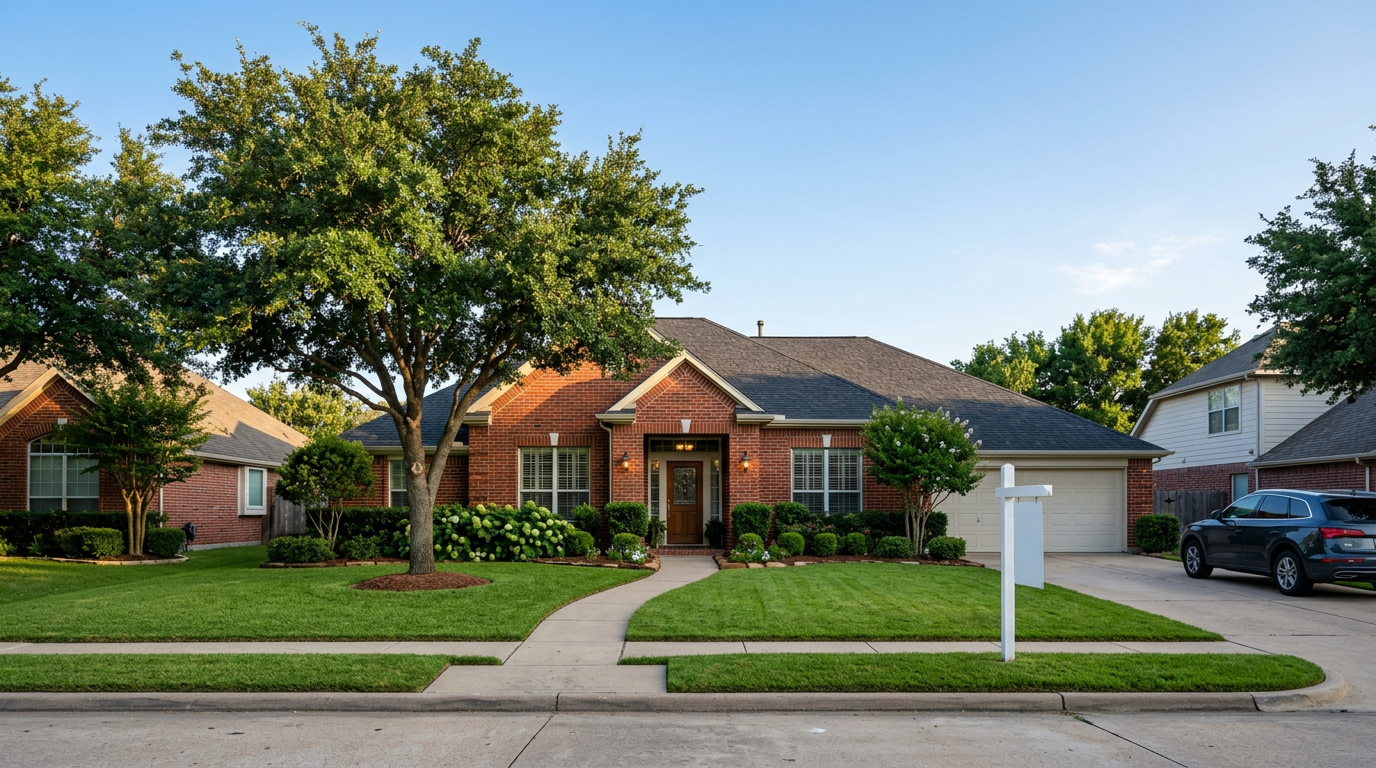
Your list price is not your check: what Glenn Heights sellers actually net in 2026
By Steven J. Thomas
Most Glenn Heights sellers I talk to have one number in their head. It's the list price, minus whatever they still owe the bank. That number feels like the check. It isn't the check. The list price is a marketing number, and the number that actually hits your account at closing is a different number entirely. The good news is that the gap between the two is predictable, and you can run it before you list instead of finding out after you sign an offer.
The short answer
Your list price is what you advertise. Your net proceeds are what's left after the sale price, your loan payoff, commissions, title, taxes, credits, and fees all settle up. In Glenn Heights and the rest of southwest DFW, homes are closing below list, and across the transactions I close around here, total seller costs commonly run about 6 to 8 percent of the sale price before any buyer credits. Run the estimate first. Then set the price.
What a sale-to-list ratio actually is
Sale-to-list ratio is one number divided by another. Take the price the home actually closed at, divide it by the price it was listed at, and you get a percentage. A home listed at $385,000 that closes at an estimated $365,750 has a sale-to-list ratio of 95 percent.
There are two versions of this number, and the difference matters more than almost anything else in this post.
- Sale to current list — the price it closed at divided by whatever the price was on the day it went under contract, after any reductions. This is the flattering version.
- Sale to original list — the price it closed at divided by the price it launched at on day one. This is the honest version, and it's the one that shows what a bad launch price actually costs.
Say you list at $410,000, take two price reductions down to $385,000, and close at an estimated $365,750. Your sale-to-current-list looks like 95 percent. Your sale-to-original-list is about 89 percent. Same house, same check, two very different stories. When another agent tells you their listings sell at 98 percent of list, ask which of the two numbers they're quoting.
Nobody guarantees a ratio. Yours depends on condition, price, timing, and what the buyer pool looks like the week you go live. But you can estimate it, and estimating it before you list is the whole point.
Where the DFW numbers sit right now
Here is what the data shows, based on current conditions. None of it is a promise about your house.
- Sale to original list — North Texas resale homes sold at about 95 percent of original list price, at roughly 56 days on market — Source: NTREIS MLS data, June 2026
- Median DFW seller price reduction: about $12,500, or roughly 3 percent of the initial list price — Source: Texas Real Estate Research Center, Texas Housing Insight
- About 26 percent of Dallas-area listings took at least one price reduction in a given month in 2026 — Source: Texas Real Estate Research Center, Texas Housing Insight
- Sale to current list — Glenn Heights median sale price: $370,000, with homes selling for roughly 2 percent below their current list price, meaning the price after any reductions, and going pending in about 88 days — Source: Redfin, Glenn Heights housing market
- 30-year fixed mortgage rate: 6.69 percent — Source: Freddie Mac Primary Mortgage Market Survey, week of August 6, 2026
Read those together carefully, because the first and fourth bullets aren't measuring the same thing. The NTREIS number is sale to original list. The Redfin number is sale to current list. That's why 95 percent of original list and 2 percent below current list can both be true at once — one version counts the price cuts along the way and the other doesn't. Based on current conditions, the North Texas average is about 95 percent of original list at roughly 56 days on market. Roughly one in four Dallas-area listings is cutting price in a given month, and the typical cut is around $12,500. Glenn Heights sits at the slower end of southwest DFW, with a longer time to contract than the metro average. That 95 percent sale-to-original-list figure is what the worked example below is built on — not a guarantee for your house, just the current NTREIS average applied to a round number so you can see the shape of the arithmetic.
"Sellers do not lose money at the closing table. They lose it in the first two weeks, by picking a price nobody was going to pay." — Steven J. Thomas, Broker at Refind Realty DFW and Loan Officer at Envision Home Lenders
A Glenn Heights net sheet, line by line
What follows is a composite example, not a real client or a real address. Every figure is an estimate. Your numbers will differ, and the only way to know yours is to have someone build the sheet from your actual payoff, tax bill, and HOA documents.
The setup: a four-bedroom home in Glenn Heights, bought in 2019, listed at $385,000, closing in mid-October.
Step 1 — the contract price
For the example, the home goes under contract at 95 percent of its original list price — sale to original list, the same measure NTREIS reports — matching the North Texas average in NTREIS MLS data for June 2026. There are no price reductions in this example, so the current-list and original-list versions of the ratio are the same number here.
$385,000 × 0.95 = $365,750 (estimate)
That's an estimated $19,250 haircut before a single cost comes out. Most sellers never budget for this line, because it doesn't appear on any statement. It just quietly happens during negotiation.
Step 2 — the loan payoff
The seller bought at $245,000 in 2019 with a small down payment. Seven years of payments later, the estimated payoff is $198,000. Payoff isn't the same as your last statement balance — it includes interest through the funding date and any prepayment items, so ask your lender for an actual payoff quote with a good-through date.
Step 3 — commissions
Since the National Association of Realtors settlement took effect, listing-side and buyer-side compensation are negotiated separately. There's no standard rate, no automatic split, and nothing published in the MLS. What you agree to pay your own broker is one conversation. Whether you offer anything toward the buyer's agent, and how much, is a second conversation you have when you price the home and again when you review each offer.
For this example, assume the seller agrees to 3 percent to the listing side and offers 2.5 percent toward buyer representation.
- Listing side: $365,750 × 0.03 = $10,972.50 (estimate)
- Buyer-side compensation offered: $365,750 × 0.025 = $9,143.75 (estimate)
- Combined: $20,116.25 (estimate)
Step 4 — the owner's title policy
In Texas, custom in most of the state has the seller pay for the owner's title policy. It's negotiable in the contract, but around here it's usually a seller line. Title insurance rates in Texas are promulgated by the Texas Department of Insurance, so the premium is the same at every title company at a given price point — you're not shopping for a better rate, only for better service.
At this sale price, estimate roughly $2,350. Get the exact figure off the title company's rate sheet once you have a contract price.
Step 5 — property tax proration
Texas property taxes are paid in arrears. The tax year runs January 1 through December 31, bills go out in the fall, and payment is generally due by January 31 of the following year, per the Texas Comptroller. That means at closing you owe your share of a bill that hasn't been paid yet.
Assume an estimated annual tax bill of $8,200 and a closing on October 15. The seller owns the home for 287 days of the tax year.
$8,200 × (287 ÷ 365) = $6,448 (estimate, rounded)
This is the line that surprises people most. It isn't a fee and it isn't a penalty. It's your own tax bill, settled early. But it comes off your proceeds, and on an October closing it's a real number.
Step 6 — HOA transfer and resale fees
Plenty of Glenn Heights subdivisions carry an HOA. Selling triggers a resale certificate and a transfer fee, and Texas Property Code §207.003 caps what an association can charge for the resale certificate and for a later update to it.
- Resale certificate: $375
- Transfer fee: $225
- Combined estimate: $600
If your neighborhood has no HOA, this line is zero. If it has a master association plus a sub-association, it can run higher. Pull your governing documents before you list so you know which one you're dealing with.
Step 7 — repair and closing-cost credits
The buyer's inspector finds an aging water heater, some fence damage, and a couple of plumbing items. Instead of doing the work, the seller offers a credit. In this example the buyer takes $6,000 toward closing costs and repairs.
Credits are the most controllable line on this sheet and the one sellers plan for the least. A pre-listing walk-through that catches those items early usually costs less to fix than it costs to credit.
Step 8 — survey
Many buyers and their lenders want a current survey. If yours is old or missing, the seller often pays for a new one. Estimate $600 in this price range.
Step 9 — the estimated net
Every line below is an estimate for this example only.
| List price | $385,000 |
| Estimated sale price at 95 percent of original list | $365,750 |
| Estimated commissions (3 percent + 2.5 percent) | -$20,116 |
| Estimated owner's title policy | -$2,350 |
| Estimated property tax proration (287 days) | -$6,448 |
| Estimated HOA transfer and resale certificate | -$600 |
| Estimated buyer credit for repairs and closing costs | -$6,000 |
| Estimated survey | -$600 |
| Estimated total seller costs | -$36,114 |
| Estimated proceeds before payoff | $329,636 |
| Estimated loan payoff | -$198,000 |
| Estimated net proceeds | $131,636 |
Now compare that to the number the seller had in their head. List price of $385,000 minus a $198,000 payoff equals $187,000. The estimated wire is $131,636. The estimated difference is $55,364.
Nothing went wrong in this example. No deal fell apart, no lawsuit, no disaster. The seller simply never ran the arithmetic. Every figure above is an estimate for illustration only.
Why the first net sheet number changes before you get to the table
You'll get a net sheet at your listing appointment. That number will move, and it should. Here's what moves it.
- The sale price is a guess until it isn't. Your first sheet assumes you get list price. Almost nobody does. Ask for a second version at 95 percent of original list, the North Texas average in NTREIS MLS data for June 2026, and a third that first knocks a typical $12,500 price reduction off the list price before applying that same 95 percent.
- Buyer credits appear after the option period. Nobody knows what the inspector will find on day one.
- The tax proration moves with the calendar. A February closing prorates about 45 days of tax. An October closing prorates about 287. Same house, roughly a $5,400 swing in this example.
- Your payoff grows if you make cuts and sit. Every extra month is another payment, and only part of it goes to principal.
- Buyer-side compensation is negotiated per offer now. One buyer's agent asks for 3 percent, the next asks for nothing because their client agreed to pay them directly.
A net sheet isn't a quote. It's a model. The useful version of it is the one you update every time a real number replaces an assumption. If you want a starting point on how different sale structures change that model, look at the home selling options available to DFW sellers before you commit to a path.
What 6 to 8 percent actually covers
Across the transactions I close in southwest DFW, base seller costs usually land somewhere around 6 to 8 percent of the sale price. That's the working range I plan around, but you have to know what it includes.
In the example above, estimated commissions, title, HOA fees, and the survey total $23,666. On an estimated $365,750 sale, that's 6.5 percent — right inside the range.
Add the estimated $6,000 buyer credit and you're at $29,666, or 8.1 percent. Add the estimated $6,448 tax proration and estimated total seller costs reach $36,114, or 9.9 percent of the estimated sale price.
So that 6 to 8 percent range is real, but it only describes the base. Concessions and prorations sit on top of it. When you build your own estimate, budget the base at 6 to 8 percent and then add a separate line for credits and a separate line for taxes based on your closing month. Two lines, and the surprise mostly goes away.
Days on market is a pricing story, not a patience story
North Texas resale is averaging roughly 56 days on market in NTREIS MLS data for June 2026. Glenn Heights is slower than that — Redfin puts local homes at about 88 days to pending. And based on current conditions, about 26 percent of Dallas-area listings took at least one price reduction in a given month in 2026, with a median cut of about $12,500, per the Texas Real Estate Research Center's Texas Housing Insight.
Time on market is not neutral. It compounds against you in three ways at once.
- Buyers read the days-on-market counter. What I see on my own listings and the ones I show is that once a home passes about 30 days, showings start arriving with the assumption that something is wrong. Offers reflect that assumption.
- Every price cut resets the negotiation floor. A buyer who watches you cut from $410,000 to $397,500 to $385,000 — two cuts of about $12,500, the median size reported by the Texas Real Estate Research Center — doesn't open at $385,000. They open lower, because you've shown them the direction you're willing to move.
- Carrying costs stack up. On this example home, principal, interest, taxes, insurance, utilities, and lawn care might run about $2,400 a month. Three extra months on market is $2,400 × 3 = $7,200 out of the same pocket the proceeds come from.
That is the mechanism behind the widening list-to-sale gap. Slow homes don't just sell later. They sell for less, and they cost more to hold while they do it.
How Glenn Heights compares with the rest of southwest DFW
Glenn Heights sits along the Dallas and Ellis County line, straddling I-35E south of Dallas. Sellers here are competing on a wider board than they think, because a buyer shopping this price band is also shopping the towns next door.
DeSoto
DeSoto is the larger, older, more established neighbor directly north. Inventory there skews toward established subdivisions with mature trees and a longer sales history, which gives appraisers deeper comps to work with. For a Glenn Heights seller, DeSoto matters because a buyer with a $360,000 budget will look at both. If your home is priced against a DeSoto comp with a finished-out kitchen and yours is original, the market will notice inside the first weekend.
Red Oak and Ovilla
Red Oak and Ovilla sit just south and southwest, and they pull from the same buyer pool along the I-35E corridor. Both have absorbed a meaningful amount of new construction over the last several years. That matters to a resale seller in a direct way: a builder down the road can offer a rate buydown or cover closing costs, and you can't. You compete on condition, price, and speed to close, not on incentives.
Lancaster, Cedar Hill, and Waxahachie
Lancaster to the east, Cedar Hill to the west, and Waxahachie further south round out the shopping radius. Each has its own price ladder and its own pace. The practical takeaway for a Glenn Heights seller is that your comps should be drawn tightly — same subdivision or same school attendance boundary where possible — but your competitive picture is regional. Pull the current DFW area market statistics before you settle on a number.
The one thing you actually control
You don't control mortgage rates. You don't control how many buyers are shopping in October. You don't control what the appraiser thinks. You control your launch price, and it's worth more than everything else combined.
Pricing to the comps at launch means three things, specifically.
- Use closed sales, not active listings. Actives tell you what your neighbors hope for. Closings tell you what buyers paid. If the closed comps in your subdivision from the last 90 days sit between $355,000 and $372,000, your price lives in that band, whatever the online estimate says.
- Adjust honestly for condition. A comp with a renovated kitchen and new roof isn't your house if yours has neither. Subtract for it up front. The market will subtract for it either way — the only question is whether you do it on day one or on day 70.
- Price into a search bracket, not past it. Buyers search in round numbers. Listing at $402,000 hides you from everyone whose filter stops at $400,000. That's a self-inflicted wound.
The alternative is chasing the market down. You launch at $410,000, sit three weeks, cut $12,500 to $397,500, sit four more, cut another $12,500 to $385,000, and finally take an estimated $365,750 on day 96. You end up at the same sale price you could have reached in three weeks, except you paid three extra months of carrying costs and handed every buyer proof that you negotiate. That's how a 95 percent sale-to-current-list result still leaves you at about 89 percent of your original list.
Condition is the other half. Deferred items you already know about will show up in the inspection, and they come back as a credit request that hits this net sheet directly. Fixing a $900 problem before listing is almost always cheaper than crediting $2,000 for it after.
What to do before you put a sign in the yard
Run the number first. Get an actual payoff quote from your lender with a good-through date. Pull your most recent tax bill. Find your HOA documents and check both the resale certificate fee and the transfer fee. Then have someone build a real net sheet at three sale prices — full list, 95 percent of list, and 95 percent of a list price already reduced by a typical $12,500 cut, which lands near $353,875 in this example. If the lowest of the three still works for your next move, you're ready. If it doesn't, you've found that out while you can still do something about it.
Before we put a price on your house, I want to walk through it with you. It takes about 30 minutes, you get an honest readiness score at the end, and that score tells us exactly what we're working with — what to fix, what to skip, and where the price should realistically start.
Get your free Home Selling Score — or call me directly at 972-846-9170.
Five things to remember
- Your list price is a marketing number. Your net proceeds are the real number, and the two are separated by commissions, title, taxes, credits, fees, and your payoff.
- North Texas resale homes sold at about 95 percent of original list price at roughly 56 days on market, per NTREIS MLS data for June 2026. Homes that launch high and cut repeatedly land lower against their original number — the median Dallas-area cut runs about $12,500, or roughly 3 percent of initial list, per the Texas Real Estate Research Center.
- Across the transactions I close in southwest DFW, base seller costs usually run about 6 to 8 percent of the sale price. Buyer credits and property tax proration sit on top of that and can push the total into double digits.
- Texas property taxes are paid in arrears, so a fall closing prorates far more tax against your proceeds than a winter closing does. Same house, different month, thousands of dollars apart.
- The launch price is the one lever fully in your control. Price to closed comps in the first week rather than discovering the market through a series of reductions.
FAQ: list price versus net proceeds for Glenn Heights sellers
When should I run a net sheet — before listing or after I get an offer?
Before listing, and then again with every offer. The pre-listing version tells you whether the sale works for your next move at all. The offer-stage version replaces your assumptions with real numbers from a real contract.
How much will I actually walk away with on a $385,000 Glenn Heights listing?
In the composite example in this post, a $385,000 listing that closes at an estimated $365,750 with an estimated $198,000 payoff produces an estimated net of about $131,636 after roughly $36,114 in estimated seller costs. Your figure depends on your payoff, tax bill, HOA, and what you concede in negotiation. Every number here is an estimate.
What if the appraisal comes in below the contract price?
The buyer's lender will only lend against the appraised value, so you're typically looking at a price reduction, the buyer bringing extra cash, a renegotiation, or a termination depending on how the contract is written. Pricing to closed comps at launch is the cheapest protection against this, because it keeps the contract price inside what an appraiser can support.
Who pays the owner's title policy in Texas?
By custom across most of Texas, the seller pays for the owner's title policy, though it's a negotiable term in the contract. Texas title insurance rates are promulgated by the Texas Department of Insurance, so the premium doesn't change from company to company at a given price point.
How long should I expect my Glenn Heights home to take to sell?
NTREIS MLS data for June 2026 puts North Texas resale at roughly 56 days on market, and Redfin shows Glenn Heights homes going pending in about 88 days. Those are averages based on current conditions, not a prediction for any specific home.
Where do I get the actual numbers for my own house?
Three places: your lender for the payoff, your county appraisal district and tax office for the current tax bill, and your HOA management company for the resale certificate and transfer fees. Bring those three to a listing conversation and the net sheet stops being a guess.
All figures in this article are estimates based on market conditions at the time of writing and are provided for illustration only. The Glenn Heights example is a composite, not an actual transaction or client. Nothing here is a guarantee of sale price, net proceeds, timeline, or market performance. Market data cited from NTREIS MLS data, the Texas Real Estate Research Center (Texas Housing Insight), Redfin, Freddie Mac, and the Texas Comptroller as noted. Steven J. Thomas is a licensed Texas real estate broker with Refind Realty DFW, and a licensed loan officer with Envision Home Lenders, NMLS #689220. Office: 128 S. Cockrell Hill Rd, DeSoto, TX 75115. Phone: 972-846-9170. Equal Housing Opportunity. Texas law requires all real estate license holders to give the Information About Brokerage Services form and the TREC Consumer Protection Notice to prospective clients.

BLOG NAVIGATION
Contact Me By Filling Out
The Form Below
We Can Help You Reach Your Real Estate Goals!
Locate Us
Site: www.stevenjthomas.com
Call :(972) 846-9170
Email: [email protected]
Office 128 S. Cockrell Hill Rd, DeSoto TX 75115
Owned and Operated by Thomas & Thomas Financial Group, LLC
© Copyright 2026 | All Rights Reserved
Steven J. Thomas, REALTOR® · TREC License #0657467
Privacy Policy | Terms of Service | Fair Housing Statement
Refind Realty DFW · 128 S. Cockrell Hill Rd, DeSoto, TX 75115 · (972) 846-9170
Facebook
Instagram
X
LinkedIn
Youtube
TikTok