
Refind Realty Blog
Your DeSoto House Is Empty Now. Your Insurance Might Not Cover It (2026)
Your DeSoto House Is Empty Now. Your Insurance Might Not Cover It (2026)
By Steven J. Thomas
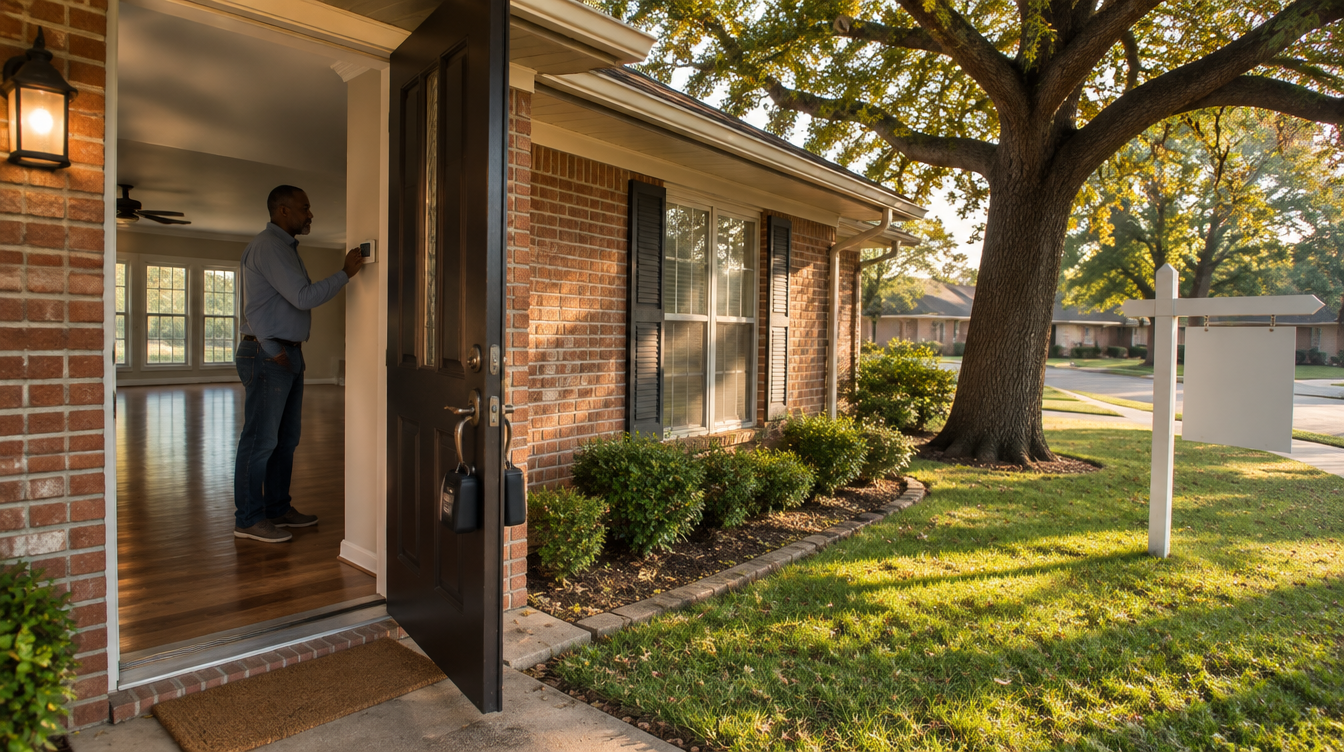
[Caption: A DeSoto homeowner stepping back into the empty brick house they just moved out of, checking the thermostat while the For Sale sign sits at the curb.]
You closed on the new build. The moving truck is gone, the keys are on the new counter, and your DeSoto house is listed and sitting empty. It feels like the hard part is over. Here is the part nobody mentioned at the closing table: the homeowners policy on that empty house may already be counting days, and once it hits the number in your policy wording, some of the coverage you have paid for quietly stops working.
This is the real cost of the gap between two transactions. The gap is where sellers lose money, and most of it gets decided before you ever sign on the new build.
Direct Answer
Most standard homeowners policies limit or exclude certain losses once a home has been vacant for a set number of consecutive days, commonly 30 or 60 depending on the policy form. Vandalism, glass breakage, theft, and some water damage are the usual casualties. Call your carrier, read your vacancy wording, and ask about a vacancy permit endorsement or a vacant dwelling policy before the clock runs out.
Vacant vs. unoccupied: what your insurer means
These two words sound the same. To an insurance adjuster they are not.
An unoccupied home still has your furniture and belongings in it. You are away, but the house is set up for living. A vacant home is empty, or close to it. Claims professionals at Miller Public Adjusters point out that courts have described vacant as lacking both people and the personal property needed for normal occupancy.
That is the exact situation most move-up sellers are in. You took the couch, the beds, and the kitchen table to the new build. What you left behind is a clean, empty house with a lockbox on the door. On paper, that looks like vacancy.
Do not assume a few staging pieces change your status. Some carriers treat the terms differently, and some do not separate them at all, according to Insurify's vacant home insurance guide. The only answer that counts is the one in your policy wording.
What the vacancy clause usually takes away
According to Adjusters International, a standard HO-3 policy commonly drops coverage for vandalism, malicious mischief, and glass breakage once the dwelling has been vacant more than 60 consecutive days before the loss. Other forms use 30 days. The Insurance Information Institute describes the typical trigger as 30 to 60 consecutive days.
The losses that usually get limited or excluded after the threshold:
- Vandalism and malicious mischief
- Glass breakage
- Theft or attempted theft, including stripped copper and appliances
- Water damage from pipes that freeze in an unheated house
- Liability questions if someone is hurt on the property
The Insurance Information Institute describes an inherited home left empty through winter while it was listed. A pipe burst during a hard freeze, repairs topped $60,000, and the vacancy clause excluded the claim. Nobody in that story did anything reckless. They just assumed the policy still worked the way it did when someone lived there.
This is general information about how homeowners policies commonly work, not insurance advice. Your carrier's policy wording and your licensed insurance agent are the final word on your coverage.
Your options before the clock runs out
Start with a phone call to your carrier the week you move out. Tell them the house is listed and empty, and ask three questions: How many consecutive vacant days does my policy allow? Which losses change after that? What do you offer to cover the gap?
You will usually hear one of two answers.
A vacancy permit endorsement
Some insurers will add an endorsement to your existing homeowners policy that extends protection for a set period while the home is vacant. Not every company offers one, and the terms vary by carrier. If yours does, this is often the simplest fix. Ask for the price and the exact dates in writing.
A vacant home or dwelling policy
If your carrier will not extend coverage, you may need a separate vacant home policy. Insurify reports vacant home premiums ranging from under $1,000 to more than $7,000 a year depending on coverage amount and insurer, and from under $1,500 to nearly $8,000 for $350,000 in dwelling coverage. These policies are often sold in three, six, or twelve month terms, which helps if you expect the house to sell soon. They also tend to leave out personal property coverage, which matters less when the house is empty anyway.
Those ranges are national figures. Your DeSoto quote depends on the home, the deductible, and the carrier, so ask your insurance agent for an actual number before you decide anything. One more thing to check: if you still have a mortgage on the DeSoto house, your lender requires continuous coverage, so a lapse is a problem on two fronts.
The DeSoto empty-house checklist
Insurance covers the loss. These steps help keep the loss from happening, and several of them are things carriers look for when a claim comes in.
Keep the utilities on
Do not shut off power or water to save a few dollars. Buyers need lights and running water for showings and inspections, and a house with no heat in January is a pipe claim waiting to happen. DeSoto sits in Oncor's delivery area. Oncor maintains the lines, but you buy electricity from a retail provider you choose, which you can compare through the Public Utility Commission's Power to Choose site. Keep that account in your name through closing.
Water, sewer, trash, and drainage come from the City of DeSoto. DeSoto Utility Billing is at 211 E. Pleasant Run Road, and the city lets you keep service on at two DeSoto addresses for up to 10 calendar days during a transfer. If your new build is outside DeSoto, keep the old account open until the buyer closes.
Set the thermostat and prep for the first freeze
The National Weather Service in Fort Worth puts the average first freeze at DFW around November 22, based on records going back to 1898. The earliest on record came October 22. North Texas also remembers February 2021, when DFW spent 139 straight hours below freezing.
- Keep the heat on. The Insurance Information Institute recommends at least 55 degrees in winter for an empty home.
- Insulate exposed pipes in the garage and attic, and cover outdoor hose bibs.
- Know where the main water shutoff is, and make sure your agent knows too.
- Add a smart thermostat or leak sensor that alerts your phone if the temperature drops or water shows up where it should not.
- Schedule a weekly walk-through. Someone should open every cabinet under a sink.
Lockbox and showing security
An empty house gets more foot traffic than an occupied one, and less of it is supervised. Use an electronic lockbox that logs every entry by agent and time. Turn on exterior lights on a timer, and consider motion lights, which Insurify notes may help lower premiums on a vacant policy. Stop or forward your mail so it does not pile up at the door. Ask your agent to confirm every showing appointment and to report anything that looks off after each one.
Lawn and curb appeal
An overgrown yard tells every driver the house is empty. It also breaks a city rule. DeSoto's weeds and grass ordinance makes it unlawful to let grass or weeds grow taller than 12 inches on any premises, occupied or unoccupied. According to the City of DeSoto Code Enforcement page, after a violation notice the city can mow at the owner's expense and add a $150 administrative fee, with a lien filed in Dallas County if the invoice goes unpaid for 60 days. Put a mowing service on a schedule before you move out.
Staging an empty house vs. leaving it bare
Empty rooms photograph small and feel cold in person. Buyers struggle to judge whether a king bed fits or where the table goes. In the National Association of Realtors 2025 Profile of Home Staging, 83 percent of buyers' agents said staging made it easier for buyers to picture the property as their future home, and 49 percent of sellers' agents said staging reduced time on market. Staging the living room, primary bedroom, and dining area is often enough. Virtual staging in the listing photos is a lower-cost option, as long as the photos are labeled as virtually staged.
What an empty house does to days on market
An empty listing costs you every month it sits: the mortgage, property taxes, insurance, utilities, lawn care, and now possibly a vacant policy on top. Here is what the market looks like based on current conditions:
- Texas homes that sold in July spent an average of 63 days on market. Unsold inventory at month end averaged 92 days (Source: Texas Real Estate Research Center, Texas Housing Insight, September 2026)
- Median Texas seller price cut: $13,000, or 3.6 percent of the initial list price (Source: Texas Real Estate Research Center, September 2026)
- Texas active inventory: 5.5 months of supply. DFW: 4.6 months, with active inventory down 4.3 percent year over year (Source: Texas Real Estate Research Center, September 2026)
- More than one in four DFW listings are seeing price cuts even as inventory shrinks (Source: DFW Housing Weekly, September 15, 2026)
Look at the gap between 63 and 92 days. Homes that sell tend to move in about two months. Homes that sit are already a month past that. If your policy's vacancy threshold is 30 or 60 days, a listing that runs to the unsold average can blow through it with time to spare. D Magazine's September 2026 state of the market report found agents agreeing that pricing right from day one matters most.
Watch the broader numbers on the DFW market statistics page while you are listed.
Plan the move sequence before you sign on the new build
Everything above is damage control. The better fix is to never have an empty house at all, and that decision gets made before you sign a builder contract. There are two basic sequences.
Sell first, then lease back
You sell the DeSoto house while you are still living in it. The buyer agrees to let you stay for a set period after closing while the new build finishes. The house photographs furnished, shows lived-in, and never sits empty. You walk into the new build with your equity in hand instead of tied up in a listing. The tradeoff is negotiation: not every buyer wants a leaseback, and the terms, including who insures what during the leaseback, need to be written clearly in the contract.
Buy first, then sell
You close on the new build and move, then list the old house. You only move once, which is easier on everyone. The cost is the gap. You may carry two housing payments, the old house sits empty, and every item in this post becomes your problem. Buy-first can still be the right call, but only if the numbers work with the old house sitting for 90 days or longer, not the 30 you are hoping for.
Builder timelines slip. Appraisals come in low. Buyers terminate. Whichever sequence you pick, build it around a realistic timeline, and compare your home selling options before the builder's sales office hands you a pen.
Conclusion
An empty DeSoto house is a vacancy risk for your insurer, a target for thieves, a frozen pipe waiting for November, and a code violation waiting for the grass to hit 12 inches. Call your carrier the week you move out. Keep the utilities on, the heat at 55 or higher, and the lawn on a schedule. Stage the rooms that sell the house. Most of all, remember where sellers actually lose money: in the gap between two transactions. Plan the move sequence before you sign on the new build, and the gap gets a lot smaller.
If your house is already empty, or you are about to sign on a build, start with an honest read on where it stands. Get your Home Selling Score. I walk through the house with you for about 30 minutes and give it a readiness score, so you know whether you are listing a house that is ready to sell or one that will sit.
Call or text 972-846-9170. You're Always Home with Steven J. Thomas.
Steven J. Thomas, Broker, Refind Realty DFW, TREC Broker License #0657467. Loan Officer, Envision Home Lenders, NMLS #689220. Equal Housing Opportunity.
Key Takeaways
- Many standard homeowners policies limit or exclude vandalism, glass breakage, theft, and some water damage after a home is vacant a set number of consecutive days, commonly 30 or 60. Check your policy wording.
- Insurers treat a vacant house, empty of furniture and belongings, differently from an unoccupied one that is still furnished.
- Ask your carrier about a vacancy permit endorsement, or get a quote on a vacant home policy. Insurify reports national premiums from under $1,000 to more than $7,000 a year.
- In DeSoto, keep the Oncor-area electric and City of DeSoto water on, hold the heat at 55 degrees or higher before the average November 22 first freeze, and keep grass under the city's 12-inch limit.
- Texas unsold listings averaged 92 days on market versus 63 for homes that sold, per the Texas Real Estate Research Center. Plan your sell-first or buy-first sequence before you sign on the new build.
FAQ: Insuring and Selling an Empty DeSoto House
When should I call my insurance company after I move out?
Call the week you move out, before the house has been empty for long. Ask how many consecutive vacant days your policy allows, which losses change after that, and whether the carrier offers a vacancy endorsement.
How much does vacant home insurance cost?
Insurify reports national vacant home premiums from under $1,000 to more than $7,000 a year, depending on coverage amount and insurer. Your DeSoto price depends on the home and deductible, so get a written quote from your insurance agent.
What happens if a pipe bursts in my empty house?
If the home has passed your policy's vacancy threshold, or the heat was off, the water damage claim may be limited or denied. Keep the heat at 55 degrees or higher in winter and have someone check the house weekly.
Does DeSoto fine owners of empty houses for tall grass?
DeSoto's ordinance prohibits grass or weeds over 12 inches on any premises, occupied or unoccupied. After a notice, the city can mow at the owner's expense with a $150 administrative fee, and unpaid invoices can become a lien.
How long will my empty house take to sell?
Nobody can promise a timeline. Based on current conditions, Texas homes that sold in July averaged 63 days on market while unsold listings averaged 92 days, according to the Texas Real Estate Research Center. Pricing and condition drive most of the difference.
What should I do before I sign on a new build?
Decide your move sequence first: sell first with a leaseback, or buy first and carry the gap. Then get your Home Selling Score so you know how ready the DeSoto house is before the builder's clock starts.

BLOG NAVIGATION
Contact Me By Filling Out
The Form Below
We Can Help You Reach Your Real Estate Goals!
Locate Us
Site: www.stevenjthomas.com
Call :(972) 846-9170
Email: [email protected]
Office 128 S. Cockrell Hill Rd, DeSoto TX 75115
Owned and Operated by Thomas & Thomas Financial Group, LLC
© Copyright 2026 | All Rights Reserved
Steven J. Thomas, REALTOR® · TREC License #0657467
Privacy Policy | Terms of Service | Fair Housing Statement
Refind Realty DFW · 128 S. Cockrell Hill Rd, DeSoto, TX 75115 · (972) 846-9170
Facebook
Instagram
X
LinkedIn
Youtube
TikTok