
Refind Realty Blog
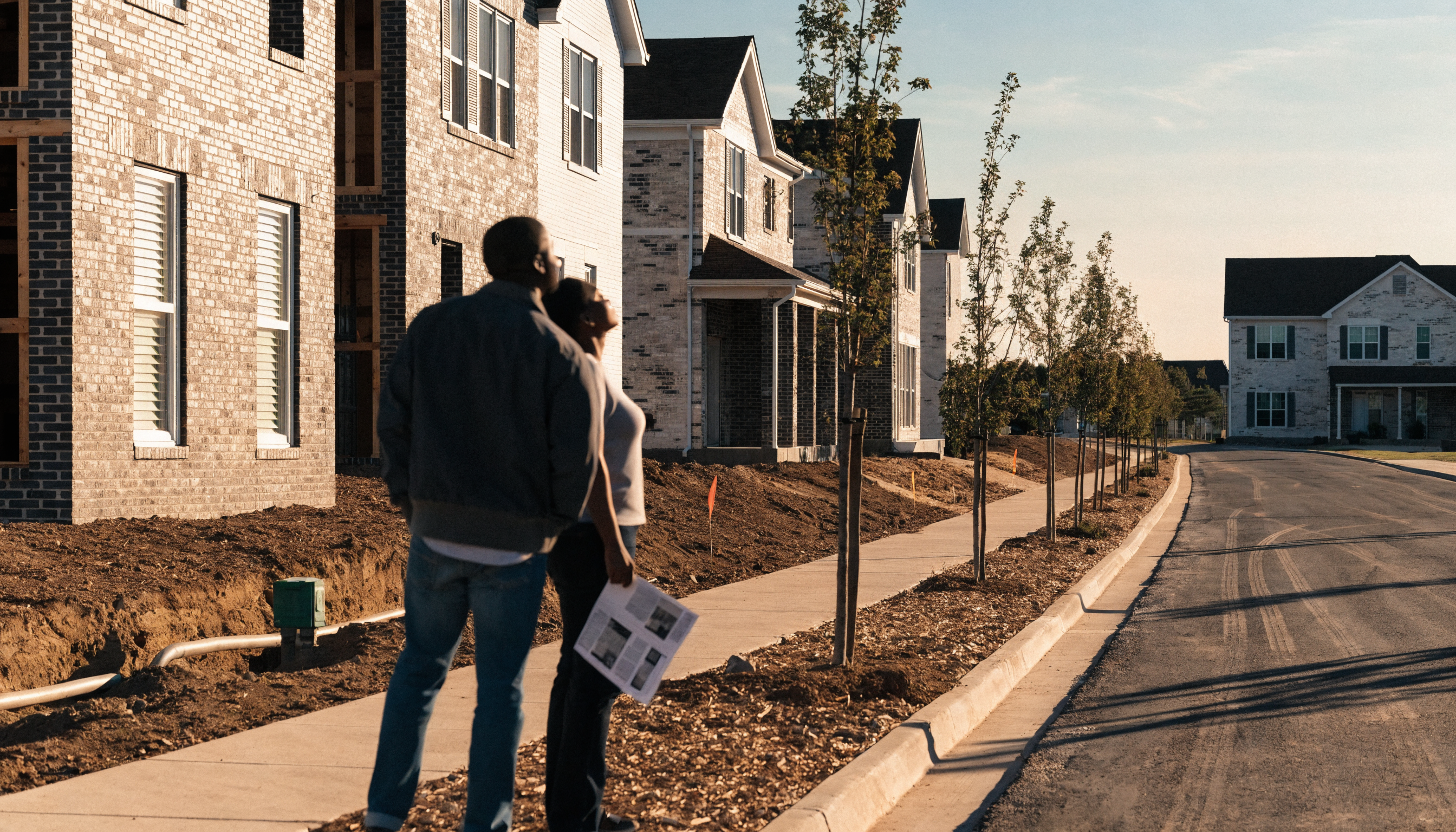
Waxahachie new construction impact fees in 2026: the cost buried in your purchase price
Waxahachie new construction impact fees in 2026: the cost buried in your purchase price
By Steven J. Thomas
You can walk four model homes in Waxahachie on a Saturday afternoon and never hear the words impact fee. The fee is still there. Before a builder can pull a permit on your lot, the City of Waxahachie charges a one-time amount to cover the water, wastewater, and roadway capacity that house is going to use, and that amount ends up inside the price you sign for. Ellis County has been absorbing new rooftops for a decade, and the cost of extending pipe and pavement to those rooftops does not come out of nowhere.
The short answer
An impact fee is a one-time charge a Texas city collects at permit to help pay for the water, wastewater, and roadway capacity a new home consumes. Waxahachie adopted an updated fee schedule in 2025 under Ordinance 3654. Waxahachie Sun coverage of the council action put a single-family residence near $12,700 across roads, water, and wastewater. The builder pays it at permit and prices it into the house. You finance it for 30 years.
Steve's take: the builder rep works for the builder
The person sitting at the desk in that model home is paid by the builder. That is not a scandal and it is not a character flaw. It is the job. But it means nobody in that room is going to walk you through what the city charged to bring water, sewer, and pavement to that lot, or what happens to the price of the next phase when the fee schedule gets updated on a three-year cycle. Roughly $12,700 of one-time municipal fee, as reported by the Waxahachie Sun in its coverage of the council action, is sitting inside a purchase price on a home somebody is going to buy this year without ever seeing a line item for it.
That is the whole point of this post. Not that builders are doing something wrong. That the person explaining the house to you answers to somebody else.
What an impact fee is, and what Chapter 395 requires
Texas cities do not get to invent these charges. Impact fees are governed by Chapter 395 of the Texas Local Government Code, and the statute is specific about what a city can charge for and how it has to get there. The Texas Municipal League publishes a plain-language overview of the framework in its impact fees reference for cities, which is a useful read if you want the mechanics without the legalese.
The four categories a Texas city can charge for
- Water supply, treatment, and distribution facilities
- Wastewater collection and treatment facilities
- Stormwater, drainage, and flood control facilities
- Roadway facilities inside the city limits
That is the list. A city cannot use impact fee revenue to build a library or hire firefighters. The money is tied to capacity for those specific systems, and roadway fees apply inside the corporate limits.
The process a city has to run
Before a city can adopt or update a fee, Chapter 395 requires land use assumptions, a capital improvements plan built off those assumptions, a Capital Improvements Advisory Committee to review the work, and a public hearing. It is a slow, documented process with a paper trail. For a buyer, the practical value is that the paper trail exists and you can ask for it.
Service units, not square footage
Impact fees are calculated in service units rather than home size. For roadway fees, the service unit is vehicle-miles, which is a measure of the traffic demand a land use is expected to generate. For water and wastewater, the service unit is water meter size. Two homes on the same street with the same meter carry the same water and wastewater fee whether the house is 1,900 square feet or 3,400. That surprises people who assume a bigger house automatically means a bigger fee.
What Waxahachie did in 2025, and why it still matters in 2026
Waxahachie City Council adopted its 2025 impact fee update by Ordinance 3654 on August 18, 2025, with an effective date of September 18, 2025. The update covered land use assumptions, the capital improvement plans, and the fee schedule for roads, water, and wastewater. Council also set a three-year review cycle, so the schedule gets revisited on a known rhythm instead of whenever someone remembers to bring it up.
The technical work was presented at the Chapter 395 public hearing by consultants Eddie Haas and Cullen Carlson of Freese and Nichols. That detail matters more than it sounds. A named engineering firm produced a study, the advisory committee reviewed it, and the council voted on it in an open meeting. If you want to know why a number is what it is, there is a document behind it.
The 50 percent collection threshold, and what it means for you
Both the Capital Improvements Advisory Committee and city staff recommended adopting the updated assumptions, capital plans, and fee calculations at a 50 percent collection threshold. Here is the plain reading of that. A Chapter 395 study calculates the maximum fee the underlying capital costs will legally support. A city is allowed to collect that maximum, or something less. Waxahachie's recommendation was to collect half.
So the reported figure near $12,700 is not the ceiling. It is the collected amount at half of what the study supports. For a buyer, two things follow. First, the fee currently embedded in your price is smaller than it could be. Second, the collection threshold is a policy decision that a future council can revisit on a review cycle, which is exactly why the phase of a community you buy in can carry a different embedded cost than the phase that opened before it.
What roughly $12,700 actually costs you once it is financed
The fee itself is a one-time charge. Your experience of it is not one-time, because it is inside the purchase price and you borrow against the purchase price. Let's run it.
Freddie Mac's Primary Mortgage Market Survey put the 30-year fixed-rate average at 6.65% for the week of August 20, 2026, per Freddie Mac PMMS. Use that as the illustration rate and a 30-year term.
Step one. The monthly rate is 6.65% divided by 12, which is 0.554167%, or 0.00554167 as a decimal.
Step two. The standard payment formula is the principal times the monthly rate, divided by one minus (one plus the monthly rate) raised to the negative 360th power.
Step three. $12,700 times 0.00554167 equals $70.38. Raising 1.00554167 to the 360th power gives 7.3118, so one divided by 7.3118 equals 0.13677, and one minus that is 0.86323.
Step four. $70.38 divided by 0.86323 equals $81.53 per month.
So roughly $12,700 of embedded impact fee costs about $82 a month in principal and interest at 6.65% on a 30-year fixed loan. Over 360 payments, $81.53 times 360 equals about $29,351. Against the $12,700 of actual fee, that is roughly $16,651 in interest paid over the life of the loan for a charge the city collected once, at permit, before your slab was poured.
Most buyers are not financing 100% of the price, so here is the more common version. With 20% down, about $2,540 of that fee comes out of your pocket at closing as part of the down payment and about $10,160 gets financed. Running the same formula on $10,160 gives about $65.22 a month, or roughly $23,481 over 360 payments.
Every figure above is illustrative and based on current conditions. It is a principal-and-interest calculation only, with no taxes, insurance, HOA dues, or mortgage insurance included, and it is educational rather than a loan offer, a quote, or a commitment to lend. An actual advertisement quoting a rate alongside a payment and a term would require an APR disclosure. Rates change weekly, your rate depends on your credit, loan program, and lender pricing, and no one can guarantee a rate, a payment, a price, or a timeline.
One more wrinkle worth knowing. Because the fee lives inside the sale price rather than beside it, it sits inside the number the market and the appraisal district are working from. It does not show up as its own line anywhere you will look.
Impact fee, PID assessment, and MUD tax are three different animals
Buyers mix these up constantly, and the difference is simple. An impact fee is one time, paid by the builder at permit, and buried in the purchase price, so you never write a check for it and never see it again. A Public Improvement District assessment and a Municipal Utility District tax are ongoing annual obligations that show up on your tax statement year after year for as long as the district exists, and they are disclosed to you as a buyer. One is a hidden one-time cost you finance for 30 years. The other two are visible recurring costs that change what you can afford every single year. Ask about all three before you sign anything, because a community can have an impact fee baked into the price and a PID or MUD on top of it.
Why two nearly identical homes in Ellis County can carry different embedded costs
Drive the southwest DFW corridor and you will look at similar floor plans from similar builders in Waxahachie, Midlothian, Red Oak, and Ennis. The homes can look the same. The municipal cost inside them is not the same, because each city runs its own Chapter 395 process.
Each city adopts its own land use assumptions, its own capital improvements plan, its own service area map, and its own collection threshold. One city might collect at 50 percent of the maximum the study supports. Another might collect at a different percentage. One city might have roadway service areas where the fee applies and areas where it does not. One might have updated its schedule last year and another might be working off a schedule adopted years ago. Water and wastewater capacity costs differ from system to system based on what has already been built and what still has to be built.
None of that is visible from the curb. A buyer comparing two homes at $475,000 in two different Ellis County cities is comparing two different bundles of embedded municipal cost, and neither model home is going to break out the difference.
What to actually ask, and who to ask
This is the part you can do something with. Five questions, and none of them are confrontational.
Ask the city
- What is the current adopted impact fee schedule, and can I get a copy? Ask the planning department directly rather than relying on a web page.
- Can I see the service area map, and does my specific lot sit in a service area where roadway fees apply?
Ask the builder
- Was the impact fee locked at plat, or does it apply at the rate in effect when the permit is pulled? Timing decides which schedule governs your house.
- Is a later phase of this same community going to be priced off a newer fee schedule? If the answer is yes, that is a real reason phase pricing moves.
- What else is on this lot besides the impact fee, such as a PID assessment or MUD tax? Get it in writing.
You are not going to negotiate the impact fee away. The city sets it and the builder pays it. What you get from asking is an honest picture of what you are financing and why phase two is priced differently from phase one.
Where the published schedule can lag the adopted ordinance
The City of Waxahachie's planning department publishes impact fee material on its development process page, including the 2015 schedule adopted by Ordinance 2830 on November 2, 2015, and the 2020 schedule adopted by Ordinance 3239 on December 7, 2020, with service area maps, Schedule 1 and Schedule 2 collection rates, and the final reports behind each.
Go read those. They are genuinely useful for understanding how the service areas and collection schedules are laid out. Then call the planning department and ask for the current adopted schedule, because a published web page can lag the ordinance the council actually passed. The 2025 update was adopted in August 2025 and took effect that September. If the page you are reading still leads with 2020, you are looking at history rather than the number that will price your permit. Confirm current figures with the City of Waxahachie planning department before you rely on any of them.
What the 2025 Texas legislative session did, briefly
In the 89th Legislature's 2025 session, SB 1253 addressed impact and production fees for certain water projects and the regulation of certain wells, with an effective date of September 1, 2025. Its companion, HB 3875, dealt with credits against impact fees for certain water conservation and reuse projects. The bill analysis is on the Texas Legislature Online if you want the primary document.
Keep this in proportion. These are project-level and utility-level provisions, and neither one rewrites what a single homebuyer in Waxahachie pays for a house. They are worth knowing about because they are part of the ongoing legislative attention to how Texas cities fund water infrastructure, and that attention is what drives fee schedules over time. They are not a reason to change your buying decision this month.
Why you bring your own agent to the first visit
Here is the mechanical reason this matters. In most new construction transactions, the builder pays your agent's compensation out of the same budget either way. If you walk in alone, that money typically does not come back to you as a discount. It just means one fewer person in the transaction is working for you.
Register with your agent on the first visit. Most builders have a policy that your agent has to accompany you or be registered at that first contact, and if you tour alone first, some builders will not honor the representation afterward. That one detail is the difference between having someone read the plat notes, ask which fee schedule governs your permit, and compare the embedded municipal cost across Waxahachie, Midlothian, and Red Oak, versus having the builder's representative be the only professional in the room.
That takes us back to where we started. The builder rep works for the builder. They will answer every question you ask honestly. They are simply not the person whose job it is to ask the question about roughly $12,700 of embedded municipal cost on your behalf.
Key takeaways
- Waxahachie updated its impact fee schedule by Ordinance 3654, adopted August 18, 2025, effective September 18, 2025, with a three-year review cycle set by council.
- Waxahachie Sun coverage of the council action put a single-family residence near $12,700 across roads, water, and wastewater, collected at a recommended 50 percent of the maximum the Chapter 395 study supports.
- At 6.65% on a 30-year fixed loan, roughly $12,700 embedded in the price works out to about $82 a month and roughly $29,351 over 360 payments, which is about $16,651 in interest on a one-time charge. Illustrative and based on current conditions.
- An impact fee is one time and hidden in the price. A PID assessment or MUD tax is an ongoing annual line on your tax statement. Ask about all three.
- Ask the planning department for the current adopted schedule and the service area map, and ask the builder whether the fee was locked at plat or applies at permit.
FAQ: Waxahachie impact fees for new construction buyers
Do I pay the impact fee at closing?
No. The builder pays it to the city at permit, well before you close. The cost is priced into the house, so you pay it as part of the purchase price and finance it with the rest of the loan.
How much does an impact fee add to my monthly payment?
Roughly $12,700 financed at 6.65% on a 30-year fixed loan adds about $82 a month in principal and interest, or about $65 a month if you put 20% down and only finance 80% of it. These are educational illustrations based on current conditions, not a loan offer or a quote.
Can the impact fee change between contract and closing?
It can, depending on whether your fee was locked at plat or applies at the schedule in effect when the permit is pulled. Ask the builder in writing which one governs your lot, and ask the city when the next Chapter 395 review is scheduled.
Do Midlothian, Red Oak, and Ennis charge the same as Waxahachie?
No. Each Texas city runs its own Chapter 395 process with its own land use assumptions, capital improvements plan, service area map, and collection threshold. Two similar homes in two neighboring Ellis County cities can carry meaningfully different embedded municipal costs.
How often does Waxahachie update its fee schedule?
Council set a three-year review cycle with the 2025 update. The published schedules on the city's planning page date back to 2015 and 2020, so the update rhythm has historically been every several years rather than annually.
Where do I confirm the current numbers?
Call or email the City of Waxahachie planning department and ask for the current adopted impact fee schedule and the service area map. The published web page can lag the adopted ordinance, so ask a person rather than relying on a PDF that may not have been swapped out yet.
One next step
If you are looking at new construction anywhere in the southwest DFW corridor, get the free New Construction Buyer Guide before your first model home visit. It covers the questions to ask, the documents to request, and what to nail down before you sign a builder contract.
Get the free New Construction Buyer Guide
Steven J. Thomas, Broker, Refind Realty DFW, TREC Broker License #0657467. Loan Officer, Envision Home Lenders, NMLS #689220. 128 S. Cockrell Hill Rd, DeSoto, TX 75115. 972-846-9170. All financing figures in this article are educational illustrations based on current conditions and are not a loan offer, a rate quote, or a commitment to lend. An advertisement stating a rate alongside a payment and a term would require an APR disclosure. Rates and fees change and are subject to credit approval. This article is general information and is not legal, tax, or financial advice. Confirm all current impact fee figures with the City of Waxahachie planning department. Equal Housing Opportunity.

BLOG NAVIGATION
Contact Me By Filling Out
The Form Below
We Can Help You Reach Your Real Estate Goals!
Locate Us
Site: www.stevenjthomas.com
Call :(972) 846-9170
Email: [email protected]
Office 128 S. Cockrell Hill Rd, DeSoto TX 75115
Owned and Operated by Thomas & Thomas Financial Group, LLC
© Copyright 2026 | All Rights Reserved
Steven J. Thomas, REALTOR® · TREC License #0657467
Privacy Policy | Terms of Service | Fair Housing Statement
Refind Realty DFW · 128 S. Cockrell Hill Rd, DeSoto, TX 75115 · (972) 846-9170
Facebook
Instagram
X
LinkedIn
Youtube
TikTok