
Refind Realty Blog
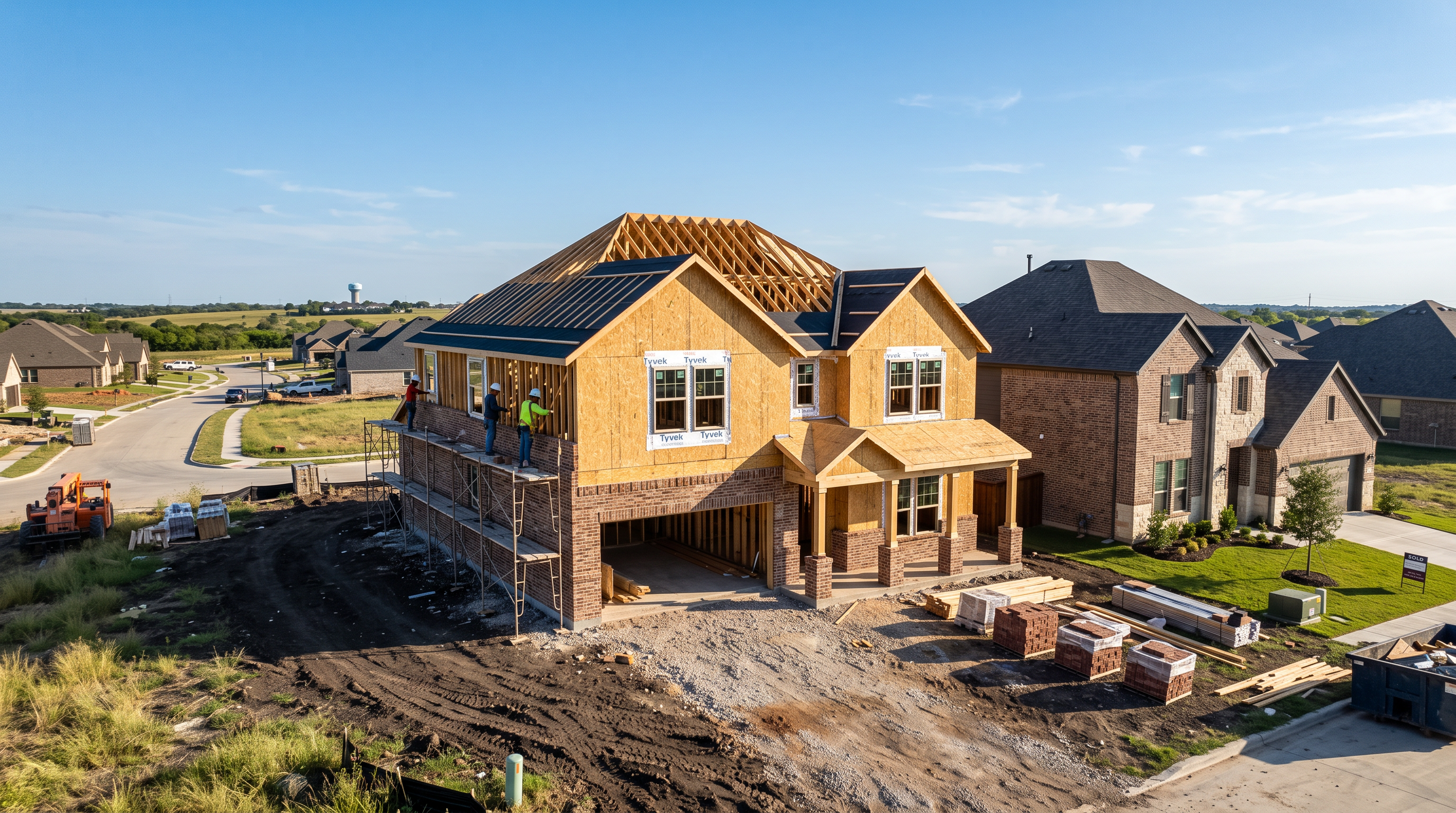
Builder's Lender or Your Own? Midlothian TX Buyers 2026
Builder's lender or your own lender? What Midlothian, TX new construction buyers should do in 2026
By Steven J. Thomas
You walk into a model home in Midlothian, the sales counselor slides a sheet across the desk, and there it is: a five-figure incentive if you finance through the builder's lender. Use an outside lender and the number shrinks or disappears. That offer can be real money, and sometimes it is the better deal. But you cannot know that from the flyer. You know it from two Loan Estimates sitting next to each other.
The short answer
Sometimes the builder's lender wins in Midlothian and sometimes it doesn't. A builder is allowed to tie an incentive to using its affiliated lender. It is not allowed to make you use that lender as a condition of buying the home. The only honest test is a side-by-side Loan Estimate comparison, pulled the same day, with the same lock period and loan type, measured on total cost over the years you will really keep the loan.
My take, and the number behind it
The builder rep works for the builder. So does the builder's lender. That is not an accusation. It is an org chart. Both of them get paid when the home closes at the price on the sign, and the incentive is one of the tools that makes that happen.
Here is the number that explains the whole thing. The AEI Housing Center estimates that lowering a buyer's mortgage rate by one full percentage point costs a builder roughly 3.2% of the sale price, while producing that same monthly payment through a straight price cut would take about a 10% reduction (AEI Housing Center, November 2025). Same payment for you. Three times the cost for them. That is why the incentive shows up as a rate buydown or a closing cost credit and almost never as a lower purchase price.
I am licensed on both sides of this. I am a broker with Refind Realty DFW and a loan officer with Envision Home Lenders, NMLS #689220. That means I can read the builder's Loan Estimate line by line against an outside one and tell you which columns actually moved. Most agents cannot do that, because they have never been trained to read page 2 of a Loan Estimate. It is not a knock on them. It is just a different license.
Why builders buy down your rate instead of cutting the price
A price cut is public. It hits the closing record, it hits the comps, and every buyer already under contract in that section finds out about it by the weekend. AEI put it plainly: once a builder cuts price on one home, buyers expect the same discount across the subdivision. Financing incentives do not leave that footprint. The home closes at the list price, the comp holds, and the concession lives inside the loan file.
This is not a fringe practice anymore. In the NAHB/Wells Fargo Housing Market Index for July 2026, 63% of builders reported using sales incentives, the 16th straight month at 60% or higher, while 37% cut prices, with an average reduction of 6% (NAHB, July 16, 2026). Builder confidence sat at 34. Read that combination for what it is: builders are competing hard for your contract, and most of that competition is running through the financing line rather than the price line.
How they fund it matters too. A temporary 2-1 buydown costs a builder roughly 2% of the sales price, while a full-term buydown can run up to 6%, according to John Burns Research and Consulting. Large builders often use a bulk forward commitment instead of paying points loan by loan. They buy a block of mortgage money in advance at a below-market rate, then hand out that rate to buyers who finance in-house. AEI notes that buydowns funded this way sit outside the normal seller concession caps, which is exactly why the advertised rate can look so far below what an outside lender quotes.
None of that is illegal. It is a pricing strategy. But it tells you something useful: the money is real, it is large, and it is attached to a specific lender for a reason.
What the rules actually allow, and what they don't
This is where most buyers get told something wrong at the model home, usually by accident.
Under the Real Estate Settlement Procedures Act, a builder cannot require you to use a particular settlement service provider as a condition of getting access to the property. Regulation X defines "required use" as a situation where you must use a specific provider in order to have access to some distinct service or property. That is prohibited. So no, a builder cannot tell you that the only way to buy the house is to close with its lender.
What a builder can do is offer a discount. The same regulation says that offering a package of settlement services, or a discount or rebate for using multiple settlement services, is not required use, so long as three things hold: the package is optional to you, the discount is a true discount below prices otherwise generally available, and the discount is not made up by higher costs elsewhere in the settlement process. So an incentive conditioned on using the affiliated lender is generally permitted. A demand that you use it to buy the home is not.
When the builder and the lender share ownership, you should also receive an Affiliated Business Arrangement Disclosure. Under 12 CFR 1024.15, that disclosure has to be a separate piece of paper, delivered at or before the referral, and it has to spell out the ownership relationship, give an estimated charge or range of charges, and state in plain language that you are not required to use the listed provider. Read it. Keep it. It is the cleanest confirmation you have that shopping is your right, not a favor.
Two practical notes for Midlothian buyers. First, that "not made up by higher costs elsewhere" language is why comparing only the rate is useless. If the rate drops but the origination charge, the underwriting fee, and the title work climb, the discount may not be much of a discount. Second, ask the incentive question directly and in writing: what is the incentive if I use an outside lender? Get the answer in the contract, not in conversation.
Midlothian market conditions as of July 2026
Based on current conditions in Midlothian, TX (Ellis County), here is what the numbers look like as of late July 2026:
- Median sale price: $472,990, down 7.7% year over year (Source: Orchard Midlothian market report, retrieved July 2026)
- Median days on market: 34, down from 68 a year earlier (Source: Orchard, July 2026)
- Active listings: 468, down 12.5% year over year (Source: Orchard, July 2026)
- Months of supply: 8.8, up from 4.75 a year earlier (Source: Orchard, July 2026)
- Median sale-to-list price ratio: 97.55% (Source: Orchard, July 2026)
- 30-year fixed mortgage rate: 6.58% as of July 23, 2026, compared with 6.74% a year earlier (Source: Freddie Mac Primary Mortgage Market Survey)
The number that should shape your negotiation is months of supply. At 8.8 months, up from 4.75, Midlothian sellers and builders are sitting in a slower market than they were a year ago, and homes are trading at about 97.55% of list. That is negotiating room for buyers, and it applies to financing terms as much as to price. Freddie Mac's own note alongside the July 23 survey said the quiet part out loud: shopping around for a mortgage rate can make a meaningful difference over the life of a loan. Market conditions change weekly, and nothing here is a rate quote.
"When supply loosens, the builder's incentive usually gets bigger before the price gets smaller. That is the moment to ask what the incentive looks like with an outside lender, because that is the moment they are most likely to answer." — Steven J. Thomas, Broker at Refind Realty DFW and Loan Officer at Envision Home Lenders
Where southwest DFW buyers are shopping right now
Midlothian sits in northern Ellis County off Highway 287 and Highway 67, roughly 30 minutes south of downtown Dallas. Growth here has pulled in a wide bench of builders, and most of them run a preferred lender program of some kind.
Bloomfield Homes is active across multiple Midlothian communities including Mockingbird Heights, Hayes Crossing, Villages of Walnut Grove, and Ridgepoint. D.R. Horton, Perry Homes, Tri Pointe, Impression Homes, First Texas Homes, and Lennar all show Midlothian or adjacent Ellis County inventory on their own sites and on NewHomeSource as of mid-2026. Master-planned sections like BridgeWater and Redden Farms carry several builders at once, which means two homes a block apart can come with two very different incentive structures. Verify current pricing, availability, and incentive terms directly with each builder, because those terms change month to month and often at quarter-end.
If Midlothian inventory does not fit, the rest of the southwest DFW corridor is worth a look. Waxahachie sits about 15 minutes southeast with a deeper entry-level bench. Red Oak is closer in on I-35E. Mansfield sits west across the county line in a different price band. The financing question does not change from city to city. What changes is how many builders are competing for you, which is what determines how flexible the incentive gets. A running list of what DFW builders are currently advertising and a directory of active DFW new construction communities both live on my site.
How to run the comparison honestly
Most buyers compare a builder loan and an outside loan by holding up two rates. That comparison is close to meaningless. Here is the method that actually works.
Apply to both lenders and get a real Loan Estimate from each. Not a rate sheet, not a screenshot, not a payment quote in a text message. The Loan Estimate is a standardized federal form, which is the entire point. Two of them line up.
Pull them on the same day. Rates move daily. A Tuesday quote against a Friday quote is not a comparison, it is a coin flip.
Match the lock period. A 30-day lock and a 90-day lock are priced differently, and new construction often needs a longer lock or an extended lock with a float-down. If your home is 120 days from completion, a 30-day quote is fiction.
Match the loan type, the down payment, the credit assumptions, and the property taxes and insurance escrows. Ellis County tax rates and new construction assessments can swing the escrow line hard, and a lender using last year's unimproved-lot tax figure will show you a payment you are never going to make.
Then go to page 2 of each Loan Estimate and read it against page 2 of the other. Section A is origination charges. Section B is services you cannot shop for. Section C is services you can shop for. Section J is total closing costs, and it includes lender credits as a negative number. Compare A to A, B to B, C to C, J to J. Then flip to page 3 and compare the Total Interest Percentage and the five-year cost figure.
Last step, and it is the one almost nobody does: decide how long you will actually keep this loan. If you plan to be in this Midlothian home for six years, comparing 30-year total interest is the wrong yardstick. Add the closing costs to the interest you will pay over your real holding period and compare those two numbers. A permanent buydown that takes eight years to pay for itself is worth very little to a buyer who refinances in three.
Lender credits, origination charges, and discount points
Three lines on the Loan Estimate move the most and get confused the most.
Discount points are money paid up front to lower the interest rate for the life of the loan. On the Loan Estimate they sit in Section A. When a builder funds a permanent buydown, this is usually where the cost shows up, or it is baked into the rate through a forward commitment and does not appear as a line item at all. AEI reported that as of June 2025, about 64% of new homes sold by the largest builders carried a permanent buydown, with an average discount of roughly 1.3 percentage points, costing an estimated 5% of the mortgage amount in builder concessions.
Lender credits are the mirror image. The lender gives you money toward closing costs in exchange for a higher rate. Credits show up as a negative number in Section J. A lender credit is not free money. It is a rate increase you agreed to.
Origination charges are what the lender charges to make the loan: origination fee, underwriting, processing, application. A builder lender with a lower rate and higher origination charges can end up costing more than an outside lender with a slightly higher rate and no junk fees. This is precisely the scenario RESPA's "not made up by higher costs elsewhere" language was written for, and it is why you compare Section A to Section A rather than headline to headline.
One more line to watch: who is paying for title, and at what price. In many builder transactions the title company is affiliated too. That is legal with disclosure. It is also a place where the discount can quietly reverse.
The 2-1 buydown presented as a rate
This one costs Midlothian buyers real money, and it is usually a communication failure rather than anything worse.
A 2-1 temporary buydown lowers your interest rate by 2 percentage points in year one and 1 point in year two, then the loan goes to its full note rate in year three and stays there. The reduced payments are funded from an escrow account set up at closing. Your actual note rate never changed. If the builder is advertising "4.58%" and your note says 6.58%, you are looking at a temporary buydown, not a rate.
Three things to check before you accept one. First, ask what the note rate is, in writing, and confirm it on page 1 of the Loan Estimate. Second, confirm that you were qualified at the full note rate, because most loan programs require that and you want to know you can carry the year-three payment. Third, ask what happens to the unused buydown funds if you refinance or sell in year one or two. On most programs the remaining balance is applied to your loan, but the terms vary and you should see them.
Temporary buydowns are not a scam. They are a legitimate tool for a buyer expecting income growth or a near-term refinance. They are simply a different product than a permanent buydown, and John Burns Research found that most builders have been leaning toward full-term buydowns precisely because the temporary version does not solve the underlying affordability problem. Know which one you are being handed.
Where the builder's lender genuinely wins
I am not here to tell you to walk past the incentive. Sometimes it is the strongest offer on the table, and pretending otherwise costs you money.
The builder's lender tends to win when the incentive is large relative to the loan and funded through a forward commitment. A rate that runs a full point or more below market for 30 years is very hard for an outside lender to beat, because the outside lender has to buy that rate with your cash.
It wins on extended locks. Builder lenders quote 180-day and 270-day locks on to-be-built homes as a matter of routine. Many outside lenders do not, or they charge heavily for the extension.
It wins on coordination. The builder's lender has the plat, the survey, the tax assessment, and the certificate of occupancy timeline inside its own system. On a home that slips two months, that matters.
And it wins when the incentive is structured as closing cost assistance you would otherwise pay in cash. If you are short on cash to close and long on income, a $20,000 credit can be worth more to you than a better rate.
Where the builder's lender usually doesn't win
It tends not to win when the incentive is small, when the origination charges are noticeably higher, or when you are only going to hold the loan a few years. A buydown you never amortize is a bad trade no matter how large it looks.
It tends not to win on unusual files. Self-employed income, recent job changes, gift funds, non-QM situations, VA loans with entitlement questions, or a simultaneous sale of a home in DeSoto or Cedar Hill can all be handled better by a lender who does not have a single production pipeline to protect.
It tends not to win when you never shopped. That is the real failure mode. Not a bad builder lender, just an unexamined one.
What to add up before you sign
Line items to price out on a Midlothian new construction purchase, based on current conditions:
- Earnest money and design center deposit: typically 1% to 5% of the purchase price, often non-refundable after an option period
- Design center and structural upgrades: commonly $15,000 to $75,000 depending on the plan and how much is standard
- Lot premium: frequently $5,000 to $40,000 for greenbelt, corner, or oversized homesites
- Total closing costs: generally 2% to 5% of the purchase price, before any builder credit
- Discount points for a permanent buydown: roughly 1% of the loan amount buys about a quarter point of rate reduction, though pricing moves daily
- MUD or PID assessments: verify by exact address, because they vary community to community in Ellis County and they hit your monthly payment
- Post-closing costs builders do not include: fencing, blinds, gutters, landscaping, refrigerator
Add the closing costs and points to the interest you will pay over your real holding period, then compare that total between the two lenders. That single number settles the argument faster than any conversation in a model home.
Keep your own agent so someone is checking the math
The onsite sales counselor is a licensed professional and often a good one. They also represent the builder. That is disclosed, it is legal, and it is exactly how the arrangement is supposed to work. It just means nobody on that side of the table is assigned to check whether the incentive holds up against an outside loan.
Bring your own agent, and bring them on your first visit. Most Midlothian builders require your agent to register with you on that first walk-in, and if you tour alone first, representation can be lost for that community. Whether a builder offers cooperating compensation to your agent, and on what terms, varies by builder and by community. Ask for it in writing, and read your own written representation agreement so you know how your agent is paid before you tour.
My version of that job includes the loan file, because I hold both licenses. I will pull an Envision Home Lenders Loan Estimate for you, put it next to the builder's, and walk you through page 2 against page 2. If the builder's lender is genuinely better, I will tell you to take it. That happens more often than agents admit. What should not happen is you signing a loan nobody compared. If you want the full walkthrough of the process before you tour, the new construction buyer guide covers the contract side in detail.
What this comes down to for Midlothian buyers
The builder's incentive is real money and it deserves a serious look. It is also engineered, and the engineering has a purpose: it moves the concession off the price line and onto the financing line, because a rate buydown costs the builder roughly a third of what an equivalent price cut would cost. With Midlothian at 8.8 months of supply and homes trading near 97.55% of list, you have room to ask hard questions and get real answers.
So ask them. Get both Loan Estimates on the same day, with the same lock period, and compare page 2 to page 2 over the years you will actually own the loan. Get the affiliated business disclosure and read it. And remember what you already know: the builder rep works for the builder, and so does the builder's lender. Someone on your side of the table should be able to read that loan file. That is why I carry both licenses.
Before you tour a single model home in Midlothian, get your loan application started so you know where you actually stand. Start your pre-approval with me. Approval and terms depend on a full review of your credit, income, and the property.
What to remember
- A builder can condition an incentive on using its affiliated lender, but under Regulation X it cannot require you to use that lender in order to buy the home, and it must give you a written affiliated business arrangement disclosure that says so.
- Builders favor rate buydowns over price cuts because a one-point rate reduction costs roughly 3.2% of the sale price while an equivalent payment reduction through price would take about 10%, per the AEI Housing Center.
- Midlothian sat at 8.8 months of supply in July 2026, up from 4.75 a year earlier, with a median sale price of $472,990 and a 97.55% sale-to-list ratio, which gives buyers room to negotiate financing terms.
- Compare Loan Estimates page 2 against page 2 on the same day with the same lock period, and measure total cost over your real holding period rather than comparing headline rates.
- A 2-1 temporary buydown is not your interest rate. Confirm the note rate in writing on page 1 of the Loan Estimate and confirm you were qualified at that full rate.
FAQ: builder lender vs. your own lender in Midlothian, TX
Can a Midlothian builder require me to use its preferred lender?
No. Regulation X prohibits "required use," meaning a builder cannot make financing with a specific lender a condition of buying the home. It can offer a discount or incentive for choosing the affiliated lender, as long as that choice is optional and the discount is a genuine one that is not offset by higher costs elsewhere in the transaction.
Will I lose the incentive if I bring my own lender?
Usually you lose some or all of it, and that is generally permitted. The right move is to ask in writing what the incentive is with an outside lender, then price both loans and compare total cost. In some cases the outside loan still wins after the incentive is subtracted.
What is the biggest risk in taking the builder's financing?
Not shopping it. The second risk is accepting a temporary buydown while believing it is your permanent rate. Confirm the note rate on page 1 of the Loan Estimate, confirm you were qualified at that rate, and ask what happens to unused buydown funds if you sell or refinance early.
How much are Midlothian builders actually offering in 2026?
It varies by builder, community, and month, and it typically shows up as a rate buydown or closing cost credit rather than a price reduction. Nationally, 63% of builders reported using sales incentives in July 2026 per NAHB, and 37% cut prices with an average reduction of 6%. Confirm current terms directly with each Midlothian community.
When should I start the loan comparison if my home is not built yet?
Start before you sign the contract, and ask both lenders about extended locks in the 90 to 270 day range with a float-down option. A 30-day quote on a home that finishes in five months is not usable, and lock pricing is one of the places the builder's lender often has a real advantage.
Where can I see what is available in Midlothian right now?
Active Midlothian and Ellis County new construction shows up on the MLS through NTREIS, on individual builder websites, and on aggregator sites like NewHomeSource. Inventory and incentives both change weekly, so check the exact community and the exact address rather than relying on a citywide listing count.
Steven J. Thomas is a licensed Texas real estate broker with Refind Realty DFW, TREC Broker License #657467, and a licensed loan officer with Envision Home Lenders, NMLS #689220. Real estate services are provided through Refind Realty DFW; mortgage services are provided through Envision Home Lenders. This article is general education. It is not a loan offer, not a lending commitment, and not an advertised rate. Any mortgage rate referenced is a third-party market survey average or a builder's advertised figure, cited for context only, and is not a rate offered or available here. All market data is presented based on current conditions as of the dates cited and is subject to change. Loan approval, terms, pricing, and closing timelines depend on credit, income, property, program guidelines, and market conditions at the time of application. Nothing here guarantees a price, a rate, an approval, or an outcome. Equal Housing Opportunity. Refind Realty DFW, TREC Broker License #657467, 128 S. Cockrell Hill Rd, DeSoto, TX 75115. Phone: 972-846-9170. Email: [email protected].

BLOG NAVIGATION
Contact Me By Filling Out
The Form Below
We Can Help You Reach Your Real Estate Goals!
Locate Us
Site: www.stevenjthomas.com
Call :(972) 846-9170
Email: [email protected]
Office 128 S. Cockrell Hill Rd, DeSoto TX 75115
Owned and Operated by Thomas & Thomas Financial Group, LLC
© Copyright 2026 | All Rights Reserved
Steven J. Thomas, REALTOR® · TREC License #0657467
Privacy Policy | Terms of Service | Fair Housing Statement
Refind Realty DFW · 128 S. Cockrell Hill Rd, DeSoto, TX 75115 · (972) 846-9170
Facebook
Instagram
X
LinkedIn
Youtube
TikTok