
You're Always At Home With Refind Realty.
Serving Your DFW Real Estate Needs Since 2005.
We Help You Buy and Sell in The Greater Dallas-Fort Worth Area.
Check Out Our Social Media Channels!
Buying in DFW
Buying your first or next home should be a rewarding and exciting time in your life, and one that you look back on with fond memories.
Thinking Of selling?
The market has changed a lot and I'd love to show you the exact strategy I use to get sellers in DFW top dollar for their property.
Get Pre-Approved
Let me walk you through the entire pre-approval process so you know exactly how much home you can afford.
Sign Up For my
Email List
My emails are a great way to stay up-to-date with local news and real estate market trends, even if you're not currently in the market. So, come on and join me to stay in the loop!
affordability Calculator
Get pre-approved to know exactly how much house you can afford. Use this calculator to get a quick estimate. Contact me for assistance!
DFW New Construction
Discover the latest new home constructions in DFW and take advantage of the builder incentives that are available now.


Let's Make Your real estate Dreams Come True.
Newest Listings
Call Me Today At (713) 505-2280

Refind Realty Blog:

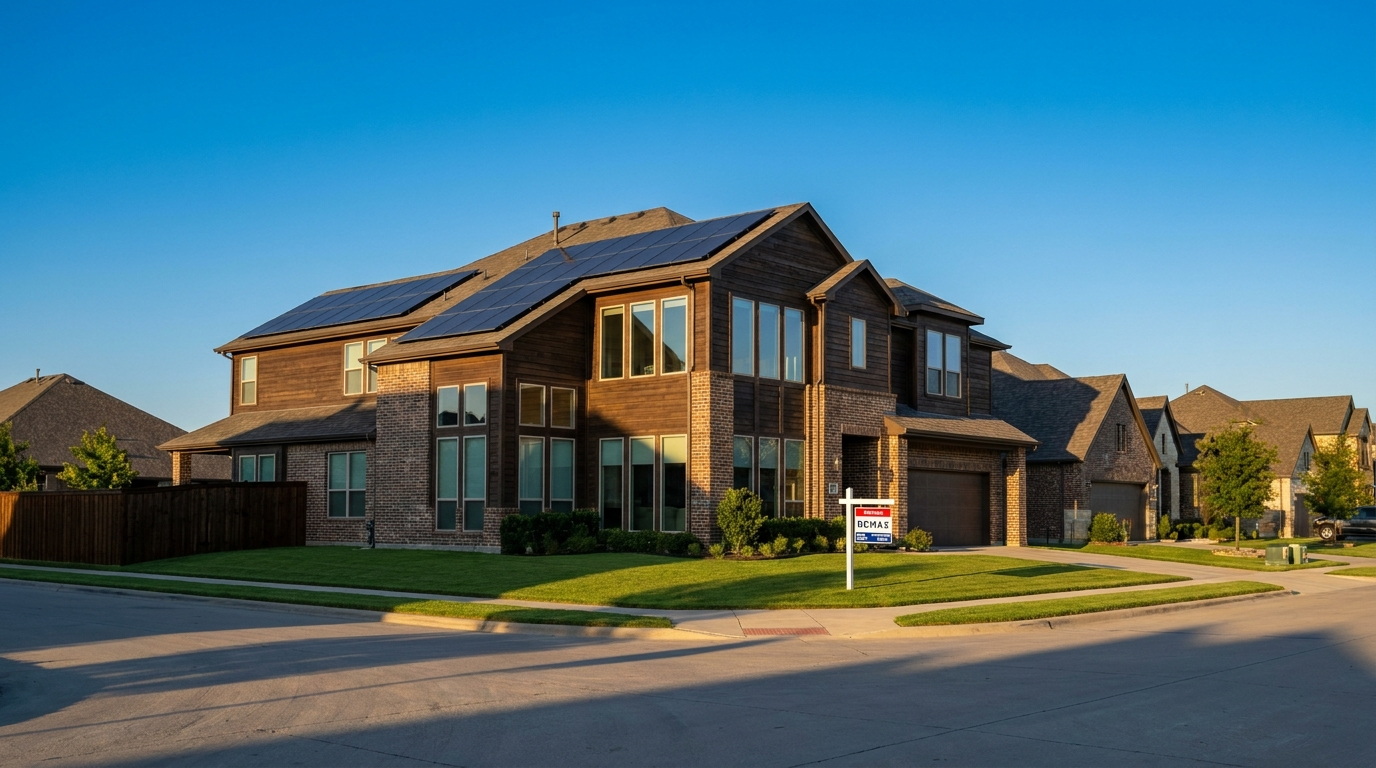
Selling a Home With Leased Solar Panels in Mansfield TX (2026): Asset or Deal-Killer?
Selling a Home With Leased Solar Panels in Mansfield TX (2026): Asset or Deal-Killer?
By Steven J. Thomas
You put solar on the roof to cut your electric bill, and it did. Now you want to sell your Mansfield home, and the same panels that saved you money are making buyers hesitate. The problem is almost never the panels themselves. It is the lease behind them. Here is how leased solar actually affects a home sale in southwest DFW in 2026, and how to keep it from costing you a buyer.
Direct Answer
Leased solar panels do not have to kill your Mansfield home sale, but they change the process. The buyer has to qualify to assume the lease, the monthly payment counts against their loan, and a UCC filing on the panels has to be cleared at closing. Handle the lease terms up front and you protect your selling options.
Owned vs. Leased: The Distinction That Decides Everything
Before anything else, figure out which kind of solar you have, because the two sell completely differently.
Owned panels, whether you paid cash or financed them and paid the loan off, transfer with the house like any other fixture. They can add appraised value, and there is nothing for the buyer to assume. That is the simple path.
Leased panels, or a power purchase agreement, mean a company like Sunrun, Tesla, or Sunnova still owns the equipment on your roof. You are paying monthly for the power they produce. When you sell, that contract does not just disappear. It has to go somewhere, and that is where most Mansfield sellers get surprised. If you are not sure which you have, pull your original paperwork or call the provider before you list. It sets the whole strategy.
The Three Ways a Solar Lease Transfers
When you sell a home with leased panels, the contract resolves one of three ways, and each one has a cost or a catch.
1. Buyer Assumes the Lease
The most common route. Your buyer takes over the remaining lease term and the monthly payment. Sounds clean, but the solar company runs a credit check on the buyer, and the buyer has to agree to the escalator, which is a clause that raises the payment a few percent every year. A payment that started at 130 dollars can be pushing 170 by year ten. Buyers read that fine print now.
2. You Buy Out the Lease
You pay the remaining balance, own the panels free and clear, and sell the home with owned solar. This removes the biggest objection, but a buyout on a mid-term lease in 2026 often runs 15,000 to 25,000 dollars depending on the system and years remaining. That comes out of your net proceeds, so it only makes sense if the panels help the sale more than the cash would.
3. You Prepay and Transfer at Closing
Some agreements let you prepay the remaining term at a discount so the buyer inherits free electricity with no monthly payment. When the numbers work, this is often the cleanest option for a Mansfield seller, because the panels become a pure benefit instead of a monthly bill the buyer has to qualify for.
Local Market Trends (Summer 2026)
- Mansfield median sale price sat near 515,000 dollars, with one tracker (Orchard) showing a median closer to 420,000 dollars and about 400 active listings, per Homes.com and Orchard, July 2026.
- Median days on market ranged from roughly 56 to 87 days depending on the source, per Orchard and Movoto, July 2026.
- The 30-year fixed averaged 6.49 percent the week of July 9, 2026, per Freddie Mac PMMS.
Here is what those numbers mean for a solar seller. This is a buyer's market with real days on market, so buyers have room to walk if something feels complicated. A leased-solar home with unclear terms is exactly the kind of listing a hesitant buyer skips. Clear it up before you list and you remove a reason to say no. Most agents will not tell you this, because they list the house and let the solar surprise show up during the option period, when it does the most damage.
Cost Breakdown for a Mansfield Solar Seller
Here is a realistic picture of what each path can cost, based on current conditions in 2026.
- Lease assumption: usually 0 dollars to you, but it narrows your buyer pool to those who qualify and accept the payment.
- Full buyout: roughly 15,000 to 25,000 dollars off your net, removes the objection entirely.
- Prepay and transfer: a discounted lump sum, often the best return per dollar when the contract allows it.
- UCC-1 release: minimal cost, but it must be filed and cleared or it stalls the closing.
The right move depends on your equity, your timeline, and your buyer. That is a math problem, and it is the kind I run before you list, not after an offer falls apart. Want the honest read on where your home stands before we price it? Start with a Home Selling Score, my in-person 30-minute walk-through that tells us exactly what we are working with.
The Two Traps That Sink Solar Closings
Two technical issues derail more leased-solar sales in DFW than anything else, and both are avoidable.
The first is the UCC-1 fixture filing. When a company leases you panels, they often file a lien on the equipment through the county. Title has to see it released or subordinated before your buyer can close clean. Start that request early, because solar companies are slow, and a two-week delay on paperwork can blow a closing date.
The second is buyer loan qualification. That solar payment gets added to the buyer's monthly debts, which affects how much home they can finance. A buyer stretching to hit your price may not have room for a 150-dollar solar payment on top of a 6.49 percent mortgage. Knowing this up front lets us position the home to the right buyer instead of the wrong one. It is the same reason sellers who skip this step end up on my list of seller pitfalls that derail a Dallas-area sale.
What You Have to Disclose
Texas requires you to disclose known facts about the property on the TREC Seller's Disclosure Notice, and leased solar belongs on it. You disclose that the panels are leased, who holds the contract, the monthly payment, and any transfer terms you know. Hiding a lease to make the listing look cleaner is how sellers end up in a dispute after closing. Disclose it, document it, and let the terms do the talking. Being straight about it also builds the trust that gets a nervous buyer to the table.
Financing the Move: What Comes Next
Most Mansfield sellers with solar are not just selling. They are moving up, moving over, or building new. That is where handling both sides matters. I am licensed as a broker and a loan officer, so I can look at your sale and your next purchase as one plan instead of two disconnected deals. We can time the solar buyout, your net proceeds, and your next mortgage together so you are not guessing. If a new build is the next step, get the numbers straight early with a pre-approval so we know what your next payment really looks like at today's rates.
Conclusion
Leased solar panels are not a deal-killer in Mansfield. Unmanaged leased solar is. Figure out whether you own or lease the system, pick the transfer path that fits your equity and timeline, clear the UCC filing early, and disclose everything. Do that and the panels go back to being what they were meant to be, a benefit. Skip it and you hand a buyer a reason to walk in a market where they already have options.
Ready to sell your Mansfield home the right way? Book a no-pressure planning call at stevenjthomas.com/book.
Want to see what is selling near you first? Download the Lone Star Living App for live Mansfield and southwest DFW listings.
You're Always Home with Steven J. Thomas.
Key Takeaways
- Confirm whether your panels are owned or leased before you list. It changes the entire strategy.
- A leased system transfers three ways: buyer assumption, full buyout, or prepay-and-transfer.
- The solar payment counts against your buyer's loan qualification at a 6.49 percent rate environment.
- Clear the UCC-1 filing early. Solar companies move slowly and can stall your closing.
- Disclose the lease on the TREC Seller's Disclosure Notice. Always.
FAQ: Selling a Home With Leased Solar Panels in Mansfield
Can I sell my Mansfield home while I still have a solar lease?
Yes. You resolve the lease one of three ways at closing: the buyer assumes it, you buy it out and own the panels, or you prepay and transfer the remaining term. The right choice depends on your equity and timeline.
Does leased solar hurt my home's value or net proceeds?
Leased panels usually do not add appraised value the way owned panels can, and a buyout comes out of your net. The trade-off is whether removing the buyer objection is worth more than the cash. That is a math call worth running before you list.
What happens if my buyer can't qualify to assume the lease?
Then you pivot to a buyout or prepay before closing, or you market to a buyer with more loan room. Knowing this risk early keeps it from surfacing as a surprise during the option period.
Are solar panels common on Mansfield and southwest DFW homes?
Yes, especially on newer builds across Mansfield, Midlothian, and the broader corridor. That is exactly why buyers and their lenders know to ask about the lease now.
How long does it take to clear the solar lien for closing?
The UCC release itself is quick, but solar companies can take one to three weeks to process the request. Start it as soon as you list so it does not delay your closing date.
Where can I see homes for sale near me right now?
Download the Lone Star Living App for live listings across Mansfield and southwest DFW, updated straight from the MLS.
Equal Housing Opportunity. Steven J. Thomas, Refind Realty DFW, is a licensed Texas real estate broker and a licensed loan officer with Envision Home Lenders, NMLS #689220. Market data reflects current conditions as of July 2026 and is not a guarantee of price, timeline, or outcome.

Stay Informed With My Downloadable
Buyer and Seller guides

6 Smart Ways to Build Home Equity

7 Insider Secrets To Selling Your Home w/o a Lot of Time or Money

DFW Home Seller Negotiation Secrets

Home Appraisals Guide

Avoiding Pitfalls That Can Derail Your Home's Sale

Ultimate Guide To Buying a Home

A First Time Homebuyers Guide In DFW

Are You Ready To Buy?

25 Insider Secrets To Buying A Home

How to Improve Your Credit
Download All My Guides For Free
Steven J. Thomas
Steven J. Thomas has been in the financial services industry for the past 19 years and started my career as a Financial Planner for American Express Financial Advisors. I entered into banking with JP Morgan Chase as personal banker in 2003 and was promoted several times up to Small Business Specialist. I earned multiple Million Dollar Club awards and was ranked in the top 5 Small Business Specialist before I branched out in 2005 to start my own Financial Management Company. I ran a successful company before family circumstances lead me to Wachovia Bank in 2008 where I worked as a Senior Financial Specialist. As a Sr. Financial Specialist; I was responsible for the P & L and revenue growth of my banking center. The elimination of my role thru a bank merger lead me to BBVA Compass. I have held various leadership roles at BBVA Compass including Personal Relationship Manager, Branch Retail Executive, Workplace Solutions VP, and his current role as a Retail Manager. As the Regional Workplace Solutions VP, I was responsible for the strategic, tactical, and execution of Partnership Banking relationships, promotion and activity with corporate and non-profit companies in my footprint. I was responsible for the acquisition production for three districts, which includes 51 banking centers and over 300 employees. In May of 2014, I joined the team at Refind Realty and became one of the managing partners in mid-2015.

Wondering What Your DFW Home Could Be Worth in 2026?
Get a Professional Home Valuation From A Local Market Expert
Unlock insights into potential selling prices.
Get a personalized analysis sent directly to your inbox.
Stay ahead with updates on property value fluctuations.
Benchmark your property against neighborhood listings.
Get a FREE Home Valuation And Potential Net Sheet:


I used this realtor and it was a great experience. He was patient and very helpful with our journey. He also helped us find a great lender with little hassle on the process, also got us approved for well above the market of our original home so we were able to get more house with a lower mortgage rate. So to anyone who is interested in buying a home take my advice give Steven a call. It’s worth it 😁
Bryant Loring


Steve was absolutely amazing! Everything was easy! Very professional in all aspects. Punctual, responsive, and diligent. He goes above and beyond to ensure you get to see as many homes as you’d like no matter the location. Not only was he knowledgeable about home buying, he also has a resourceful network for new home owner needs. I recommend Refind Realty to everyone!
Nicholas Bishop
I definitely recommend Steven to assist with your home buying needs. As a first time home buyer the process can be overwhelming, but as my realtor he was knowledgeable & patient while addressing my concerns and assisting me with my new home purchase. Thanks again Steven!! :-)
Gayle Mason
Ask Us Anything
Frequently Asked Questions
Why do you need a Realtor?
When buying or selling a home, there are so many options…which can also present a lot of obstacles. Laws change, forms change, and practices change all the time in the real estate industry. Because it’s our job to stay on top of those things, hiring a realtor reduces risk, and can also save you a lot of money in the long run.
When you work with me as your Realtor, you’re getting an expert who knows the area; knows how to skillfully guide your experience as a seller or buyer; can easily spot the difference between a good deal and a great deal. My job is to translate your dream into a real estate reality, and I work hard to earn and keep my business. This also means earning your trust: When you work with me, you’ll be working with a realtor who looks out for your best interests and is invested in your goals.
Which loan should you choose?
There are two different types of loans conventional loans and government-backed loans. The main difference is who insures these loans:
1 - Government-backed loans (FHA, VA and USDA):
(a) - Are, unsurprisingly, backed by the government.
(b) - Include FHA loans, VA loans, and USDA loans.
(c) - Make up less than 40 percent of the home loans generated in the U.S. each year.
2 - Conventional loans
(a) - Are not backed by the government.
(b) - Include conforming and non-conforming loans (such as jumbo loans).
(c) - Make up more than 60 percent of the loans generated in the U.S. each year.
What is the difference between FHA, VA and USDA loans?
1 - FHA LOANS:
FHA loans, which are insured by the Federal Housing Administration, are typically designed to meet the needs of first-time homebuyers with low or moderate incomes. FHA loans can be approved with a down payment of as little as 3.5 percent and a credit score as low as 580.
FHA loans are often called “helper loans,” because they give a leg up to potential borrowers who may not be able to secure one otherwise. For this reason, FHA loans have maximum lending limits, which are determined based on housing values for the county where the for-sale home is located.
Because the agency is taking on more risk by insuring FHA loans, the borrower is expected to pay mortgage insurance both at the time of closing and on a monthly basis, and the property must be owner-occupied.
2 - VA LOANS:
VA loans are backed by the Department of Veterans Affairs and they are guaranteed to qualified veterans and active-duty personnel and their spouses. VA loans can be approved with 100 percent financing, meaning VA borrowers are not required to make a down payment.
Unlike FHA loans, borrowers do not have to pay mortgage insurance on VA loans.
3 - USDA LOANS:
You may also hear about USDA loans, which are backed by the United States Department of Agriculture mortgage program. USDA loans are intended to support homeowners who purchase homes in rural and some suburban areas. USDA loans do not require a down payment and may offer lower interest rates; borrowers may have to pay a small mortgage insurance premium in order to offset the lender’s risk.
What’s a conventional loan? Understanding what it means to be conforming and non-conforming
Buyers who have a more established credit history and a larger down payment may prefer to apply for a conventional loan. These loans may offer a lower interest rate and only require the home buyer to purchase monthly mortgage insurance while the loan-to-value ratio is above a certain percentage, so a conventional loan borrower can typically save money in the long run.
Conventional loans are divided into two types: Conforming loans and non-conforming loans.
1 - CONFORMING LOANS:
Conforming loans are those that meet (or conform to) predetermined standards set by Fannie Mae and Freddie Mac — two government-sponsored institutions that buy and sell mortgages on the secondary market. By selling the loans to "Fannie and Freddie," lenders can free up their capital and return to issue more mortgages than if they had to personally back every loan that they approve.
The main standard for conforming loans is that the amount borrowed must be under a certain amount; in Alaska, a single-family home loan must be under $647,200 in order to be considered conforming.
Properties with more than one unit have higher limits.
2 - NON-CONFORMING (JUMBO) LOANS:
But what happens if a borrower wants to borrow more than the Freddie- and Fannie-approved loan amount? In this case, they would have to apply for a “jumbo loan,” which is the most common type of non-conforming loan.
Because the lender cannot resell the jumbo loan (or any non-conforming loan) to Freddie Mac or Fannie Mae, jumbo loans are considered to be riskier than a conforming loan. To protect against this risk, the bank will typically require a higher down payment; the interest rate on a jumbo loan may also be higher than if the same borrower applied for a conforming loan.
What kind of rate should you choose?
Rate types: Fixed-rate vs. adjustable-rate mortgages.
In addition to the loan type you choose, you’ll also have to determine if you want a fixed-rate mortgage or an adjustable-rate mortgage (ARM). A fixed-rate mortgage has an interest rate that does not change for the life of the loan, so it provides predictable monthly payments of principal and interest.
An adjustable-rate mortgage typically offers an initial introductory period with a low-interest rate. Once this period is over, the interest rate adjusts periodically, based on the market index. The initial interest rate on an ARM can sometimes be locked in for different periods, such as one, three, five, seven, or 10 years. Once the introductory period is over, the interest rate typically readjusts annually.
Locate Us
Site: www.stevenjthomas.com
Call :(713) 505-2280
Email: [email protected]
Office 128 S. Cockrell Hill Rd, DeSoto TX 75115
Owned and Operated by Thomas & Thomas Financial Group, LLC
© Copyright 2022 | All Rights Reserved
Facebook
Instagram
X
LinkedIn
Youtube
TikTok