
Refind Realty Blog
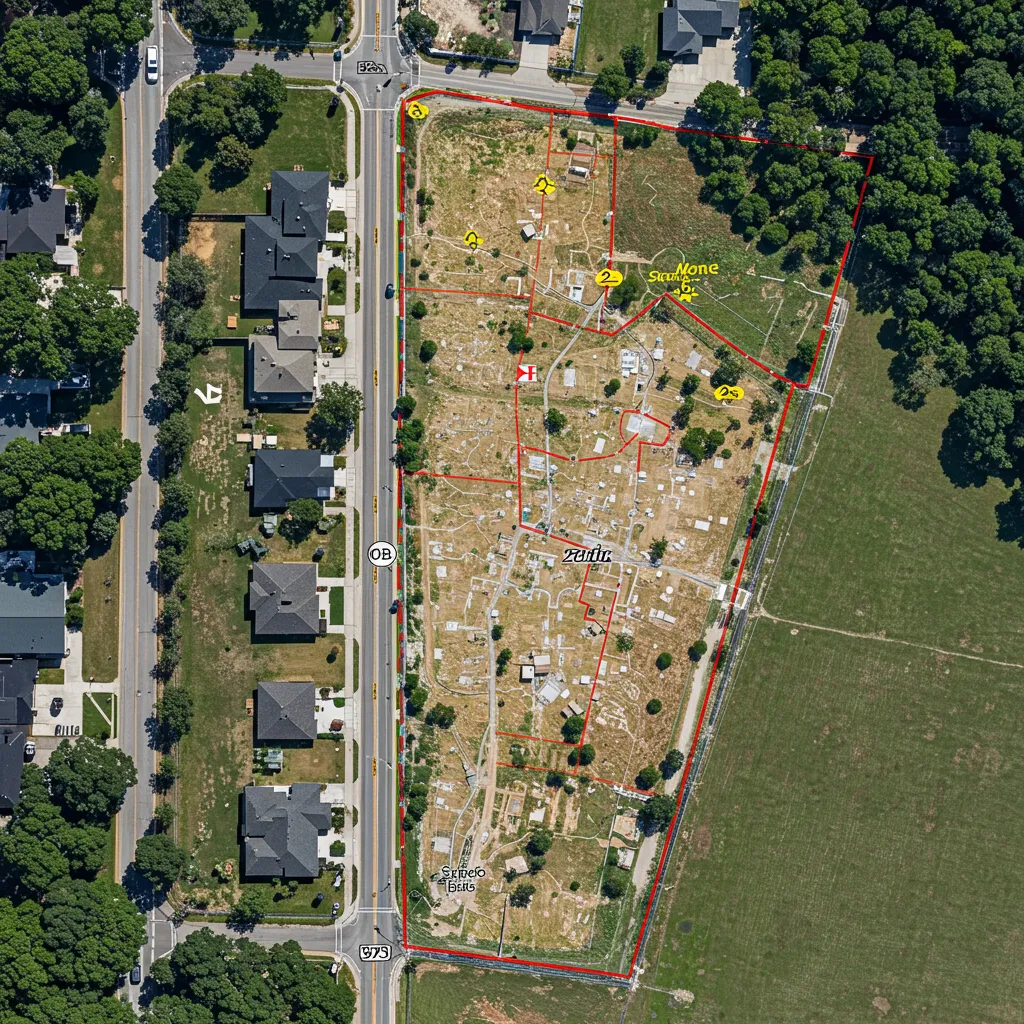
How to Read a Site Plan for Your New DFW Home | Refind Realty DFW
How to Read a "Site Plan" to See What’s Actually Being Built Behind Your New Home

Direct Answer
Reading a site plan requires identifying four key elements: the Scale and North Arrow for orientation, Property Lines for legal boundaries, Easements for utility access, and Setbacks to determine how close a neighbor can build to your home. In the 2026 DFW market, pay special attention to contour lines and zoning classifications (like SF-1 or PUD), as these reveal how water will drain across your clay soil and whether that empty field behind you is slated for a park or a shopping center.
Book your Home Goals consultation to have a pro review your site plan before you sign: https<span></span>://stevenjthomas.com/home-goals
1. The Anatomy of a Site Plan
Before looking at the drawings, locate the Title Block and the Legend. The Legend is your "decoder ring" for the symbols and line types used throughout the document.
Scale: Usually shown as a ratio (e.g., 1:300), this allows you to measure exactly how far the neighboring house is from your bedroom window.
North Arrow: Critical for 2026 DFW energy efficiency; this tells you if your patio will be a "Texas furnace" in the afternoon or a shaded retreat.
2. Property Lines, Setbacks, and Easements
Property Lines: Shown as solid, bold perimeters that define the legal extent of your lot.
Setbacks: The mandatory "no-build zone" between your house and the property line. If your neighbor has a 5-foot side setback, they can build a wall exactly 5 feet from your line.
Easements: Often marked with dashed lines, these are areas where the city or utility companies have the right to enter. Never build permanent structures like pools or sheds over an easement, as they can be legally removed by the city if access is needed.
3. Drainage and "The Clay Factor"
In North Texas, drainage is the #1 cause of foundation issues.
Contour Lines: These thin lines show the elevation of the land.
Grading Arrows: Look for arrows pointing away from the home. You want to ensure the builder has designed the site so water doesn't pool in the "swales" between your house and the one behind you.
4. DFW Zoning: What is Actually Being Built?
If there is an empty lot behind your home, check the site plan for a Zoning Code.
R-1 / SF-1: Strictly single-family homes.
PUD (Planned Unit Development): A mix of residential, retail, or green space. This is very common in DFW master-planned communities like Harvest or Union Park.
MF (Multi-Family): This indicates that townhomes or apartments are likely in the future.
Conclusion
A site plan is more than a drawing; it is a legal roadmap for your future quality of life. By understanding setbacks, drainage, and zoning, you can buy with the confidence that you won't be surprised by a two-story wall or a drainage pond appearing 10 feet from your back door in 2026.
Key Takeaways
Check the Legend: It decodes all symbols for utilities and boundaries.
Verify Setbacks: Know exactly how much "breathing room" you have from neighbors.
Watch the Easements: Don't plan a pool where the city has a sewer line.
Trust the Grading: Ensure water flows away from your foundation.

BLOG NAVIGATION
Contact Me By Filling Out
The Form Below
We Can Help You Reach Your Real Estate Goals!
Get In Touch With Me
Office 1229 E. Pleasant Run Ste 224, DeSoto TX 75115
Call :(713) 505-2280
Email: [email protected]
Site: www.stevenjthomas.com
Facebook
Instagram
X
LinkedIn
Youtube
TikTok