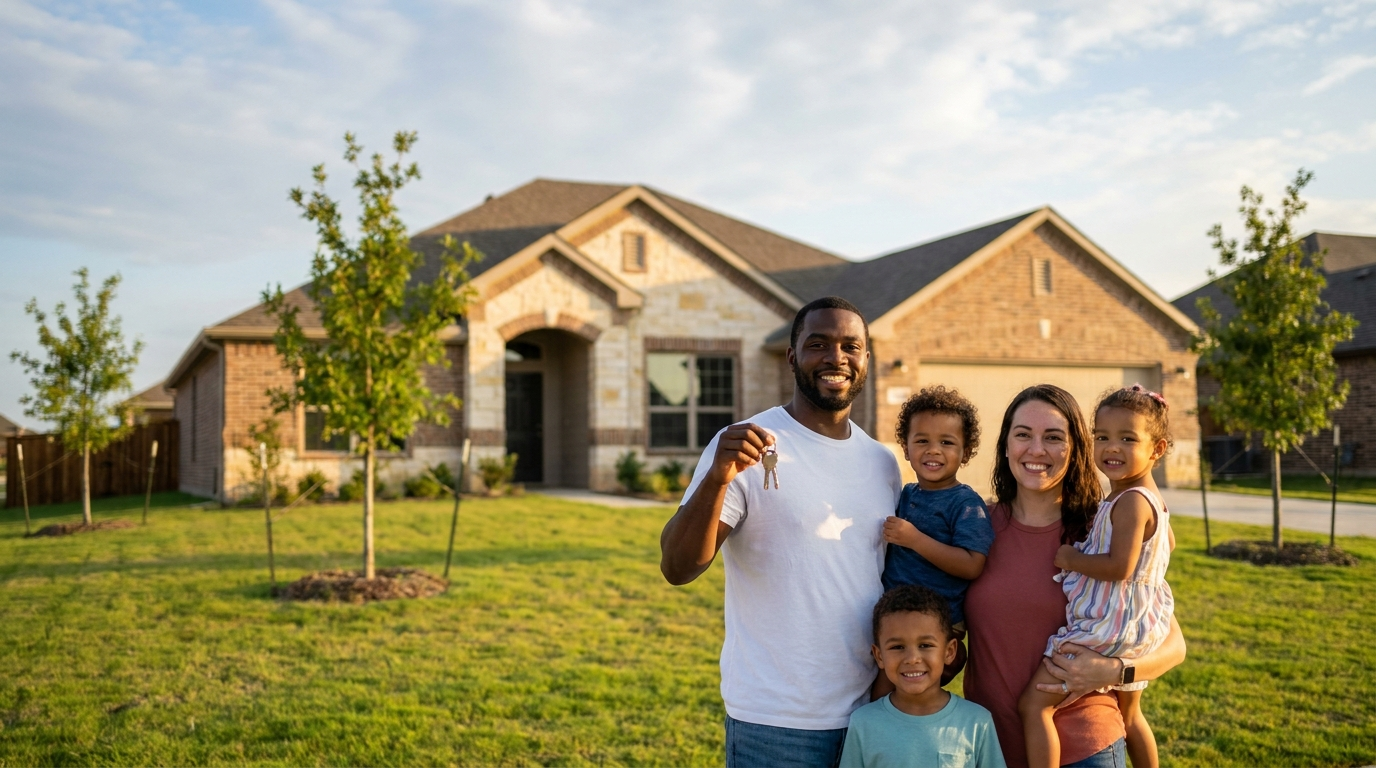
USDA Loans in Ellis County, TX: Zero-Down Homes in 2026
USDA loans in Ellis County, TX: zero-down homes in 2026
By Steven J. Thomas
If you have been sitting on the sidelines in DeSoto or the southern suburbs because you cannot pull together a down payment, look one county south. Across much of Ellis County, TX, there is a loan most buyers never ask about that finances the full purchase price with nothing down. It is not a gimmick and it is not only for farms. It is the USDA Section 502 Guaranteed loan, and in 2026 it is one of the few true zero-down mortgages left for buyers in Red Oak, Ovilla, Palmer, and the towns around them.
Direct answer: can you buy with no money down in Ellis County?
Yes, in eligible areas. The USDA Section 502 Guaranteed loan finances 100 percent of the appraised value with no down payment, as long as the property sits inside a USDA-eligible rural area and your household income is under the county limit. About 92 percent of Ellis County land is eligible, which covers most of Red Oak, Ovilla, Palmer, Pecan Hill, and the smaller towns. The fastest way to know your options is to get pre-approved.
How a USDA loan actually works
A USDA loan is a mortgage backed by the U.S. Department of Agriculture's Rural Development program. Most buyers use the Guaranteed version, where a regular lender writes the loan and the USDA insures it. That backing is what lets the lender approve zero down.
Two features pull DFW buyers toward it. First, it finances 100 percent of the appraised value, so you bring no down payment. Second, the fees are lighter than you might expect. There is a one-time guarantee fee of 1 percent that can be rolled into the loan, plus an annual fee of 0.35 percent built into the monthly payment. Compare that to FHA, where the mortgage insurance runs higher and sticks around longer. For a family with steady income but thin savings, that gap matters every month.
There is also a USDA Direct loan for lower-income households, written by the USDA itself rather than a bank. Effective July 1, 2026, the USDA Direct rate is 5.250 percent for low and very-low-income borrowers, per USDA Rural Development. Most buyers land on the Guaranteed loan at market rates set by their lender, but if your income is on the lower end, the Direct program is worth a real look.
The two tests: location and income
A USDA loan turns on two separate checks, and both have to pass before a lender will move forward.
The first is location. The property has to sit inside a USDA-eligible area. USDA generally defines that as a place with a population under 35,000 that is rural in character. That is why the built-up cores of the fastest-growing Ellis County towns can fall outside the map while the areas around them qualify. The eligibility line is drawn down to the street, so two homes a mile apart can land on opposite sides of it.
The second is income. Your household income has to stay under the USDA limit for the county. In the Dallas–Fort Worth area, the moderate-income limit runs around $134,900 for a one-to-four-person household and higher for larger families, based on the USDA income table in effect for 2026. That is adjusted household income after USDA's allowed deductions, not your gross pay, so families who assume they earn too much often still qualify. Confirm the exact figure for your household size on the USDA Rural Development site before you rule yourself out.
Which Ellis County areas qualify
Most of Ellis County is on the eligible map. USDA data shows only about 8 percent of the county is ineligible, which means the majority of homes outside the densest city centers can work. Communities that show eligible areas include Red Oak, Ovilla, Palmer, Pecan Hill, Oak Leaf, Maypearl, and Milford, with parts of Waxahachie and Midlothian on the map as well.
- Red Oak: fast-growing, close to the I-35E corridor and an easy run north into DeSoto and Dallas.
- Ovilla and Oak Leaf: larger lots and a quieter feel right on the Dallas County line.
- Palmer and Pecan Hill: smaller-town pricing with newer inventory going up.
- Waxahachie and Midlothian: eligibility depends on the exact address, since the city cores have grown, so always check the street.
Because the map does not follow city limits, the address is what decides it, not the town name. I can check any specific home against the current USDA map before you fall for it. Start by browsing what is active on the Lone Star Living App, then we confirm eligibility house by house.
Local market trends (summer 2026)
- DFW ran as a buyer's market through mid-2026, with more inventory and longer days on market than in 2021 through 2023, based on regional Redfin and Zillow data.
- The 30-year fixed mortgage averaged in the low-to-mid 6 percent range through spring 2026, per the Freddie Mac Primary Mortgage Market Survey.
- Dallas-area lenders were quoting conventional 30-year purchase rates near 6 percent in July 2026, according to Texas United Mortgage, with USDA and VA options often lower.
- Builders across the southern corridor kept offering closing-cost credits and rate buydowns to move standing inventory, per J.P. Morgan's 2026 housing outlook.
Put those together and Ellis County is a rare spot in 2026: negotiating room from a soft market, plus a loan that removes the down payment wall entirely. You can pair a zero-down USDA loan with seller or builder closing-cost help and walk in with very little cash out of pocket.
What buying with USDA really costs upfront
Zero down does not mean zero cash, so plan for the real line items.
- Earnest money: a deposit that holds the contract and applies to your costs at closing.
- Appraisal and inspection: paid during the option period so you know the home's value and condition.
- Closing costs: title, lender, and prepaid taxes and insurance, which sellers or builders can often cover in a 2026 buyer's market.
- The 1 percent guarantee fee: financeable, so it usually rolls into the loan rather than coming out of pocket.
The home also has to be your primary residence, not a rental or investment, and it must be safe and structurally sound at the appraisal. That is standard for USDA, and it protects you from buying a money pit with nothing down.
Where the plan comes in
Most agents will hand you off to a random lender and hope it works out. I handle both sides. I am a licensed broker and a loan officer, so I can tell you in one conversation whether a specific Red Oak or Ovilla home is USDA-eligible, whether your income fits the limit, and what your real monthly payment looks like once taxes and insurance stack on. That is the full picture, not just the house. When you are ready to see numbers on a real address, get pre-approved and we build it from there. If you also want to compare newer inventory, my neighborhood reports break down the southern DFW submarkets.
Conclusion
A USDA loan is one of the last true zero-down paths to owning a home, and Ellis County is one of the closest places to DeSoto where it still works on most addresses. The two tests are simple: the home has to sit in an eligible area, and your household income has to fit the county limit. Clear both and you can buy in Red Oak, Ovilla, or Palmer without draining your savings for a down payment. In a 2026 buyer's market with builders offering help, that is a real opening.
See your numbers and get pre-approved in minutes.
Browse eligible-area listings on the Lone Star Living App.
Have questions about a specific home? Book an appointment today.
You're Always Home with Steven J. Thomas.
Key takeaways
- The USDA Section 502 Guaranteed loan finances 100 percent of the home with no down payment in eligible areas.
- About 92 percent of Ellis County land is USDA-eligible, covering most of Red Oak, Ovilla, Palmer, and nearby towns.
- Eligibility is drawn by address, not city name, so the built-up cores of Waxahachie and Midlothian need a street-level check.
- The Dallas-area moderate-income limit is around $134,900 for a one-to-four-person household in 2026, based on adjusted income; confirm your household size.
- USDA fees are lighter than FHA: a 1 percent financeable guarantee fee and a 0.35 percent annual fee.
FAQ: USDA loans in Ellis County, TX
How do I find out if a home is USDA-eligible?
Check the exact address against the USDA eligibility map, since the line is drawn by street rather than city. I can confirm any Ellis County home before you write an offer.
How much money do I actually need to buy with USDA?
No down payment, but plan for earnest money, an appraisal and inspection, and closing costs. In a 2026 buyer's market, sellers or builders can often cover much of the closing costs.
What happens if my income is over the USDA limit?
The limit is based on adjusted household income after USDA deductions, so you may still qualify. If you are truly over, an FHA or conventional loan with a small down payment is the next option to compare.
Which Ellis County towns work best for USDA in 2026?
Red Oak, Ovilla, Palmer, Pecan Hill, Oak Leaf, and the smaller towns show large eligible areas. Parts of Waxahachie and Midlothian qualify depending on the address.
How long does a USDA loan take to close?
Generally similar to other loans, often around 30 to 45 days, with the added step of USDA reviewing the file. Getting pre-approved early keeps it on schedule.
Where can I see USDA-eligible listings in Ellis County?
Browse active listings on the Lone Star Living App, then confirm each home's eligibility before you tour it.
Steven J. Thomas is a licensed Texas real estate broker with Refind Realty DFW and a loan officer with Envision Home Lenders (NMLS #689220), based in DeSoto, TX. Refind Realty DFW is an equal housing opportunity brokerage. Loan approval, rates, and USDA eligibility depend on your specific situation and current program rules and are not guaranteed. Figures reflect conditions as of July 2026. Call or text 972-846-9170.


