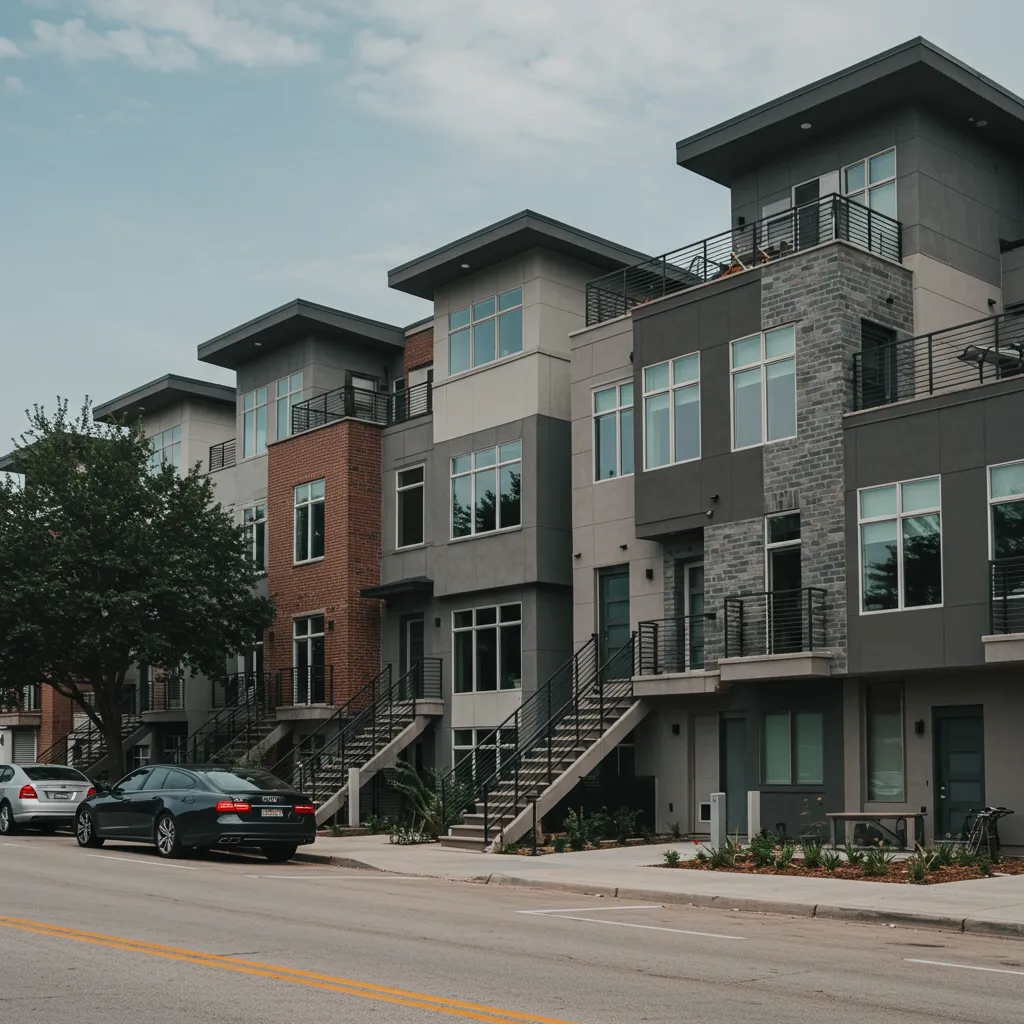
Why New Townhomes are Dominating DFW Urban Pockets in 2026
Why "Townhome New Construction" is Taking Over DFW’s Urban Pockets

Direct Answer
Townhome construction is "taking over" DFW's urban pockets in 2026 because it solves the metroplex's twin crises of affordability and land scarcity. With urban land costs soaring, builders can no longer deliver detached single-family homes at entry-level prices in core areas. Townhomes represent the "Missing Middle"—housing that is denser than a house but more private than an apartment. This surge is further accelerated by Dallas's 2025-2026 Zoning Reforms, which removed rigid parking minimums and streamlined permitting for small-scale multifamily builds, allowing developers to maximize smaller urban lots that were previously deemed undevelopable.
Book your Home Goals consultation to tour the latest urban townhome developments in Dallas and Fort Worth: https://stevenjthomas.com/home-goals
1. The "Missing Middle" Solution
In 2026, the gap between luxury high-rises and suburban sprawl has been filled by the townhome.
Density without Displacement: Urban pockets like West Dallas (75212) and The Cedars (75215) are seeing "gentle-fication"—adding density through townhomes that respect the neighborhood scale while providing modern housing.
Cost Efficiency: Because townhomes share walls and infrastructure, construction costs per unit are lower than detached homes. In 2026, these savings are vital as builders face higher insurance and labor costs.
Higher ROI for Builders: On a lot that might fit one traditional house, a builder can now "by-right" construct 4 to 8 high-end townhomes, making urban development financially viable again.
2. 2026 Zoning Reform: The Green Light
The massive uptick in townhome permits is a direct result of local policy shifts aimed at increasing housing supply.
Parking Mandate Removal: In May 2025, Dallas removed many "one-size-fits-all" parking requirements. Developers no longer have to waste 25% of an urban lot on asphalt, freeing that space for more living units or green space.
"By-Right" Permitting: The Dallas Zoning Reform allows for more housing types in areas previously restricted to single-family only. This bypasses the months of public hearings that used to stall urban projects.
Building Code Modernization: Revised codes now apply residential-style standards to buildings with up to 8 units and 3 stories, significantly reducing the regulatory burden and cost (like mandatory expensive sprinkler systems for small builds) that used to make townhomes too expensive to build.
3. The Lifestyle Shift: "Lock-and-Go" Culture
The 2026 buyer—spanning from Gen Z professionals to downsizing Boomers—is trading "the yard" for "the street."
Zero Maintenance: With the HOA handling landscaping and exterior repairs, townhomes offer a "Lock-and-Go" lifestyle perfect for the frequent travelers and remote workers who have flocked to DFW.
Walkability over Acreage: Urban pockets are centered around walkability. Buyers are prioritizing proximity to the DART Silver Line, the Katy Trail, or the revitalization of Bishop Arts over having a private half-acre.
Rooftop Living: To compensate for smaller footprints, 2026 DFW townhomes frequently feature rooftop terraces with Downtown views, effectively moving the "backyard" to the sky.
4. Investment Resilience
For investors, townhomes in urban pockets represent a high-yield play in a fluctuating market.
Rental Demand: There is a persistent shortage of high-quality "turnkey" rentals in urban Dallas. Townhomes command a premium over apartments due to private garages and "own front door" appeal.
Appreciation Potential: As DFW’s urban core continues to densify, property values in transit-oriented pockets (like those along the Silver Line in Richardson and Addison) are appreciating faster than distant suburban fringes.
Conclusion
Townhomes are the architectural answer to the 2026 North Texas economy. They allow for affordable homeownership in the most desirable parts of the city while giving builders a path to profitability despite rising land prices. As DFW moves toward a more dense, walkable future, these urban townhomes aren't just a trend—they are the new standard for city living.
Key Takeaways
The "Missing Middle": Townhomes provide a necessary bridge between apartments and single-family houses.
Policy Driven: 2025-2026 zoning reforms (parking and permitting) have made townhome builds significantly easier.
Lock-and-Go: Low-maintenance living is the #1 lifestyle driver for urban buyers in 2026.
Location Value: Urban townhomes prioritize proximity to transit and entertainment over traditional yard space.
Resale Strength: High demand for urban density keeps townhome appreciation strong even during market corrections.


