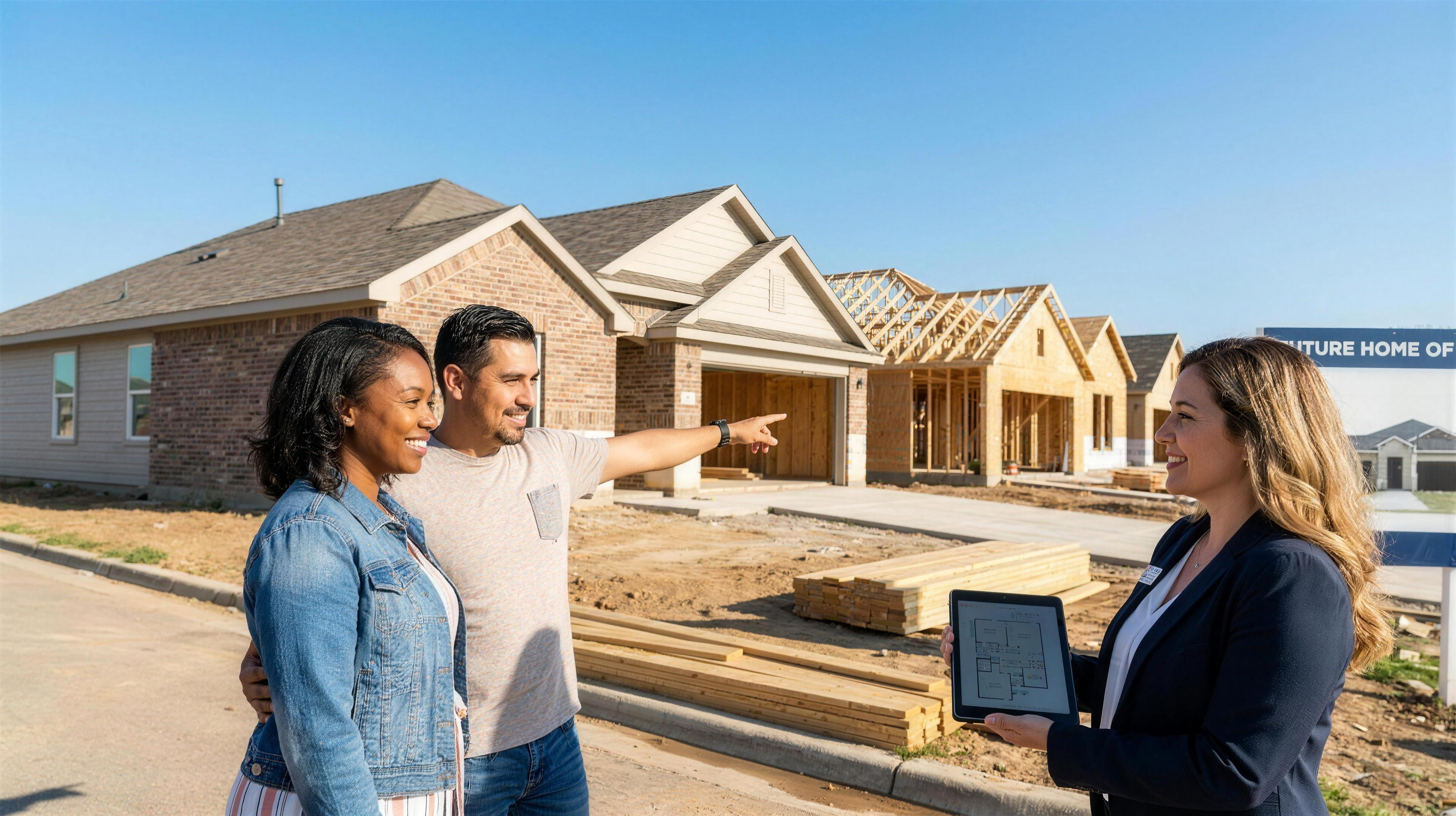
2-1 Buydown vs. Permanent Rate Buydown: Which Builder Incentive Saves DFW New-Construction Buyers More in 2026?
2-1 buydown vs. permanent rate buydown: which builder incentive saves DFW new-construction buyers more in 2026?
By Steven J. Thomas, Broker at Refind Realty DFW and Loan Officer at Envision Home Lenders (NMLS #689220) | Updated July 17, 2026 | Call or text 972-846-9170
Builders across DFW are handing out real money right now. Drive the build corridor southwest of Dallas, through Midlothian, Waxahachie, Red Oak, and Mansfield, and almost every sales office is advertising a rate incentive. Two of them keep coming up: the 2-1 buydown and the permanent buydown. They sound similar. They are not. Pick the wrong one and you leave thousands on the table.
Direct answer: which buydown saves you more?
A 2-1 buydown and a permanent buydown both cut your rate on a DFW new-construction loan, but they win in different cases. On a $450,000 loan, a 2-1 buydown saves about $10,267 in the first two years, then your payment jumps to the full rate. A permanent buydown saves about $307 every month for the life of the loan. Keep the loan past year three and the permanent buydown pulls ahead. Get the New Construction Buyer Guide to run your own numbers.
What a builder rate incentive actually is
A rate buydown means the builder pays money up front to lower your mortgage rate. The builder is not being generous for fun. Lowering your rate lets them sell the home closer to full price without cutting the sticker. It protects their comps in the neighborhood. So the incentive is real, but it is also a sales tool. Your job is to turn it into the most money for your family, not theirs.
In DFW today, a typical builder incentive package runs about $8,000 to $25,000, and some cash offers reach $20,000 to $30,000, based on current conditions. That money can go toward closing costs, a rate buydown, or design-center upgrades. When it goes toward the rate, the builder usually offers you one of two structures.
The 2-1 buydown: big relief now, then it ends
A 2-1 buydown is temporary. Your rate drops about 2% in year one and about 1% in year two, then it snaps back to the full note rate for the rest of the loan. Say the full 30-year fixed rate is 6.55% (Freddie Mac PMMS, week of July 16, 2026, up from 6.49% the prior week). With a 2-1 buydown, you pay as if your rate were 4.55% the first year and 5.55% the second year. In year three, you are back to 6.55% and staying there.
The appeal is simple. Your payment is lowest right when you are buying window blinds, a fridge, and a lawn mower. The catch is just as simple. It ends. If nothing changes with rates and you do not refinance, your payment climbs two years in.
The permanent buydown: smaller cut, but forever
A permanent buydown uses the builder's money to buy the rate down for the life of the loan by paying discount points at closing. Instead of a rate that resets, you get one lower rate that never changes. In DFW right now, builders often advertise permanent buydowns in the 5.49% to 6% range, based on current conditions. The monthly savings are smaller than a 2-1's first-year drop, but you keep them every single month for 30 years, or for as long as you hold the loan.
The real dollar math on a $500,000 DFW home
Let me run actual numbers, not the sales-office version. Take a realistic new-construction price in the SW DFW corridor: a $500,000 home with 10% down, so a $450,000 loan. I am comparing principal and interest only, so the buydown effect is clear.
- Full note rate 6.55%: about $2,859 per month
- 2-1 buydown, year one at 4.55%: about $2,293 per month (saves about $566/mo)
- 2-1 buydown, year two at 5.55%: about $2,569 per month (saves about $290/mo)
- Permanent buydown at 5.49%: about $2,552 per month (saves about $307/mo, every month)
Here is the same thing side by side, so you can see where each one wins.
| What you save | 2-1 buydown (temporary) | Permanent buydown (5.49%) |
|---|---|---|
| Year 1 savings | about $6,788 | about $3,683 |
| Year 2 savings | about $3,479 | about $3,683 |
| First 2 years total | about $10,267 | about $7,365 |
| Year 3 and beyond | $0 (rate is back to 6.55%) | about $307/mo, keeps going |
| 5-year total | about $10,267 | about $18,413 |
| 7-year total | about $10,267 | about $25,779 |
Read the table and the story is clear. The 2-1 buydown puts more cash in your pocket fast: about $10,267 in the first two years, and most of that lands in year one. The permanent buydown gives you less at first but never stops. Somewhere around month 34, just under three years in, the permanent buydown's running total passes the 2-1's total, and then it keeps pulling away.
The break-even: how long will you keep the loan?
That crossover point is the whole decision. Ask yourself one question: how long will I keep this exact loan before I sell or refinance?
If you think rates will fall and you plan to refinance inside two years, the 2-1 buydown can be the smarter play. You pocket the big early savings, then refinance into a lower permanent rate before the 2-1 expires, so the reset never hits you. If you plan to stay put with this loan for four, five, seven years or more, and you are not counting on a refinance, the permanent buydown wins on total dollars and gives you a steady payment you can plan around.
The trap is betting on a refinance that may not come. Nobody can promise where rates go. If you take the 2-1 assuming you will refinance, and rates do not cooperate, you are stuck with the full payment in year three. That is why I run this math for every client instead of guessing. See if you pre-qualify and we will map your break-even to your actual plans.
Why the builder's on-site rep is not your agent
Here is the part most buyers miss. The friendly person at the model home in Midlothian or Mansfield works for the builder. Their job is to sell that builder's homes at the best terms for the builder. They are not allowed to represent you. They cannot tell you when the incentive is worth less than a price cut, or when a competing community two exits down is offering more.
You need your own agent, and here is the kicker: on most new-construction deals, the builder already budgets to pay a buyer's agent. Using me does not cost you more. Walking in alone does not save you a dime. It just leaves you without anyone on your side of the table. Most agents will not tell you that, because plenty of them never learn the loan side well enough to check the buydown math.
I am dual-licensed, a broker and a loan officer. So when a sales office quotes you a 2-1 buydown at a certain payment, I can pull the full amortization and show you what year three really looks like, what the permanent option costs in points, and which one fits how long you plan to stay. That is the actual buydown math, not the sales-office version.
DFW builder and market conditions right now
The market is on your side more than it was two years ago. Here is where things stand across DFW, based on current conditions:
- Median single-family price: about $415,000, up about 2.2% year over year (Source: DFW area MLS data, July 2026)
- 30-year fixed mortgage rate: 6.55% (Source: Freddie Mac PMMS, week of July 16, 2026)
- Inventory: more homes on the market than a year ago, with builders competing harder for each buyer
- Typical builder incentive package: about $8,000 to $25,000, with some cash offers reaching $20,000 to $30,000
More inventory and slower foot traffic mean builders in Waxahachie, Red Oak, and the rest of the corridor are stacking incentives to keep sales moving. That works in your favor, if you know how to read the offer. Communities from national builders like D.R. Horton and Lennar to Texas regional names like Bloomfield Homes and Trophy Signature Homes are all in the mix, and their incentive structures are not identical. Watch for MUD or PID taxes in newer communities too, since those add to your monthly cost and can eat into what a buydown saves you.
"A buydown is only worth what it saves you after you factor in how long you will actually own the loan. I would rather show a family the year-three payment up front than let a low teaser number sell them a house," says Steven J. Thomas, Broker at Refind Realty DFW and Loan Officer at Envision Home Lenders.
When you use me or any of my agents on a new-construction purchase, you may also qualify for money back at closing. See how the New Construction Rebate Program works.
Financing the smart way
Builders almost always push their preferred lender, because the incentive is usually tied to using that lender. That can be fine, but it is not automatic. The preferred lender's rate and fees still need to be checked against the open market. A buydown looks great until you notice the base rate or the fees are higher than what you could get elsewhere.
Because I handle both the real estate and the mortgage side, I can compare the builder's preferred-lender offer against a clean outside quote and tell you which one actually saves you money after everything nets out. One person, both sides, no runaround. That is the coordination advantage most buyers never get.
Conclusion
Builder rate incentives in DFW are real money right now, but a 2-1 buydown and a permanent buydown solve different problems. The 2-1 gives you the most cash in the first two years, about $10,267 on a $450,000 loan, then it ends. The permanent buydown saves less each month but never stops, and it pulls ahead somewhere around year three. The right choice comes down to how long you will keep the loan and whether a refinance is realistic. The builder's rep works for the builder. You deserve someone running the real math for you. Here is how to take the next step:
- Download the New Construction Buyer Guide to compare incentives before you tour.
- Explore buyer incentives and new construction rebates to see what you get back at closing.
- Download the Lone Star Living App to view new-construction listings and track nearby activity.
Book an appointment today and I will run your buydown math before you sign anything. Call or text 972-846-9170.
5 key takeaways
- A 2-1 buydown saves the most money fast, about $10,267 in the first two years on a $450,000 loan, but the rate resets to full in year three.
- A permanent buydown saves about $307 a month for the life of the loan and passes the 2-1's total savings around month 34.
- The break-even question is simple: keep the loan under two years with a likely refinance, lean 2-1; keep it four-plus years, lean permanent.
- The DFW median single-family price is about $415,000, up about 2.2% year over year, with more inventory pushing builders to stack incentives (Source: DFW area MLS data and Freddie Mac PMMS, July 2026).
- The builder's on-site rep works for the builder; the builder usually pays your buyer's agent anyway, so bringing your own costs you nothing. Track live listings with the Lone Star Living App.
Frequently asked questions
How does a builder rate buydown actually work?
The builder pays money at closing to lower your mortgage rate, either temporarily with a 2-1 buydown or permanently by paying discount points. It lets them sell near full price while giving you a lower payment. The incentive is real, but the structure decides how much you truly save.
Which buydown saves more money overall?
It depends on how long you keep the loan. A 2-1 buydown saves more in the first two years, about $10,267 on a $450,000 loan. A permanent buydown saves about $307 a month and pulls ahead once you pass roughly year three.
What is the risk with a 2-1 buydown?
The savings end after two years and your payment jumps to the full rate. Many buyers plan to refinance before that happens, but nobody can promise where rates go. If a refinance never comes, you are stuck with the higher payment in year three.
Are builders in Midlothian and Waxahachie really offering these incentives?
Yes. Across the SW DFW build corridor, including Midlothian, Waxahachie, Red Oak, and Mansfield, builders are stacking incentives of about $8,000 to $25,000, and some cash offers reach $20,000 to $30,000, based on current conditions. Structures differ by builder, so compare them.
How long do I need to stay for a permanent buydown to be worth it?
On these numbers, the permanent buydown passes the 2-1's total savings around month 34, just under three years. Plan to keep the loan four years or more without refinancing and the permanent buydown usually comes out ahead.
How do I compare new-construction homes and incentives near me?
Start by tracking active listings and builder activity in your target cities so you know what is really available. Download the Lone Star Living App to view new-construction listings across DFW and see nearby activity in real time.
You're Always Home with Steven J. Thomas.
Equal Housing Opportunity. Steven J. Thomas, Refind Realty DFW and Envision Home Lenders, NMLS #689220. All rates, prices, and incentives are based on current market conditions as of July 2026 and are not guaranteed. Payment examples are principal and interest only and do not include taxes, insurance, HOA, or MUD/PID assessments. This is not a lending commitment.


