The HOA Capitalization Fee: The Midlothian New-Build Closing Cost Nobody Quotes You (2026)
The HOA Capitalization Fee: The Midlothian New-Build Closing Cost Nobody Quotes You (2026)
By Steven J. Thomas
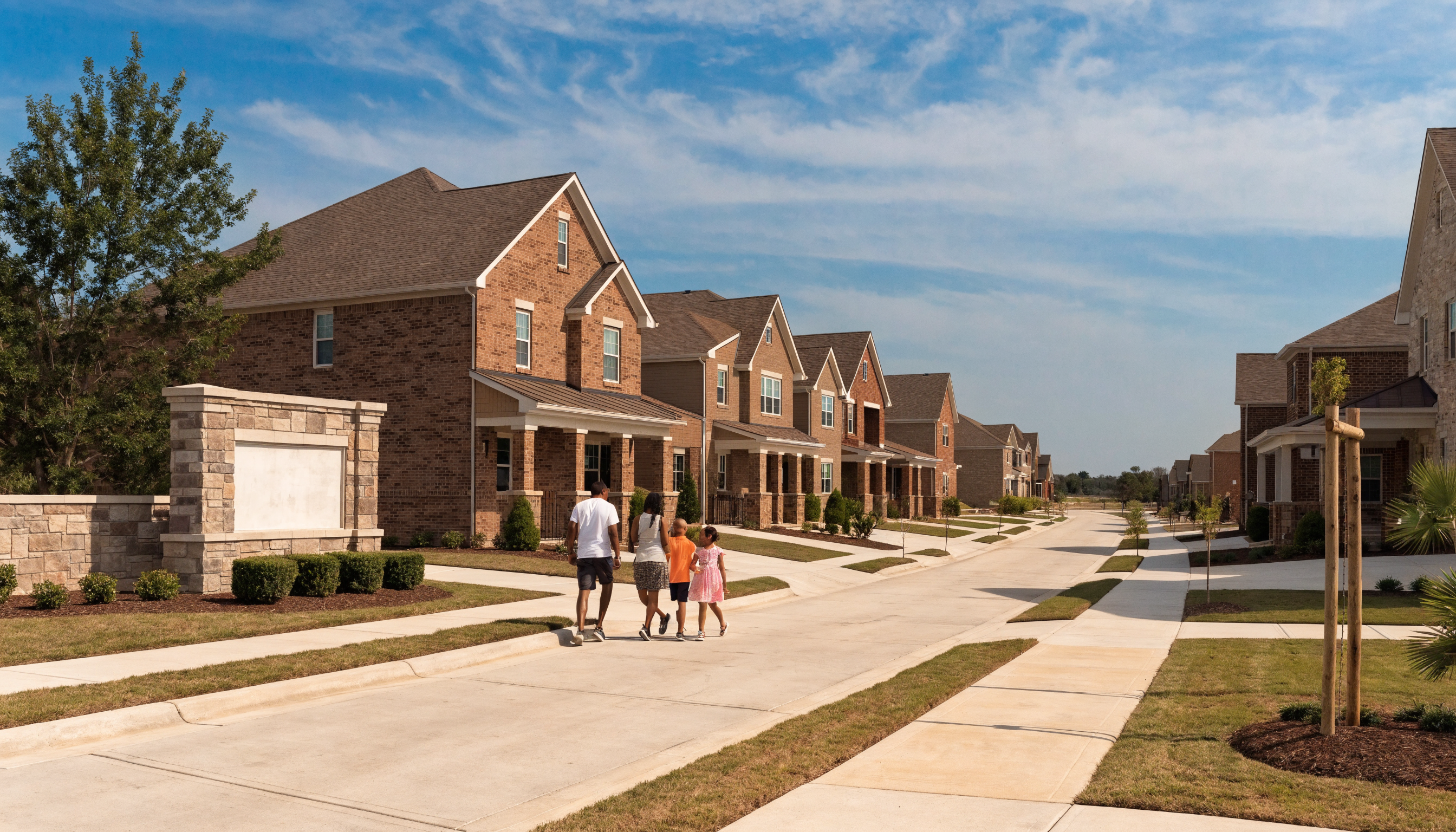
New construction homes on a landscaped street in a Midlothian, TX master-planned community, with the monument entrance in the background.
You picked the lot in Midlothian. You signed the builder contract, wired the earnest money, and started counting the weeks down to your walkthrough. Then the closing disclosure hits your inbox and there is a line on it nobody mentioned in the model home: a one-time HOA capitalization fee, due at closing, payable to the association. It is not your monthly dues. It is not your transfer fee. And in most cases, it is the first time anyone has said the words out loud to you.
Direct answer
An HOA capitalization fee is a one-time, non-refundable charge a Midlothian new-construction buyer pays at closing that goes into the homeowners association's reserve or operating fund. It is separate from your monthly dues and separate from the HOA transfer fee. A common rule of thumb is roughly three times the monthly dues, but the amount that actually binds you lives in the community's recorded governing documents.
The one thing to understand before you read another word
The builder rep works for the builder. That is not an insult and it is not a scandal. It is the job description. That person's entire assignment is to sell you a house that the builder is building, on the builder's contract, on the builder's timeline. Nobody in that model home is going to walk you through the association's fee schedule line by line, because the capitalization fee is not the builder's money and a surprise at the closing table is not the builder's problem.
So here is the number that makes this worth ten minutes of your reading time. Based on current conditions, Texas new-build HOA dues commonly run somewhere in the $150 to $400 per month range depending on amenities, with master-planned communities frequently landing in the $200 to $350 band. Apply the three-times-dues rule of thumb to that middle band and you are looking at roughly $600 to $1,050 in capitalization fee alone. Widen it out and one-time transfer or initiation charges get reported across Texas anywhere from about $250 to $1,500. Some communities run higher. None of that is a Midlothian-specific quote, and you should not treat it as one. It is the size of the hole in your closing estimate that nobody filled in for you.
What the capitalization fee actually is
The capitalization fee travels under a lot of aliases. Capital contribution. Working capital contribution. Initiation fee. Buy-in fee. New owner fee. Different management companies, different letterhead, same charge. It is a one-time, non-refundable payment collected at closing that goes into the association's reserve or operating fund.
The reasoning behind it holds up fine once somebody explains it to you. Shared assets in a master-planned community wear out. The amenity center roof, the pool equipment, the entry monument, the trail lighting, the perimeter fencing, the detention pond. All of it eventually needs to be repaired or replaced, and somebody has to have set money aside for that day. The capitalization fee seeds those reserves so that new owners help fund the long-term replacement of shared property instead of leaving the whole bill sitting on the owners who got there first.
In a brand-new development the sequence matters. The developer controls the association during buildout and eventually turns it over to the homeowners. The first owner of a home typically pays the capital contribution, which means if you are buying new construction in Midlothian, you are usually that first owner. That is exactly why this charge catches new-build buyers and rarely catches resale buyers in an older neighborhood.
Capitalization fee versus transfer fee versus resale certificate fee
These three get jumbled together on closing statements constantly, and they are three different animals with three different recipients.
Capitalization fee. One time, paid at closing, goes to the association. It funds reserves or operations. The amount and the person who owes it are specified in the community's declaration of covenants, conditions and restrictions.
HOA transfer fee. Also one time, also at closing, but this one is an administrative charge billed by the association's management company for the paperwork of moving ownership records. Updating the owner database, changing the billing account, reissuing gate codes and amenity access. Commonly around $100 to $500. That is revenue for the management company, not money going into the association's reserves. It is a fee for labor, and it buys you exactly zero equity in the amenity center.
Resale certificate fee. This one Texas actually caps. Under Texas Property Code Section 207.003, the fee for a resale certificate is capped at $375, and an update to that certificate is capped at $75. More useful than the cap: the statute requires the certificate to itemize every transfer-related fee, state who each one is paid to, and state the amount. That itemization requirement is the single best tool a buyer has in this whole conversation. It forces the association to write down, in one document, every charge it intends to collect and where each dollar goes.
What Texas law caps, and what it does not
There is a persistent piece of folklore that Texas outlawed transfer fees back in 2011 and therefore your HOA cannot charge you a buy-in. That is a misreading of a real law, and the misreading costs people money because they show up to closing expecting a fight they are not going to win.
Here is what actually happened. In 2011, the 82nd Legislature added Subchapter G to Chapter 5 of the Texas Property Code, Sections 5.201 through 5.207. It voided private transfer fee obligations created after June 17, 2011, and it terminated pre-existing ones unless the payee filed a "Notice of Private Transfer Fee Obligation" in the county real property records on or before January 31, 2012. That notice had to be printed in at least 14-point boldface type, had to state the amount of the fee and how it was determined, and had to be re-filed every three years to stay alive.
Now the part that matters for you. Dues, fees, charges, fines, assessments and similar payments made to a homeowners association under a declaration are excluded from the statutory definition of a private transfer fee. So are charges for entering a change of ownership on the association's records, for an estoppel letter, and for a resale certificate. An HOA capitalization fee is not the thing the 2011 law killed.
What that law killed was a different and genuinely predatory arrangement: a recorded covenant that pays a developer or a third-party investor a cut of every future sale of the home, forever, sometimes dressed up with labels like "capital recovery fee," "reconveyance fee," or "reinvestment fee." That money went to a private party, not to the association, and it rode along with the deed for decades. Texas shut it down. Your association's reserve contribution survived.
The earlier statute is worth knowing too. Section 5.017, added by HB 2207 in 2007 and applying to contracts entered on or after January 1, 2008, prohibited residential transfer fees payable to a declarant or a third party, but it carved out fees payable to a property owners association managing a subdivision with more than one platted lot, to a 501(c)(3) organization, or to a governmental entity. Same pattern. The legislature went after private parties skimming resales, and it left association assessments alone on purpose.
Practical translation: you are not going to argue the capitalization fee out of existence on legal grounds. You argue about who pays it, and you do that in the contract.
The blank in the TREC POA addendum that caps what you pay
If your Midlothian home sits in a community with a mandatory property owners association, your transaction should include TREC's "Addendum for Property Subject to Mandatory Membership in a Property Owners Association." The current version is Form ID 36-11, with an effective date of 07/01/2026, and you can pull it from the Texas Real Estate Commission contract forms library.
Inside that addendum is a paragraph on fees and deposits for reserves. In substance it reads: Buyer shall pay any and all Association fees, deposits, reserves, and other charges associated with the transfer of the Property not to exceed $______ and Seller shall pay any excess.
Read that again, because it is the whole ballgame. The number you write in that blank is the ceiling on what you are responsible for. Everything above the ceiling shifts to the seller. In a new-construction deal the seller is the builder, and the builder's own contract may modify or replace this language entirely, which is one more reason to have somebody reading the paperwork who is not being paid by the builder.
Two ways buyers lose here. The first is leaving the blank empty. The second, and more common, is writing a number without having any idea what the association's actual fee schedule says, which is guessing with your own money. Get the fee schedule first. Then fill in the blank at or slightly above the documented total, and let the contract do the work of protecting you.
Local market context for Midlothian buyers, August 2026
Midlothian sits in Ellis County along the southwest DFW corridor, south of Cedar Hill and Waxahachie-adjacent, close enough to the US-287 and US-67 routes that commuters keep finding it. It is one of the more active new-construction markets in that corridor, which is precisely why this fee question keeps coming up here.
- Median home price, Midlothian: about $478,130 over the trailing 30 days, down 5.3% year over year (Source: Orchard market report, August 2026)
- Median days on market, Midlothian: about 67 days (Source: Orchard, August 2026)
- Typical home value, Midlothian: about $453,770 (Source: Zillow Home Value Index, 2026)
- 30-year fixed mortgage rate: 6.66% for the week of August 27, 2026, versus 6.56% a year earlier (Source: Freddie Mac Primary Mortgage Market Survey)
Sixty-seven days of market time and a softer year-over-year price picture tell you something useful about negotiating posture. Based on current conditions, this is not a market where a buyer has to swallow every line item to keep a contract alive. Builders in slower absorption periods often have more room on closing costs than they do on base price, and association charges are a closing cost. Whether that room exists in your specific community on your specific lot is a question with a real answer, and the answer comes from asking.
"Buyers spend six weekends comparing floor plans and about four minutes reading the association documents. The floor plan is a preference. The declaration is a contract you sign for as long as you own the house." — Steven J. Thomas, Broker at Refind Realty DFW and Loan Officer at Envision Home Lenders
Cost breakdown: the association line items a Midlothian new-build buyer should price out
Ask for all of these in writing, with a dollar figure next to each one, before your option period or your financing contingency expires. Ranges below reflect commonly reported figures under current conditions, not quotes for any particular Midlothian community.
- Capitalization fee / capital contribution: one time at closing, frequently estimated at roughly three times monthly dues as a rule of thumb, with reported amounts running from a few hundred dollars to a few thousand
- HOA transfer fee: one time at closing, commonly around $100 to $500, paid to the management company
- Resale certificate fee: capped at $375 by Texas Property Code Section 207.003, with an update capped at $75
- Monthly dues, first payment and any proration: Texas new-build dues commonly run about $150 to $400 per month, with master-planned communities often in the $200 to $350 range under current conditions
- Move-in deposit, if the community charges one: sometimes refundable, sometimes not, and the documents tell you which
- Document, portal, and account setup fees: small individually, and they add up
- Rush or expedite charges: avoidable if you request documents early instead of three days before closing
- Sub-association or master association dues, where a community has both layers
- MUD or PID assessments, which are not HOA charges at all but show up in the same neighborhoods and belong on the same worksheet
Add those up and compare the total against the number you are about to write into the TREC addendum blank. If the total is higher than the number in the blank, you have found your gap while you can still do something about it.
Financing and closing-cost strategy
One question decides whether this charge is a cash-flow problem or a paperwork problem: is the buy-in included in your closing costs, or is it billed to you by the association after closing?
Ask the title company directly, in writing, and ask early. If the capitalization fee is on the closing disclosure, it is part of the cash-to-close figure your lender is working with, and it can potentially be covered by a seller or builder concession the same way other closing costs are. If it is billed separately by the association after funding, it is out-of-pocket money that arrives after you have already emptied your account on the down payment and the moving truck. Same dollar amount, wildly different experience.
Builder incentive packages in the southwest DFW corridor frequently include closing cost credits, and association charges sit inside that category more often than buyers assume. Whether a specific builder will apply a credit that way depends on their contract, their preferred-lender terms, and how the community is structured. This is loan-adjacent territory: Steven J. Thomas is also a loan officer with Envision Home Lenders, NMLS #689220, which means the contract conversation and the cash-to-close conversation happen with one person instead of two who never talk. No rate, payment, or approval outcome is promised here, and every loan is subject to underwriting and current conditions.
What to ask for, in writing, before your contingencies expire
This is the short version you can copy into an email to your builder rep and your title company today.
- The complete, itemized HOA fee schedule for this specific community, listing the transfer fee, capital contribution, move-in deposit, resale certificate fee, document and portal fees, and any rush charges, with the recipient named for each
- The recorded CC&Rs, the bylaws, and the current budget, so you can confirm the amount and confirm who the documents say owes it
- Written confirmation from the title company on whether the capitalization fee appears on the closing disclosure or is billed by the association after closing
- Confirmation of whether the community has a master association in addition to the neighborhood association, and what each one charges
- Whether the association is still developer-controlled and the expected timeline for turnover to the homeowners
- The dollar figure going into the fees-and-deposits blank on the TREC POA addendum, and confirmation that the builder's contract has not stripped that protection out
Send it as one email. Ask for one reply with all of it attached. If you get partial answers or verbal answers, ask again in writing. A community with clean documents will hand this over in a day. A slow or scattered response is information too.
The last word on this
The capitalization fee is a legitimate charge. It funds the reserves that keep the amenity center standing and the entry monument lit, and Texas law has deliberately left it in place through two separate rounds of transfer-fee reform. The problem was never that the fee exists. The problem is that a buyer can walk from first visit to closing table without one person on the other side of the transaction ever saying the number out loud, because the builder rep works for the builder, the fee is not the builder's money, and a surprise at closing is not the builder's problem. Ask for the itemized fee schedule, read the declaration, and put a real number in the blank on the TREC addendum. That is a Tuesday afternoon of work that puts a ceiling on a charge that can run into four figures.
Want the full checklist, including the questions that catch the rest of the new-construction line items nobody quotes you? Get the free New Construction Buyer Guide.
Key takeaways
- The HOA capitalization fee is a one-time, non-refundable charge paid at closing into the association's reserve or operating fund, and it is separate from your monthly dues and from the transfer fee
- The three-times-monthly-dues rule of thumb is a rule of thumb, not a rule. With Texas master-planned dues commonly running $200 to $350 per month under current conditions, that math lands roughly in the $600 to $1,050 range, and the binding number lives in the CC&Rs
- Texas Property Code Section 207.003 caps the resale certificate fee at $375 and an update at $75, and it requires the certificate to itemize every transfer-related fee, who it goes to, and the amount
- The 2011 private transfer fee law, Sections 5.201 through 5.207, voided developer and third-party transfer covenants but expressly excluded association dues, fees, and assessments, so the capitalization fee survived
- The fees-and-deposits blank in TREC Form 36-11, effective 07/01/2026, caps what the buyer pays and shifts the excess to the seller, so leaving it empty or guessing at the number is how buyers get surprised
FAQ: HOA capitalization fees for Midlothian new-construction buyers
When do I find out what the capitalization fee is?
You find out when you ask. Request the itemized HOA fee schedule and the recorded CC&Rs in writing as soon as you are under contract, and well before your option period or financing contingency expires. Waiting for the closing disclosure means finding out when it is too late to negotiate.
Can the capitalization fee be rolled into my closing costs or covered by the builder?
Sometimes. Ask the title company whether the fee appears on the closing disclosure or is billed by the association after closing, because that determines whether a seller or builder closing cost credit can apply to it. Nothing about that outcome is guaranteed, and it depends on the builder's contract and the community's structure.
Is the capitalization fee refundable if my new build falls through?
The capitalization fee is a one-time, non-refundable charge collected at closing, so if the transaction never closes, it is generally never collected. A move-in deposit is a different item and may be refundable depending on what the association's documents say. The governing documents control.
Did Texas make HOA buy-in fees illegal in 2011?
No. The 2011 law voided private transfer fee obligations payable to developers and third-party investors, but it specifically excluded dues, fees, charges, and assessments paid to a homeowners association under a declaration. Association capitalization fees remain enforceable in Texas.
How long does it take to get the HOA documents in Midlothian?
Turnaround varies by management company. Request everything in a single written email at the start of your option period so you are not paying rush charges or making decisions on partial information three days before closing.
Where can I see what is actually selling in Midlothian and the southwest DFW corridor right now?
Track current Midlothian and Ellis County activity through the DFW new construction listings hub, which covers builder communities across the southwest corridor including Midlothian, Waxahachie, Red Oak, and Cedar Hill.
Disclosures
This article is general information for Texas home buyers and is not legal advice. The association's recorded governing documents control the amount of any capitalization fee, transfer fee, or assessment and who owes it. Statutory references reflect Texas law as of August 2026. For advice about your specific contract, consult a licensed Texas attorney. Market figures reflect current conditions as of the dates cited and are not a prediction or a guarantee of price, cost, timeline, or outcome. Buyers who use Steven J. Thomas or any Refind Realty DFW agent on a new construction purchase may qualify for a rebate at closing. Terms, eligibility, and builder participation apply, and details are available on the new construction rebate program page.
Steven J. Thomas · Broker, Refind Realty DFW · TREC Broker License #0657467 · Loan Officer, Envision Home Lenders · NMLS #689220 · 972-846-9170 · 128 S. Cockrell Hill Rd, DeSoto, TX 75115
Equal Housing Opportunity. TREC Information About Brokerage Services · TREC Consumer Protection Notice


