Living Near DFW Airport vs. Love Field: 2026 Pros & Cons | Refind Realty DFW
The Pros and Cons of Living Near DFW Airport vs. Dallas Love Field

Direct Answer
Choosing between the two depends on your priority: Urban Convenience vs. Suburban Flexibility. Dallas Love Field is just 6 miles from Downtown, making it the premier choice for professionals in the Medical District or Uptown, though it faces high-frequency domestic noise in prestigious areas like Bluffview and Highland Park. DFW International is 20 miles from Downtown but serves as a global gateway surrounded by top-tier suburbs like Coppell, Grapevine, and Southlake. In 2026, the DFW area is an economic powerhouse supporting nearly 700,000 jobs, while Love Field offers a more streamlined, domestic-focused experience perfect for Southwest Airlines frequent flyers.
Book your Home Goals consultation to see how upcoming airport flight path changes might affect your target neighborhood: https<span></span>://stevenjthomas.com/home-goals
1. Dallas Love Field (DAL): The Urban Pulse
Living near Love Field puts you in the heart of Dallas's most vibrant culture, but it comes with a compact, high-intensity environment.
From a lifestyle perspective, Love Field is unbeatable for the urban professional. You can reach your gate in under 30 minutes from neighborhoods like Briarwood or Oak Lawn, and its status as a primary hub for Southwest Airlines makes it ideal for regional business hops. Infrastructure projects like the Lemmon Avenue Streetscape have improved the area's aesthetics for 2026, though residents must contend with significant traffic congestion and high-frequency domestic flight noise. Unlike DFW, Love Field is landlocked by dense residential areas, meaning flight paths are highly audible, and non-commercial flights often operate outside of the voluntary noise abatement hours.
2. DFW International: The Global Suburban Hub
DFW is one of the world's largest airports, and living nearby means choosing a master-planned suburban lifestyle with global connectivity.
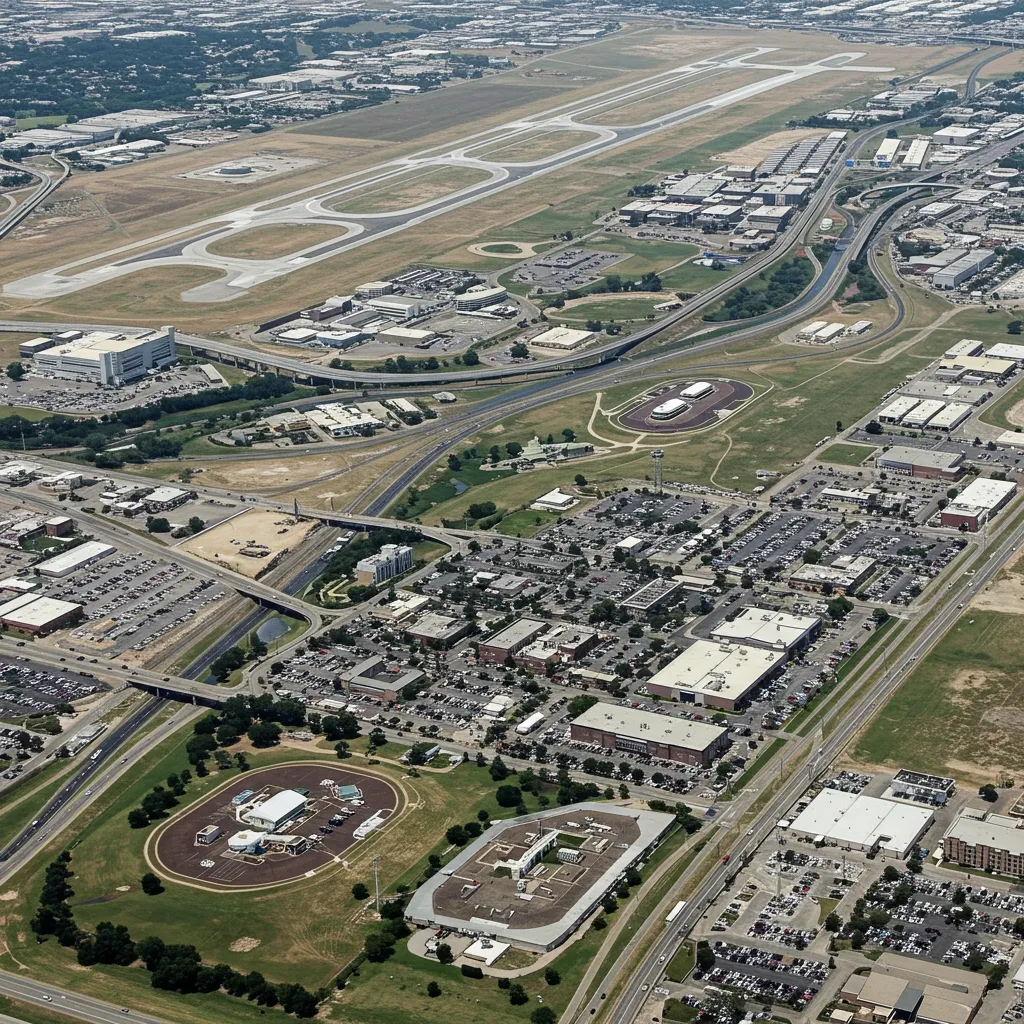
The DFW International experience is defined by scale and economic stability. The airport contributes over $78 billion to the local economy annually, supporting high property values in "Mid-Cities" corridors like Grapevine, Coppell, and Southlake. While the airport’s 17,000-acre footprint means you have more "buffer" from the runways than at Love Field, the airport operates 24/7 with heavy cargo and international long-hauls, making noise a constant factor. For international executives, the new Terminal F expansion provides world-class access, but the commute to Downtown Dallas is longer—averaging 30 to 45 minutes depending on traffic.
3. The Noise and Value Trade-off
In 2026, the "Airport Effect" remains a primary driver of North Texas real estate decisions. At Love Field, the noise is characterized by high-frequency domestic takeoffs that impact some of Dallas's most expensive real estate, yet the 15-minute commute to the city center maintains high demand. At DFW, the noise is more associated with heavy, long-range aircraft, but the airport is surrounded by elite public schools and master-planned communities that offer a quieter suburban "feel" despite the 24/7 operations. Public transit also differs: the Love Link connects DAL to the West End in 11 minutes, while the TEXRail and Orange Line provide a longer, 50-minute journey from DFW terminals to the urban core.
Conclusion
If you crave urban energy and quick domestic hops, Love Field is the strategic choice, provided you review the latest noise contour maps. If you want suburban space, elite public schools, and a gateway to the world, DFW International is the primary choice, particularly for those focused on the high-growth Mid-Cities corridor.
Key Takeaways
Infrastructure Growth: Multi-billion dollar expansions at both airports are driving long-term investment potential in surrounding homes.
Noise Path Check: Neighborhoods near DAL are highly noise-sensitive; always review the latest Voluntary Noise Program maps before buying.
Lifestyle Choice: Choose DAL for city center speed and domestic ease; choose DFW for global access and suburban amenities.


