The Tarrant County Growth Story: Fort Worth vs. Dallas (2026) | Refind Realty DFW
The "Tarrant County" Growth Story: Why Fort Worth is Outpacing Dallas in 2026

Direct Answer
In March 2026, Fort Worth is outpacing Dallas because it currently offers the most favorable "Cost-to-Opportunity" ratio in Texas. Fort Worth's median home price sits at approximately $365,000, which is nearly $50,000 lower than the Dallas median of $415,000, despite Fort Worth seeing a faster annual appreciation rate of 4.1%. This value gap is a primary driver for Tarrant County’s 1.5% annual population increase, largely fueled by international and domestic immigration. Beyond housing, Fort Worth is undergoing a structural metamorphosis: the $1.7 billion Westside Village and the Texas A&M Fort Worth urban campus are transforming the city into a research and tech-manufacturing hub, while the Panther Island project is finally realizing its vision as a premier waterfront residential and mixed-use destination.
Book your Home Goals consultation to see our 2026 "Tarrant Value Map" and find the neighborhoods with the highest projected appreciation near the new Alliance and Westside corridors: https://stevenjthomas.com/home-goals
The Affordability Advantage: More 'Home' for the Dollar
The primary engine of the Fort Worth boom in 2026 is the residential "value play". As Dallas County faces a slight population contraction (−0.49% in recent cycles), Tarrant County has grown by 2.08%, as buyers prioritize space and lower density.
Getty Images
Housing Density: Fort Worth remains significantly less dense than Dallas, ranking 24th in density among the top 30 U.S. cities. This allows for the continued development of master-planned communities like Walsh, which offers a "technology-first" lifestyle that appeals to the 2026 hybrid worker.
Rental Relief: While national rents have hit a four-year low in early 2026, Fort Worth’s median asking rent of $1,600 for a 2-bedroom remains more accessible than the Dallas average of $1,750, giving young professionals more disposable income for the city's burgeoning dining and nightlife scene.
Property Taxes: While Tarrant County’s average effective property tax rate of 2.10% is slightly higher than Dallas's 1.93%, the lower base home prices mean that the total annual tax bill for a median home in Fort Worth is often lower than in Dallas.
Economic Metamorphosis: Beyond Cowtown
In 2026, Fort Worth is successfully rebranding from a "bedroom community" to a self-sustaining economic engine.
The 'Silicon River': The Texas A&M Fort Worth campus is acting as a massive talent magnet, anchoring a new innovation district downtown that focuses on emergency management, manufacturing, and biotechnology.
Alliance Corridor Growth: The northern Tarrant corridor near AllianceTexas continues to be a global logistics powerhouse, now integrating AI-driven supply chain hubs that have created thousands of high-wage "new collar" jobs in 2025 and 2026.
Corporate Confidence: Relocations are no longer just seeking "Texas"—they are seeking "Fort Worth" for its predictable policy environment and lower overall operating costs compared to the saturated Dallas urban core.
The Infrastructure Renaissance of 2026
Fort Worth is using 2026 to execute projects that will define its skyline for the next half-century.
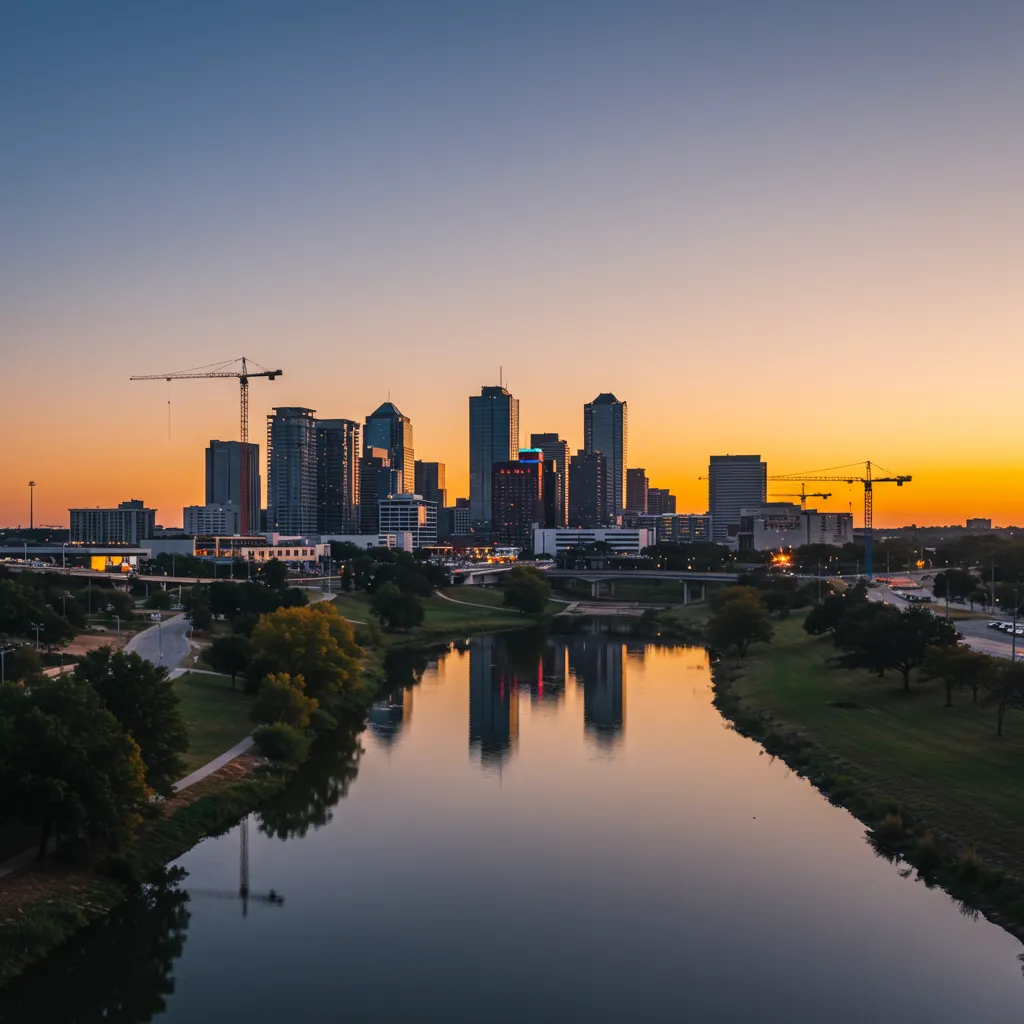
Panther Island: After years of flood-control prep, 2026 is the "Breakthrough Year" for Panther Island. Mixed-use properties and waterfront connections are finally opening, creating a pedestrian-friendly urban island that mirrors the energy of Austin’s Lady Bird Lake but with more intentional planning.
Convention Center Expansion: Phase Two of the $606 million upgrade to the Fort Worth Convention Center is set to begin in late 2026, doubling down on the city’s ability to host major national trade shows and events.
The Stockyards Expansion: A $630 million investment is currently pushing more chef-driven restaurants and luxury hotel projects into the north and east sides of the Stockyards, ensuring the city’s historic identity remains a top-tier global tourist draw.
Conclusion
In 2026, Fort Worth is no longer in Dallas’s shadow; it is a city that has mastered the art of growing big while staying livable. By prioritizing affordable housing, high-tech educational anchors, and bold waterfront infrastructure, Tarrant County has created a "Growth Story" that is as much about quality of life as it is about economic statistics. For the 2026 buyer, Fort Worth isn't just a "value option"—it is the preferred destination for the next generation of North Texas success.
Key Takeaways
Population Milestone: Fort Worth officially surpassed 1 million residents in early 2026.
Price Advantage: Fort Worth median home prices are roughly $50,000 lower than Dallas.
Fastest Growth: Fort Worth is the fastest-growing large city in the U.S. since 2020 (9.7% growth).
Waterfront Vision: Panther Island and the Texas A&M campus are the primary infrastructure catalysts for 2026.


