DeSoto Sellers: Unpermitted Work and Open Insurance Claims
DeSoto sellers: unpermitted work and open insurance claims
By Steven J. Thomas, Refind Realty DFW
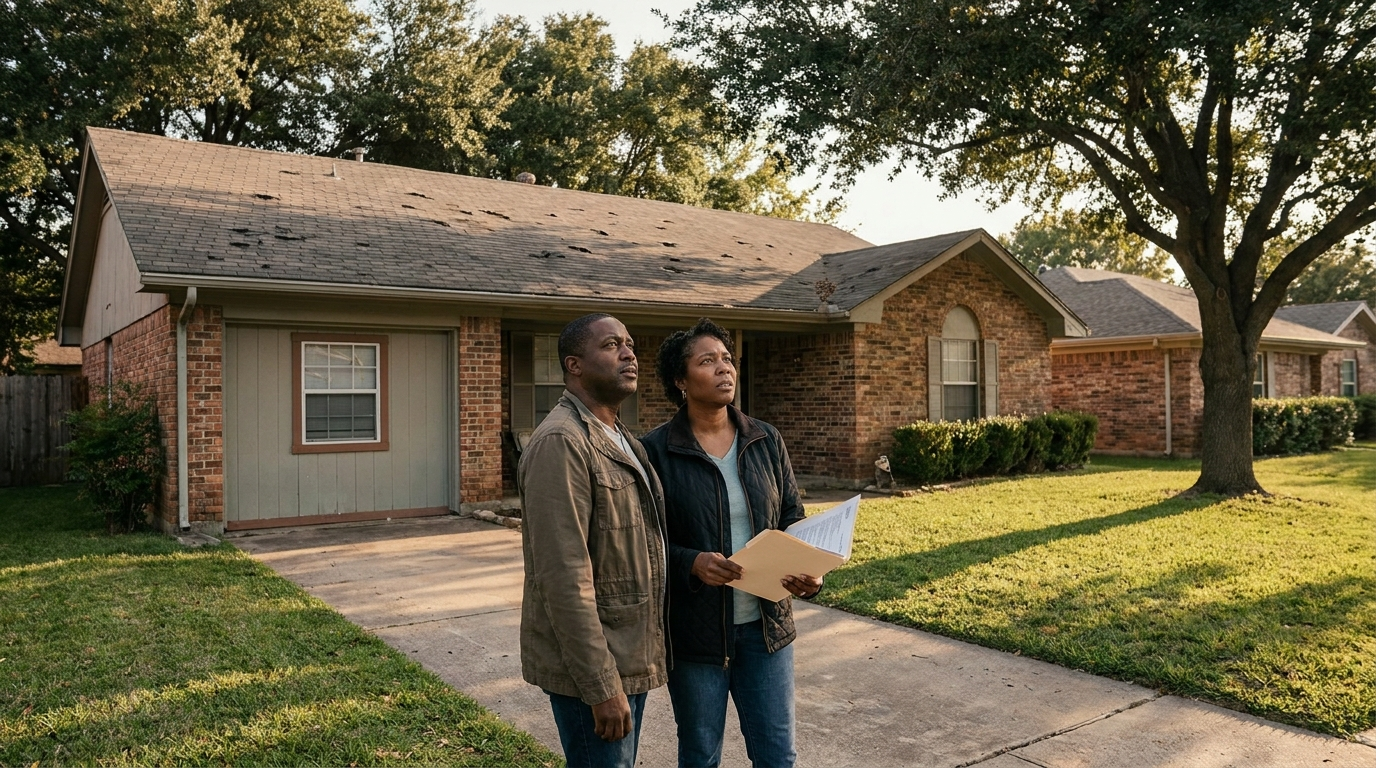
You have lived in the DeSoto house eight years. Somewhere in year four you closed in the garage and made it a fifth bedroom. In year six a hail storm came through, the carrier cut a check, and you fixed the fence and put the rest toward the kitchen. Neither decision felt like a big deal at the time. Both are sitting in your file now, and both surface during the option period, usually about ten days before you planned to sign a build contract on the new house.
Direct answer: what has to be cleared before you list
Before a DeSoto home with unpermitted work or an open insurance claim goes on the market, the seller needs three things settled: a written answer from the City of DeSoto on whether the work can be permitted after the fact, a claim status letter from the carrier showing the claim is closed or the repair is complete, and a seller's disclosure that says all of it plainly. Handle those first and the option period usually runs as a formality instead of a renegotiation.
The house is rarely the problem
Most agents look at the house. They talk about paint, counters, curb appeal, and a price. The thing that actually kills a DeSoto closing is usually a piece of paper nobody checked until the buyer's option period was already running.
Here is the number that makes the point. Homes in DeSoto sold in an average of 61 days over the three months ending May 2026 at a median price of $350,000, according to Redfin's DeSoto housing market data. The option period inside that timeline runs a week to ten days. An after-the-fact permit on an addition commonly runs two to six months, per PermitsGuide's retroactive permit overview. You cannot fit a six-month fix inside a ten-day window. So the buyer asks for a credit, asks for an extension, or walks. That is a sequencing problem, not a market problem, and it is fixable before the sign goes in the yard.
Most agents sell houses. I build plans. That distinction is boring right up until the day it saves your closing date.
What counts as unpermitted work in DeSoto
The usual suspects in southwest DFW are consistent. A garage converted to living space. A bedroom or bath added off the back. A covered patio enclosed and conditioned. A DIY addition framed by a relative who does good work but does not pull permits. A storage building or a pool on a slab with nothing on file.
DeSoto requires a permit to build, remodel, or enlarge a structure, and has adopted the 2021 International Codes. The city fee schedule, adopted under Ordinance 2183-20 and published in Appendix A, Article 2.000 of the DeSoto code, lists what you would have paid at the time:
- Residential alterations — $600.00
- Additional residential alterations inspections — $200.00
- Carport or garage, residential — $100.00
- Patio covers, pergolas, carports — $100.00
- Storage and accessory buildings — $50.00
- In-ground swimming pool — $250.00
- Roof — $110.00
- Reinspection fee — $50.00
Read that list again. The permit on the patio enclosure that is now costing you a buyer was $100. That is the part sellers find hard to hear. The original fee was almost never the expensive decision. Skipping it was.
Fees and code adoptions change, so confirm current requirements with DeSoto Development Services. Neighboring cities set their own schedules. Cedar Hill, Duncanville, Lancaster, Glenn Heights, Red Oak, Waxahachie, Midlothian, and Mansfield each run their own permit office with its own fees and its own appetite for legalizing old work.
How a buyer, an appraiser, or a lender finds it
Sellers assume unpermitted square footage stays invisible because it looks finished. It does not, because two records have to agree and they usually do not.
The first record is the county. Dallas County properties are valued by the Dallas Central Appraisal District, and DCAD carries a living-area figure based on what it has on file. The second record is the MLS listing your agent writes. Measure the finished garage, type the larger number into the listing, and the two records split. That split is visible to anyone who pulls the tax record. Buyers pull it. Appraisers pull it. Underwriters pull it.
Texas REALTORS covered a square-footage court case that turned on exactly this, where the source of the number mattered as much as the number. Cite the source of the square footage, do not blend permitted and unpermitted space into one advertised figure, and describe unpermitted space as what it is.
Buyers also find it the ordinary way. The inspector notes a bedroom with no egress window, a bathroom vented into an attic, or a subpanel nobody can trace. Then the buyer's agent calls the city, and the city says there is no permit on file.
What lenders and appraisers do with unpermitted square footage
This is the part that moves money. Fannie Mae's Selling Guide, section B4-1.3-05, states that if the appraiser identifies an addition that does not have the required permit, the appraiser must comment on the quality and appearance of the work and its impact, if any, on the market value of the subject property. You can read the section on the Fannie Mae Selling Guide site.
Two things follow. The unpermitted space goes in the report either way, and the appraiser has to support any value given to it. In practice, appraisers commonly report unpermitted finished space outside gross living area, because gross living area under the ANSI Z765 standard is finished, above-grade, permitted living area. The space may still get some contributory value, but it does not automatically carry the same per-square-foot weight as the rest of the house.
What that means for a DeSoto seller: you priced at 2,400 square feet, the appraisal supports 2,050, and the buyer's loan is now sized below your contract price. The buyer covers the gap in cash, you reduce, or the deal terminates. Outcomes vary by lender, by appraiser, and by how the work was built.
The open insurance claim stops closings cold
The second file problem is quieter and harder to unwind. A hail claim was filed. The carrier paid actual cash value on the roof. The money went somewhere other than the roof. The claim was never closed, and no final invoice was submitted.
Carriers routinely decline to write a new policy on a property with an open claim, because they do not want liability for pre-existing damage they never inspected. The Property Insurance Coverage Law Blog lays out the mechanics of selling a property with an open insurance claim, including the two workable paths: assign the claim benefits to the buyer, or keep the benefits and reduce the purchase price. A closing attorney's summary at Berlin Patten Ebling makes the practical point, which is that closing the claim before the closing date is what lets the buyer bind coverage on time.
No bound policy means no funded loan. A buyer with a conventional or FHA loan cannot close without insurance in force. Your open claim becomes the buyer's underwriting problem, and it surfaces four days before funding.
Texas hail deductibles and roof age make it worse
Two Texas-specific facts shape how this plays out across the southwest DFW corridor.
The first is the deductible structure. Percentage-based wind and hail deductibles have effectively replaced flat dollar deductibles statewide, with 2% commonly described as the standard, which on a $300,000 dwelling figure lands roughly in the $3,000 to $6,000 range. Coverage varies by carrier and policy, so read your own declarations page rather than a general figure.
The second is roof age. Many Texas carriers attach an endorsement converting roof-surfacing loss settlement to actual cash value once the roof passes a stated age, commonly between 10 and 15 years, or apply a schedule paying a declining percentage of replacement cost as the roof ages. If your DeSoto roof went on in 2013 and took hail in 2023, you may have been paid depreciated value with a recoverable depreciation holdback you never collected, because the work was never done and no final invoice was submitted.
Stack that on a listing. The inspector flags a roof at end of life. The buyer's insurance quote comes back high or comes back declined. The buyer asks for a new roof. You still have the old claim open, and the money is gone. That is the scenario that produces a price reduction two weeks after you thought the negotiation was over.
What the Texas seller's disclosure requires you to say
The TREC Seller's Disclosure Notice asks about repairs, modifications, and additions and whether permits were obtained. It also asks about prior insurance claims in specified categories. Unpermitted work and claim history are material facts. They affect value, insurability, and a future buyer's ability to finance or refinance. Hiding them is how sellers end up in litigation after closing.
The form was updated effective July 1, 2026, adding insurance questions, including whether the property is presently covered, whether it carries windstorm coverage, and whether the seller has been unable to insure it for any reason. Texas REALTORS covered the change in its May-June 2026 forms changes article, and I wrote it up separately in a separate post on the July 2026 disclosure changes. The narrow point here: an unresolved claim or an inability to obtain coverage is now something the form asks you about directly, in writing, before you sign.
Realistic ranges to clear it, based on current conditions
Nobody can promise you a cost, a timeline, or an outcome on either of these. What follows is the range sellers are commonly quoted based on current conditions. Your property, your city, and your carrier decide the actual answer.
| Item | Commonly quoted range | Notes |
| Retroactive permit on an addition | Roughly $2,000 to $8,000 | Often two to three times a standard permit; excludes corrective construction |
| Timeline to legalize | Roughly two to six months | Varies with scope and required code corrections |
| Corrective work to pass inspection | Highly variable | Egress, electrical, HVAC, insulation, foundation |
| Closing an old hail claim | Carrier-dependent | Usually requires the repair completed plus a final invoice |
There is a second path worth naming. Some sellers decide not to legalize at all. They disclose fully, price to the permitted square footage, and market the extra space honestly as unpermitted. That narrows the buyer pool and usually costs something in price, but it is predictable, and predictable beats a surprise in the option period. Which path fits depends on how much space is involved, how the work was built, and how firm your move-out date is.
The order I run it in for a DeSoto seller
- Pull the record first. Compare the DCAD living-area figure to what the house actually measures. Any gap is the starting point.
- Call the city, not a forum. DeSoto Development Services can tell you what is on file for your address and what legalizing would involve. Get it in writing.
- Get claim status from the carrier in writing. Ask whether any claim is open, whether recoverable depreciation is outstanding, and what closes the file.
- Get the roof assessed and dated. Age and condition drive both the buyer's insurance quote and the inspection negotiation.
- Decide legalize or disclose-and-price before the listing goes live, not after an offer arrives.
- Complete the disclosure honestly and keep every permit, invoice, and claim letter in one folder for the buyer's file.
- Then set the price, with the square footage question already answered.
The seller who does this walks into the option period with a folder. The seller who skips it walks into a renegotiation. Same house, same DeSoto street, different outcome, and the only variable was the order of operations.
Bottom line for DeSoto sellers
Unpermitted work and an unresolved hail claim are not deal-breakers. They are deadline-breakers. Handled six weeks before listing, they are a call to the city, a letter from the carrier, and a line on a disclosure form. Discovered on day seven of a ten-day option period, they are a price reduction or a dead contract. If you are timing this sale against a new build in Midlothian or Waxahachie, the dead contract is the expensive version.
If you want to know what is actually sitting in your file before a buyer finds it, start with a Home Selling Score. I walk your DeSoto home in person, about 30 minutes, and give you an honest readiness score along with the specific items to resolve first. Get your Home Selling Score or call 972-846-9170.
Takeaways
- A DeSoto residential alterations permit is listed at $600 in the city fee schedule. Legalizing the same work later is commonly quoted at $2,000 to $8,000 and two to six months.
- Unpermitted square footage generally does not carry the same appraisal weight as permitted living area, and Fannie Mae requires the appraiser to comment on it.
- DCAD's living-area record and your MLS square footage have to agree, or someone will ask why.
- Carriers commonly decline to write a new policy on a home with an open claim, and no bound policy means no funded loan.
- The TREC Seller's Disclosure Notice asks about permits and prior claims, and the July 1, 2026 version adds direct questions about current and unavailable insurance coverage.
FAQ: unpermitted work and open claims in DeSoto
Can I sell a DeSoto home with unpermitted work?
Yes. Texas does not prohibit selling a home with unpermitted improvements. It does require you to disclose what you know. Concealing it is the problem, not the work itself.
Will unpermitted square footage lower my appraised value?
It often reduces the square footage the appraisal supports, because appraisers generally exclude unpermitted space from gross living area and must justify any value assigned to it. The size of the effect depends on the appraiser, the lender, and how the space was built.
What happens if the buyer cannot get insurance because of my open claim?
The loan does not fund. Most buyers will either ask you to close the claim before closing, ask for a price reduction, or terminate. Closing the claim first removes the issue entirely.
I spent the hail money on something else. Am I in trouble?
Not automatically. If your carrier paid actual cash value, the recoverable depreciation is typically only released after the work is completed and a final invoice is submitted. Talk to your carrier about what closes the file and confirm whether any repair obligation exists under your policy.
How long before listing should I start on this?
Start at least 60 to 90 days out if permits are involved. City review, corrective work, and reinspections do not compress well, and the calendar is the part you cannot negotiate.
Does this apply outside DeSoto?
The insurance side applies statewide. The permit side varies by city, so Cedar Hill, Duncanville, Lancaster, Red Oak, Glenn Heights, Waxahachie, Midlothian, and Mansfield each have to be checked on their own. Same problem, different counter.
Sources
- City of DeSoto Code, Appendix A, Article 2.000 Building Permits (Ordinance 2183-20)
- Fannie Mae Selling Guide, B4-1.3-05, Improvements Section of the Appraisal Report
- Redfin, DeSoto TX Housing Market, three months ending May 2026
- Texas REALTORS, Latest Forms Changes, May-June 2026
- Texas REALTORS, The Square-Footage Court Case You Should Know About
- Property Insurance Coverage Law Blog, Selling Property With an Open Insurance Claim
- Berlin Patten Ebling, Close Out the Open Insurance Claim Today
- PermitsGuide, Retroactive Permits: How to Legalize Work That Was Already Done
Steven J. Thomas is a licensed Texas real estate broker with Refind Realty DFW in DeSoto, TX. This article is general information based on current conditions and is not legal, tax, or insurance advice. Permit requirements, fees, and policy terms change. Confirm your situation with the City of DeSoto, your insurance carrier, and your own professional. Equal Housing Opportunity.


