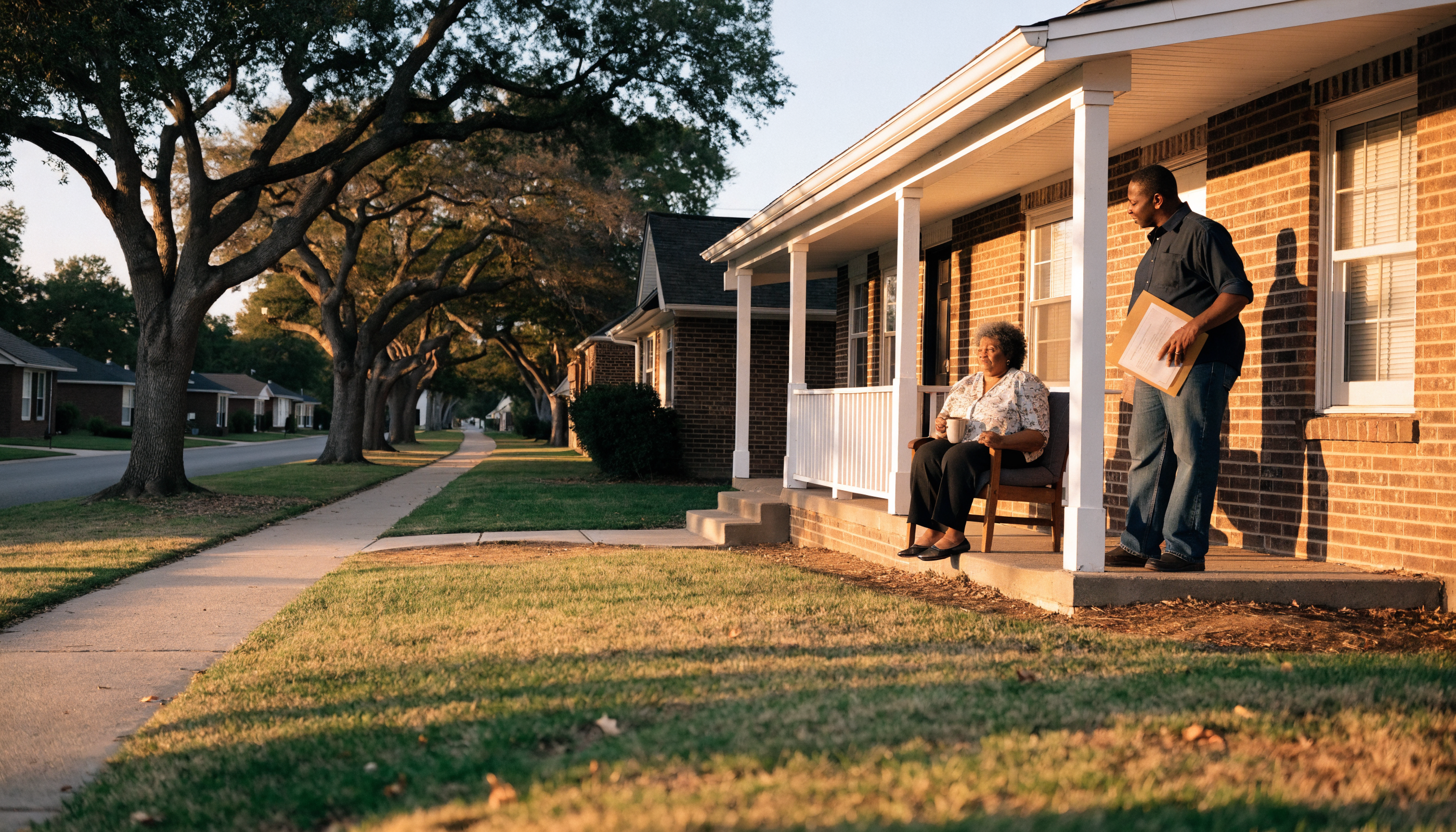
Selling a DeSoto home in 2026 with an over-65 property tax deferral on it
Selling a DeSoto home in 2026 with an over-65 property tax deferral on it
By Steven J. Thomas
A DeSoto homeowner can be square with the county, square with the appraisal district, and still owe five figures in property tax the day the house sells. That is what a Texas tax deferral does. It stops the collector from chasing the money, lets the balance sit on the property at five percent a year, and then puts the whole thing on the closing statement. Most sellers find out about it in the middle of a transaction, from a title company, which is the worst possible time.
Direct answer
Texas Tax Code Sec. 33.06 lets a homeowner who is 65 or older, disabled, or a qualifying disabled veteran defer collection of property tax on their residence homestead. It does not cancel the tax. The lien stays on the property and interest runs at five percent a year. When the home stops being that person's homestead, the balance is due, and in a DeSoto sale it comes off the seller's proceeds at closing.
Most agents sell houses. I build plans.
Here is why that distinction matters on this specific topic. A deferral does not appear in a Zillow estimate. It does not appear in any online "what's my home worth" tool. It does not appear on a DCAD value notice in a way a normal person would recognize. It appears when a title company pulls the tax certificate, roughly two weeks before closing, and by then the price is set and the buyer is packing.
Run the numbers on a DeSoto homestead with a $250,000 taxable value and five years of deferral at the 2025 combined rate, and the payoff lands around $35,135 (illustrative, based on current conditions, math shown below). That is a number that lives in exactly one document: a seller net sheet built before the listing goes live. It does not live anywhere else.
What Sec. 33.06 actually does
Who the statute covers
The statute is written around three qualifying categories and one property test. An individual may defer collection of a tax, abate a delinquent-tax suit, or abate a tax-lien foreclosure sale if that individual is 65 or older, is disabled as defined by Sec. 11.13(m), or qualifies for the disabled veteran exemption under Sec. 11.22. The tax has to be imposed on property the individual owns and occupies as a residence homestead. Any Texas homeowner who meets those statutory tests can file, in DeSoto or anywhere else in the state. You can read the chapter text yourself at Texas Tax Code Chapter 33 on the Texas Legislature's statutes site.
Where the affidavit goes
The filing does not go to the tax office. It goes to the chief appraiser of the appraisal district where the property sits. For a DeSoto property, that is the Dallas Central Appraisal District. The homeowner files an affidavit stating the qualifying facts, and the chief appraiser then notifies every taxing unit participating in the district. The Comptroller publishes the state form as Form 50-126, Tax Deferral Affidavit for Age 65 or Older or Disabled Homeowner.
What the deferral does not do
It does not erase what was already there. A Sec. 33.01 penalty is not incurred during the deferral period, which is real relief. But penalties and interest that had already accrued before the affidavit was filed stay on the account. If a homeowner filed in year three of a delinquency, the first two years of penalty and interest are still owed. The deferral changes what happens going forward, not what already happened.
The part that surprises people: it is a lien, and it grows
Five percent instead of the standard delinquency rate
The tax lien remains on the property and interest keeps accruing the entire time collection is deferred. The annual rate during the deferral is five percent, in place of the standard Sec. 33.01 delinquency rate. Five percent is a meaningful break compared to standard delinquency treatment. It is still a number that compounds against the seller's equity every year the deferral runs.
The 181st day is a shield, not a discount
Once the individual no longer owns and occupies the property as a residence homestead, a taxing unit may not file suit or foreclose until the 181st day after the collector delivers a notice of delinquency. That is the "180 days" people repeat at kitchen tables and in Facebook groups. It buys a family time to sell or refinance in an orderly way. It does not reduce the balance by a dollar.
The extra Sec. 33.07 collection penalty follows the same clock. It can only be imposed if the deferred taxes are still delinquent on or after the 181st day after the deferral period ends.
Pro tip: if you are the family member handling a parent's house, put the notice of delinquency date on a calendar the day it arrives. Every other decision in the sale keys off that date.
A worked example on a DeSoto homestead
Every figure below is illustrative and based on current conditions. It is not a quote, a promise, or a prediction about any specific property. Confirm your own numbers with the appraisal district and the county tax office.
Start with a DeSoto homestead carrying a taxable value of $250,000 after exemptions. Texas 2025 adopted rates put the combined rate for a DeSoto property at roughly $2.4442 per $100 of assessed value. Two of the larger pieces inside that combined rate are the City of DeSoto at $0.684934 per $100 and DeSoto ISD at $1.2252 per $100.
Annual tax at the combined rate: $250,000 divided by 100, times $2.4442, equals $6,110.50 a year. Broken into pieces on the same $250,000, that is about $1,712.34 to the City of DeSoto, $3,063.00 to DeSoto ISD, and about $1,335.16 to the remaining taxing units in the combined rate.
Now defer five years and let each year's deferred amount accrue simple interest at five percent for the number of years it sits outstanding.
- Year 1: $6,110.50 deferred, outstanding 5 years, interest of $1,527.63
- Year 2: $6,110.50 deferred, outstanding 4 years, interest of $1,222.10
- Year 3: $6,110.50 deferred, outstanding 3 years, interest of $916.58
- Year 4: $6,110.50 deferred, outstanding 2 years, interest of $611.05
- Year 5: $6,110.50 deferred, outstanding 1 year, interest of $305.53
Deferred tax: five years at $6,110.50 equals $30,552.50. Accrued interest across all five years: $4,582.88. Total payoff at closing: $35,135.38. The five yearly interest figures above are each rounded to the nearest cent for readability, so adding the rounded lines can land a penny off the total.
Check the interest a second way. One year of tax at five percent is $305.525. The five deferred years sit outstanding for 5, 4, 3, 2, and 1 years, which totals 15 year-units. $305.525 times 15 is $4,582.88. Same answer.
That $35,135.38 is a line on the seller's closing statement. It reduces net proceeds dollar for dollar. It has nothing to do with the sale price, the condition of the house, or how well the listing is marketed.
DeSoto market context, late summer 2026
- Combined adopted tax rate for a DeSoto property: roughly $2.4442 per $100 of assessed value (2025 adopted rates, illustration only)
- City of DeSoto: $0.684934 per $100 (2025 adopted rate)
- DeSoto ISD: $1.2252 per $100 (2025 adopted rate)
- Deferral interest rate under Sec. 33.06: 5% per year
- 30-year fixed mortgage average: 6.65% for the week of August 20, 2026 (Source: Freddie Mac Primary Mortgage Market Survey)
The rate matters here for one reason. At 6.65%, buyers are underwriting to a payment, and the escrow line on a DeSoto property carrying a $2.4442 combined rate is a large part of that payment. A seller with a deferred balance is competing in that same market for the same buyer pool. The deferral does not change the price a buyer will pay. It changes what the seller keeps.
"A deferral is a financing decision that was made years ago and gets settled the day the house sells. My job is to have that number on paper before we pick a list price, not after we have a contract." — Steven J. Thomas, Broker at Refind Realty DFW and Loan Officer at Envision Home Lenders
What a deferral does to your net proceeds
Sellers usually build a rough net in their head from three or four items: the mortgage payoff, the commission, title and escrow fees, and prorated taxes. A deferral is a fifth item, and it is often larger than any of the last three. Using the illustrative figures above, here is where it sits.
- Mortgage payoff: whatever the lender's demand statement shows
- Deferred tax and accrued interest: $35,135.38 in the five-year example, paid from proceeds
- Prorated current-year taxes: separate from the deferred balance, calculated to the closing date
- Title, escrow, and recording fees: typical Dallas County closing items
- Any pre-affidavit penalty and interest: preserved, not erased by the deferral
Sellers price a house based on what they think they will walk away with. If the walk-away number is wrong by $35,000, the list price was built on a bad assumption, and every decision downstream inherits that error. This is the whole argument for putting the tax certificate in front of the pricing conversation instead of behind it.
How to find out whether there is a deferral on your DeSoto property
Three places, and you can check all three before you ever sign a listing agreement.
The Dallas County tax office tax certificate
This is the definitive document. A tax certificate from the Dallas County Tax Assessor/Collector shows what is owed on the account, including deferred amounts. Any property owner can request one. The office publishes its process on its tax certificates page, and its Customer Care Center handles questions at 214-653-7811. Title companies pull this same certificate during the transaction. There is no reason to wait for them.
The DCAD account record
Dallas Central Appraisal District holds the affidavit that created the deferral, since that is where it was filed. A call to DCAD customer service or a look at the account record will confirm whether an affidavit is on file for the property.
The title commitment
Schedule B and Schedule C of the title commitment will surface a deferred tax lien as an item that has to be cleared. This is where most sellers meet the number for the first time. It is accurate, and it arrives late.
Check before listing, not during the option period. Once a buyer is under contract and a repair negotiation is running, a $35,000 surprise on the seller's side turns into pressure to accept terms nobody would have accepted with better information.
When the deferral was your parent's and your parent has died
This is the version families run into most often, and it moves quickly once it starts.
The deferral is tied to a specific individual and a specific homestead. When the qualifying owner dies and the property stops being that person's residence homestead, the protection ends. The collector delivers a notice of delinquency, and the 181-day clock starts from that delivery. Until the 181st day, a taxing unit may not file suit to collect or foreclose the lien. After it, they may. The balance itself, tax plus accrued five percent interest, is settled out of the sale proceeds at closing like any other lien.
Two provisions can change that picture.
Under subsection (f), a surviving spouse may continue the deferral if the property was the deceased spouse's residence homestead when the spouse died, the surviving spouse was 55 or older at that time, and the property was the surviving spouse's residence homestead then as well. Under subsection (h), an heir property owner who qualifies heir property as their residence homestead under Chapter 11 is treated as the sole owner for purposes of the deferral. Families holding an inherited DeSoto house without clean title records should ask the appraisal district about that second one specifically.
There is a narrower provision worth knowing. Under subsection (g), when the qualifying individual's interest is a life estate and the remainder interest is owned by an institution of higher education that has not consented, the deferred-tax lien attaches to the life tenant's estate rather than the remainder interest. Affidavits filed before September 1, 2011 are excepted. That situation is rare, and it is in the statute for a reason.
Sec. 33.065 is a different deferral, and people mix them up
There is a second deferral in the same chapter, and it is not the same thing. Sec. 33.065 lets a homeowner defer tax on the portion of appraised value that exceeds 105 percent of last year's appraised value plus the value of new improvements. It is an appraisal-increase deferral, not an age or disability deferral.
Two numbers separate them. The interest rate under Sec. 33.065 is eight percent, not five. And its Sec. 33.07 collection-penalty trigger is the 91st day after the deferral period ends, not the 181st. Same worked example at eight percent instead of five would add $7,332.60 of interest instead of $4,582.88, for a payoff around $37,885 rather than $35,135 (illustrative). Ask the appraisal district which one is on the account. The answer changes the arithmetic.
A deferral is not a reason to panic-sell, and it is not free money
Both overreactions show up in the same week sometimes.
The panic version: a family learns there is a lien on the house and assumes the county is about to take it. Under the statute, a taxing unit may not sue or foreclose until the 181st day after the notice of delinquency following the end of homestead status. There is time to sell an inherited DeSoto house properly, with the roof looked at and the photos done right, instead of dumping it to the first offer.
The other version: a homeowner treats the deferral as forgiveness. It is not. Interest runs at five percent every year the balance sits, and the total is due when the home stops being that person's homestead. A deferral solves a cash-flow problem today by moving money out of tomorrow's equity. For a homeowner who needs the cash flow now and intends to stay in the house, that trade can make good sense. For a homeowner who plans to sell in two years, it is worth doing the arithmetic first.
Neither call belongs to a real estate agent alone. Confirm the balance with the Dallas County tax office, confirm the affidavit with DCAD, and talk to your own attorney or CPA about your situation before you file anything or sign anything.
What to do before you set a list price
The order matters more than anything else in this article. Pull the tax certificate first. Confirm with DCAD whether an affidavit is on file and which statute it was filed under. Add the deferred balance and accrued interest to the net sheet as its own line, next to the mortgage payoff. Then, and only then, talk about list price, timing, and whether the house needs work before it goes on the market. A DeSoto seller who does it in that order is making decisions with real numbers. A seller who does it in the other order is negotiating repairs in an option period while a title company is telling them about a lien they never knew existed.
Key takeaways
- A Sec. 33.06 deferral stops collection but leaves the tax lien on the property, with interest accruing at five percent a year until the home stops being that person's residence homestead.
- Five years of deferral on a DeSoto homestead with a $250,000 taxable value at the 2025 combined rate of roughly $2.4442 per $100 works out to about $35,135.38 due at closing (illustrative, based on current conditions).
- The affidavit is filed with the chief appraiser at Dallas Central Appraisal District, not with the county tax office.
- The 180-day protection is a shield against suit and foreclosure starting from the notice of delinquency after homestead status ends. It does not reduce the balance.
- Pull a tax certificate from the Dallas County Tax Assessor/Collector before listing, so the deferred balance is a line on the net sheet rather than a surprise in the title commitment.
FAQ: over-65 tax deferrals and selling in DeSoto
Do I have to pay off a tax deferral before I list my DeSoto home?
No. The balance is normally settled at closing out of sale proceeds, the same way a mortgage payoff is handled. What matters is knowing the number before you set a list price.
How much interest does a Texas over-65 tax deferral add?
Five percent a year under Sec. 33.06, in place of the standard Sec. 33.01 delinquency rate. On an illustrative $6,110.50 annual tax bill, that is about $305.53 of interest for each year an installment sits outstanding.
Can a taxing unit foreclose on a home with a deferral after the owner dies?
Not immediately. Once the property is no longer that individual's residence homestead, a taxing unit may not file suit or foreclose until the 181st day after the collector delivers a notice of delinquency. The balance remains owed the entire time.
Which office in Dallas County handles a DeSoto tax deferral?
The affidavit is filed with the chief appraiser at Dallas Central Appraisal District. The payoff balance and the tax certificate come from the Dallas County Tax Assessor/Collector at 214-653-7811.
How long do heirs have after the homestead status ends?
The statutory shield against suit and foreclosure runs through the 180th day after the notice of delinquency is delivered, with action possible on the 181st day. That window is for selling or settling the balance in an orderly way, not for ignoring it.
Where can I see what similar DeSoto homes have sold for?
Dallas Central Appraisal District publishes account records and appraised values for every property in the city. For actual sold prices and condition-adjusted comparisons, a broker-prepared analysis using MLS data is the accurate source, since Texas is a non-disclosure state and sale prices are not public record.
Next step
If you own a DeSoto home and you want the full picture on paper, including equity, appreciation, and what a deferred tax balance would do to your net at closing, get the free Home Wealth Report.
This article is general information about Texas Tax Code Sec. 33.06 and Sec. 33.065 as those sections read as of January 1, 2026. It is not legal advice or tax advice. Tax rates shown are 2025 adopted rates used for illustration only, and all calculations are illustrative and based on current conditions. The mortgage rate shown is a national weekly average published by Freddie Mac and is included as educational market context only. It is not a loan offer, a rate quote, or a commitment to lend, and no rate, payment, price, or timeline is guaranteed. Confirm your own facts with the Dallas Central Appraisal District, the Dallas County Tax Assessor/Collector, and your own attorney or CPA before acting. Eligibility for a deferral is set entirely by statute and is available to any Texas homeowner who meets the statutory tests. Equal Housing Opportunity.
Steven J. Thomas · Broker, Refind Realty DFW · TREC Broker License #0657467 · Loan Officer, Envision Home Lenders · NMLS #689220 · 128 S. Cockrell Hill Rd, DeSoto, TX 75115 · 972-846-9170


